Posted by Dr. James Pendleton, ND, Chief Science Officer
on April 03, 2026

Lithium orotate is studied for its potential role in mood regulation, neuroprotection, and cellular signaling. It is a dietary supplement — distinct from the prescription pharmaceutical lithium carbonate. Current evidence is preliminary; typical doses (5–20 mg lithium orotate, ≈0.2–0.8 mg elemental lithium) are far below therapeutic prescription levels. *These statements have not been evaluated by the FDA. This product is not intended to diagnose, treat, cure, or prevent any disease.*
Table of Contents
- 1. What Is Lithium Orotate?
- 2. What Does Lithium Orotate Do in the Body?
- 3. Why Do People Take Lithium Orotate?
- 4. What Does Research Say About Lithium Orotate and Brain Health?
- 5. Is Lithium Orotate the Same as Prescription Lithium?
- 6. What Dosage of Lithium Orotate Do People Usually See?
- 7. What Side Effects of Lithium Orotate Should You Know?
- 8. Who Should Talk to a Healthcare Provider Before Trying Lithium Orotate?
- 9. Do Foods and Water Contain Lithium Too?
- 10. Looking for a Simpler Way to Compare Lithium Orotate Options?
Understanding what lithium orotate does is a useful starting point when evaluating this compound. Lithium orotate is a low-dose supplement form of lithium that people often discuss for mood balance, brain health, and cognitive support. It is not approved for diagnosing, treating, curing, or preventing any disease. Many individuals turn to this nutritional supplement as part of an overall wellness routine. It is important to note that it is different from prescription lithium. Exploring its intended uses, current clinical evidence, and potential risks can help readers make a more informed choice.
Looking at Lithium Orotate Options?
Now that you understand what lithium orotate is and how it differs from prescription lithium, compare products with clear labels and easy-to-read elemental lithium amounts.
Compare Weyland Products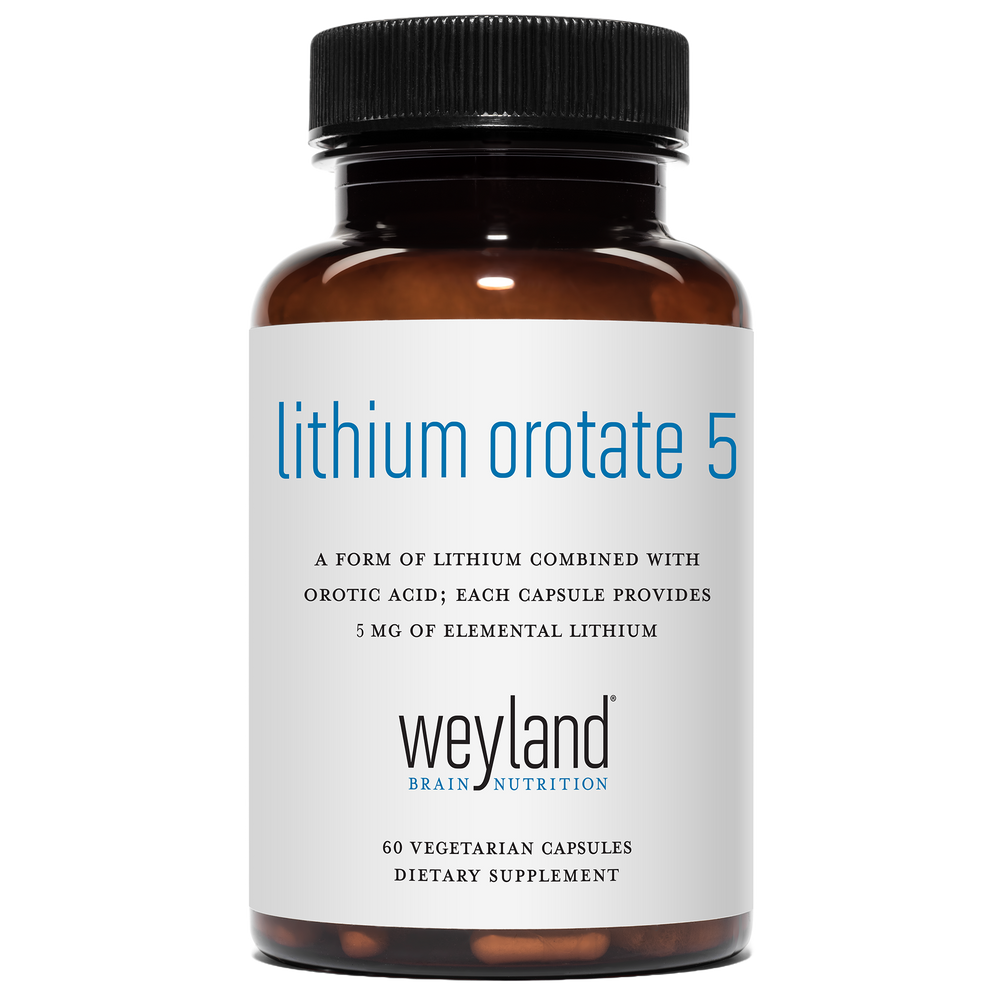
What Is Lithium Orotate?
Lithium orotate is a dietary supplement made by pairing elemental lithium with orotic acid. This specific pairing provides trace amounts of the mineral and is typically sold over the counter in low doses for daily use. It sits in a different category from prescription lithium products doctors use in psychiatric care. It is commonly marketed as a low-dose supplement for general wellness support and should not be presented as a substitute for prescribed care for manic episodes, severe depression, or other diagnosed mental health conditions.
What Does Lithium Orotate Do in the Body?
Lithium orotate provides a very small amount of lithium and is sometimes discussed in relation to brain function and cognitive function. People talk about low-dose lithium supplementation as a way to support cognitive wellness and emotional balance.
Current clinical evidence for lithium orotate specifically remains quite limited. Much of the interest comes from broader research on overall health and on how lithium concentrations interact with brain cells. Health enthusiasts frequently discuss taking it as one part of an integrative approach to daily wellness.
Why Do People Take Lithium Orotate?
People add lithium orotate to their daily routines for a range of wellness goals. Many individuals explore this supplement for possible support related to emotional balance, mental sharpness, and overall brain health:
-
Mood support: Many users actively seek out low-dose lithium orotate to encourage a calm mindset during stressful times, though it should never be used in place of prescribed care to treat bipolar disorder or any other diagnosed condition.
-
Brain health and memory: Individuals hope to support mental sharpness over the long term, as researchers explore a possible connection with mild cognitive impairment and cognitive decline with age.
-
Sleep and stress: Some people look into this supplement to support daily stress resilience and a healthy circadian rhythm, viewing it as a general wellness aid rather than a treatment for severe anxiety.

What Does Research Say About Lithium Orotate and Brain Health?
Scientists continue to explore how lithium interacts with the nervous system. Studies examine how the mineral affects neuronal function, signaling pathways, and broader markers of brain resilience. Research results vary widely depending on the exact form and dose used in the trials.
What Has Research Looked at So Far?
Researchers have looked at lithium as a potential neuroprotective agent that may support neuronal survival. Studies in the rat brain suggest it may influence brain-derived neurotrophic factor (BDNF), synaptic plasticity, oxidative stress, and tau phosphorylation. These are all areas that frequently arise in Alzheimer’s disease research. Even so, findings from preclinical models do not confirm the same effects in people using low-dose lithium orotate supplements.
What Is Still Unclear?
The long-term effects of over-the-counter lithium orotate in humans remain unclear. Much of the data comes from animal models, acute injections, epidemiological observation, or studies involving lithium in drinking water rather than low-dose supplements. Research on higher concentrations or prescription forms of lithium cannot be applied directly to low-dose lithium orotate products sold over the counter.
Check the Label Before You Choose
Elemental lithium content matters when comparing low-dose lithium orotate supplements. Review Weyland’s collection to see clearly labeled options that make side-by-side comparison easier.
View Clearly Labeled OptionsIs Lithium Orotate the Same as Prescription Lithium?
Lithium orotate is definitely not the same as prescription lithium products. Doctors use prescription lithium carbonate in much higher doses and under medical supervision for psychiatric care. A nutritional supplement contains only a small fraction of the lithium found in prescription treatment settings. Lithium orotate should never be viewed as a replacement for prescribed medication. A qualified healthcare provider should guide treatment decisions for medical conditions.
What Dosage of Lithium Orotate Do People Usually See?
Supplement companies package lithium orotate in varying amounts meant for daily use. Reading the label carefully helps you understand exactly how much active mineral you are consuming.
How Much Lithium Orotate is Usually Sold in Supplements?
Supplements are commonly sold in very low doses ranging from 1 to 20 milligrams. Companies might list the compound's total weight or just the weight of the active mineral. That difference matters when comparing one product with another.
Why Does Elemental Lithium on the Label Matter?
The mg of elemental lithium tells you the exact amount of the actual mineral in the pill. A capsule might contain 130 mg of lithium orotate but only yield 5 mg of elemental lithium. Understanding this difference prevents you from misjudging your actual dose when comparing different dietary supplements.

What Side Effects of Lithium Orotate Should You Know?
Taking any supplement requires understanding potential risks and monitoring how the body reacts when introducing it into a routine.
Side Effects Most Often Discussed:
-
Mild nausea, thirst, and occasional muscle weakness.
-
A significantly increased risk of lithium toxicity at high doses, a condition that can negatively affect kidney function and fluid balance.
Who Should Talk to a Healthcare Provider Before Trying Lithium Orotate?
Anyone with a preexisting health issue should talk to a healthcare provider before trying lithium orotate to help avoid dangerous interactions. You must seek professional guidance before adding it to a daily routine if you fall into any of the following groups:
-
People with kidney disease or thyroid problems.
-
Individuals are currently taking other medications or dietary supplements.
-
Pregnant individuals.
-
People with a mental health diagnosis who need proper medical clearance.
Do Foods and Water Contain Lithium Too?
Yes, lithium occurs naturally in drinking water and various plant foods. The National Institutes of Health notes that soil composition can affect how much lithium ends up in parts of the food supply. Food fortification with lithium is rare. Because of this, most exposure comes from natural water sources and local produce.
Looking for a Simpler Way to Compare Lithium Orotate Options?
Finding the right supplement requires clear information and trustworthy labels that respect wellness goals. If you are exploring how a low dose fits into a routine, Weyland’s lithium orotate products provide detailed labels that clearly show elemental lithium content. The educational resources can also help readers compare options and make a more informed choice.
Ready to Explore Weyland’s Full Collection?
If you want a simpler way to review lithium orotate products after reading the research, safety points, and dosage basics, browse the full Weyland lineup and compare what fits your routine.
Shop the Collection
Frequently Asked Questions
What is lithium orotate used for?
People generally use low-dose lithium orotate as a nutritional supplement to support mood balance and overall brain health.
Can lithium orotate support brain health?
Many individuals take it to encourage stress resilience and cognitive function, though clinical evidence remains limited.
Is lithium orotate the same as lithium carbonate?
No, lithium orotate is an over-the-counter supplement, while prescription lithium carbonate is a higher-dose medication used under medical supervision in psychiatric care.
What are the side effects of lithium orotate?
Potential risks include muscle weakness and thirst, while high doses can negatively impact kidney function and raise the risk of lithium toxicity.
How much lithium orotate do people usually take?
Consumers typically take dietary supplements containing 1-20 mg of elemental lithium per dose.
References
-
Hedya, S. A., Avula, A., & Swoboda, H. D. (2026). Lithium toxicity. In StatPearls. StatPearls Publishing. https://www.ncbi.nlm.nih.gov/books/NBK499992/
-
National Center for Biotechnology Information. (2026). PubChem compound summary for CID 23686432, lithium orotate. Retrieved April 1, 2026, from https://pubchem.ncbi.nlm.nih.gov/compound/Lithium-orotate
-
National Library of Medicine. (2009, January 27). Lithium carbonate capsule. DailyMed. https://dailymed.nlm.nih.gov/dailymed/drugInfo.cfm?setid=083ca85f-a450-4fe9-973e-47a13cd18dd1
-
Weddell, S., Jones, G. L., Duffy, S., Hogg, C., Johnson, S., & Ledger, W. (2019). Home ovulation test use and stress during subfertility evaluation: Subarm of a randomized controlled trial. Women’s Health, 15, 1745506519838363. https://doi.org/10.1177/1745506519838363
-
Won, E., & Kim, Y.-K. (2017). An oldie but goodie: Lithium in the treatment of bipolar disorder through neuroprotective and neurotrophic mechanisms. International Journal of Molecular Sciences, 18(12), 2679. https://doi.org/10.3390/ijms18122679
About our sourcing: Our lithium orotate active ingredient is sourced from a European EU supplier. We purposely source more ingredients from Europe, where food safety regulations are stricter and more stringent than in many other supplement-ingredient origin countries.
Medical Disclaimer
The content on this page is for informational purposes only and is not intended as medical advice, diagnosis, or treatment. Always consult a qualified healthcare professional before making changes to your health regimen.
*These statements have not been evaluated by the Food and Drug Administration. Our products are not intended to diagnose, treat, cure, or prevent any disease.