Posted by Dr. James Pendleton, ND, Chief Science Officer
on March 09, 2026

Lithium orotate is a dietary supplement at trace doses (≈0.2–0.8 mg elemental lithium per serving), used for general wellness support. Lithium carbonate is a prescription pharmaceutical at therapeutic doses (typically 600–1200 mg/day), regulated by the FDA for specific psychiatric conditions like bipolar disorder. They are not interchangeable; supplements cannot replace prescriptions. *These statements have not been evaluated by the FDA. This product is not intended to diagnose, treat, cure, or prevent any disease.*
Lithium carbonate is a prescription drug used to treat bipolar disorder, taken at high doses that require regular blood tests. Lithium orotate is an over-the-counter supplement with far less lithium per dose, and far less research on its safety and benefits. Many people do not realize that these two forms serve completely different purposes in the human body. One is a highly regulated prescription medication. The other is a low-dose nutritional supplement. The risks, benefits, and safety considerations differ significantly between these forms, and mixing them up can lead to serious consequences.
Please remember that the information provided here is for educational purposes only. You must always speak with a healthcare provider before changing any health routine. Understanding the differences in dosage, safety considerations, and potential brain support may help guide informed health decisions.
Lithium Orotate vs. Lithium Carbonate: A Quick Comparison
Could Low-Dose Lithium Be the Missing Piece in Your Brain Wellness Routine?
Choose Weyland Lithium Orotate 20mg for reliable daily lithium support. Manufactured in the USA in an FDA-registered, cGMP-compliant facility and covered by a 100% satisfaction or refund guarantee.
Get Lithium Orotate 20mg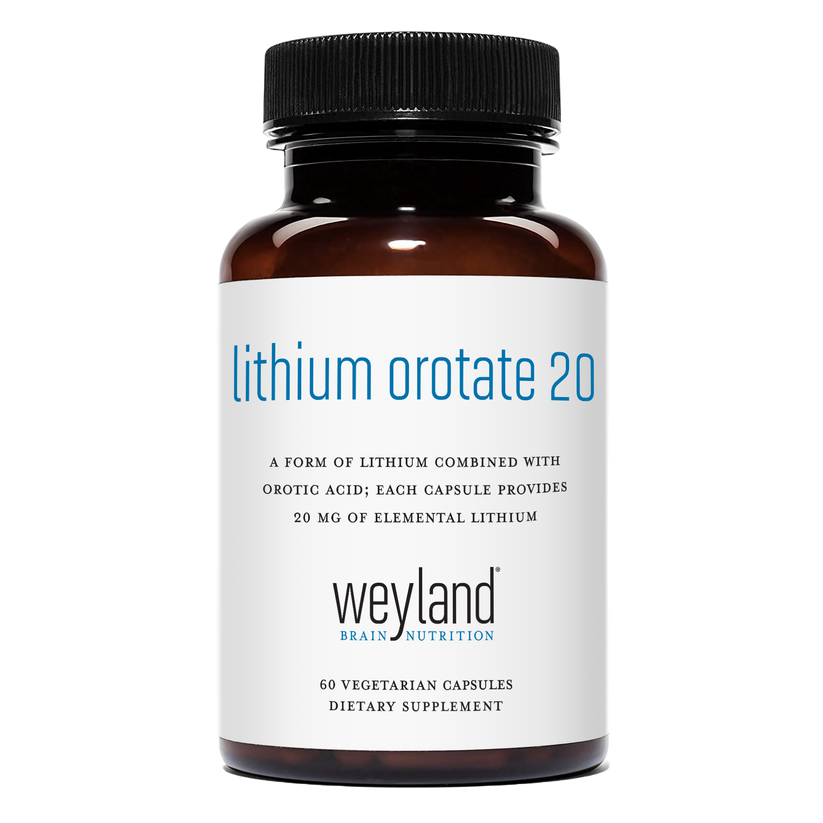
What Is Lithium and Why Is It Used?
Lithium is a naturally occurring mineral found in the earth with a fascinating history in both medicine and daily wellness. People rely on it to support brain health, mood stability, and overall cognitive function. Different forms of this mineral serve distinct purposes depending entirely on the dose of lithium used.
What is lithium as a natural mineral?
Lithium exists naturally throughout the Earth's crust and oceans. You can actually find trace amounts of it in the drinking water of many regions. Plants absorb this trace mineral from the soil, making it readily available in our food supply. Trace amounts of lithium occur naturally in food and water, and researchers continue to study how these small exposures may relate to brain health.
Why has lithium been used in mental health treatment?
Doctors have utilized lithium in mental health treatment for decades because of its unique and powerful ability to stabilize mood. Research suggests lithium can influence signaling pathways involved in mood regulation. Medical professionals rely on high doses for severe psychiatric use, while low-dose lithium supplementation provides general cognitive support. The prescribed amount determines the specific potential benefits and risks.

What Is Lithium Orotate?
Lithium orotate is an over-the-counter (OTC) nutritional supplement that combines elemental lithium with orotic acid. People often choose this specific form to support a balanced mood and maintain a healthy stress response during difficult days. It delivers a much smaller amount of the mineral compared to the heavy prescription options.
Is lithium orotate a supplement or a medication?
Lithium orotate is entirely a dietary supplement, not a prescription drug. You can buy it without a doctor's order for general nutritional support. It provides a very low dose designed specifically to support everyday brain health rather than treat diagnosed medical conditions.
How much elemental lithium does lithium orotate contain?
A typical lithium supplement in the orotate form contains just 5 to 20 milligrams of elemental lithium. Elemental lithium refers to the actual amount of the active mineral your body physically absorbs. The rest of the capsule is made up of orotic acid, which acts as the carrier compound that binds lithium in this supplement. This small amount is just a fraction of what you find in prescription medicine.
What is lithium orotate commonly used for?
People commonly use lithium orotate for gentle mood support and daily stress resilience. It helps promote a quiet sense of calm when life gets overwhelming. Some people use lithium orotate supplements as part of a routine focused on mood balance and general cognitive wellness.
Support Your Brain Without Prescription-Level Doses
Weyland Lithium Orotate 20mg delivers a precisely measured dose of elemental lithium in vegetarian capsules.
Support Brain Health TodayWhat Is Lithium Carbonate?
Lithium carbonate remains a powerful medication used strictly within professional psychiatric care. Doctors prescribe it in much higher doses to safely manage severe mood disorders. It absolutely requires close medical supervision to ensure patient safety.
Is lithium carbonate a prescription drug?
Lithium carbonate is a strictly regulated prescription medication fully approved by the Food and Drug Administration (FDA). You cannot purchase it over the counter under any circumstances. A licensed healthcare provider must closely oversee your lithium treatment due to the intense strength of the medication.
What conditions is lithium carbonate prescribed for?
Medical professionals prescribe lithium carbonate primarily for targeted bipolar disorder treatment. It is highly effective at significantly reducing the frequency of manic and depressive episodes. Some clinical research has examined lithium treatment and suicide risk in people with bipolar disorder.
Why does lithium carbonate require blood testing?
Lithium carbonate requires regular blood tests because the safe and toxic levels are incredibly close together. Doctors call this delicate balance a narrow therapeutic window. Monitoring blood levels ensures the patient receives the right dose while carefully avoiding dangerous toxicity.

What Are the Main Differences Between Lithium Orotate and Lithium Carbonate?
The main differences center entirely around the concentration of elemental lithium and how people access these compounds. One is a high-strength medical intervention designed for severe illness. The other is a gentle daily supplement meant for wellness. Understanding these important differences keeps you safe and on the right track.
How do the dosage levels compare?
Dosage levels differ dramatically between the two distinct forms. A prescription dose of lithium carbonate often exceeds 900 milligrams per day to achieve a necessary medical effect. A low-dose lithium supplement provides less than 20 milligrams daily.
How does elemental lithium content differ?
The actual elemental lithium content in the carbonate form is vastly higher than in the orotate form. Lithium carbonate delivers a much higher amount of elemental lithium that produces therapeutic effects used in psychiatric treatment. Lithium orotate combines lithium with orotic acid and provides a much smaller dose of elemental lithium.
How do safety profiles compare?
Safety profiles differ largely due to the large gap in dosage. High-dose lithium therapy requires constant monitoring for serious adverse effects that can impact the whole body. Low-dose supplements carry a much lower risk level, though no supplement is entirely risk-free.
How does availability differ?
Availability depends entirely on the specific formulation you seek. You can buy low-dose lithium supplements easily online or in local vitamin shops. You can obtain lithium carbonate only from a pharmacy with a valid prescription from a doctor.
Who typically uses each form?
People dealing with diagnosed mental health issues, like severe mood swings or episodes of mania, use the prescription form. People looking for mild nutritional support for better mental health and cognitive function use the supplement form.
Is Lithium Orotate Safer Than Lithium Carbonate?
Lithium orotate provides a much smaller amount of elemental lithium than prescription lithium carbonate, which may influence the overall risk profile. However, safety always depends on the exact dosage and your personal medical context.
A lower dose does not automatically mean the supplement is completely risk-free for everyone who tries it. You must seek medical supervision if you take other medications or have a history of kidney problems.
Myth vs Fact
- Myth: You can take the same amount of lithium orotate as lithium carbonate to treat bipolar disorder.
- Fact: Orotate provides a microdose specifically for nutritional support and cannot replace high-dose prescription psychiatric care.
What Are the Side Effects of Each Form?
Both forms of this mineral can cause noticeable side effects if your body cannot process them properly. The risk of unwanted symptoms naturally increases as the dose of lithium increases. Knowing what to watch for helps protect your brain health and your overall physical well-being.
Common side effects of lithium carbonate
Common side effects of lithium carbonate include extreme thirst, frequent urination, and noticeable hand tremors that can interfere with daily tasks. Patients often report stubborn weight gain and heavy feelings of sluggishness during treatment. Long-term lithium therapy requires monitoring of kidney and thyroid function because changes in these organs may occur in some patients.
Reported side effects of lithium orotate
Reported side effects of lithium orotate appear uncommon, although research on supplement use remains limited, and can include mild nausea or slight digestive upset. Some people experience a very faint headache or a small increase in thirst when they first start taking it. These mild symptoms usually fade away completely as the body comfortably adjusts to the low dose.
When should you seek medical advice?
You should seek medical advice immediately if you experience severe confusion, heavy shaking, or sudden muscle weakness. You must also talk to a doctor about potential drug interactions before mixing lithium salts with blood pressure medications or standard antidepressants. Pre-existing conditions like kidney disease make professional medical guidance absolutely mandatory.

Can You Get Lithium From Food or Drinking Water?
You can absolutely get tiny amounts of ionic lithium from your daily diet and local water supply. Leafy greens, root vegetables, and whole grains naturally absorb this trace mineral directly from the ground.
The exact amount you consume depends entirely on the geographic variation of the soil where your food actually grows. This natural dietary intake is much lower than what you find in even the lowest dose supplements, but it still plays a role in human health.
How Do You Decide Between Lithium Orotate and Lithium Carbonate?
Deciding between the two forms comes down to the severity of your symptoms and your very specific health goals. One path requires a doctor. The other path allows for independent nutritional support. You must evaluate your needs honestly to find the right dose and the safest formulation.
Are you seeking prescription treatment?
You are seeking prescription treatment if you need clinical help managing severe manic episodes, severe depression, or suicidal thoughts. These intense symptoms require the strong intervention that only lithium carbonate provides. You cannot treat these other conditions safely with a dietary supplement.
Are you interested in nutritional brain support?
You are interested in nutritional brain support if you just want to actively improve your daily stress resilience and focus. Lithium orotate serves people looking to protect an aging brain and may be used as part of a broader approach to cognitive wellness. It acts as a gentle preventative wellness tool rather than an acute crisis intervention.
Have you discussed options with your healthcare provider?
You must discuss all available options with your healthcare provider to ensure you make the safest choice possible. They can carefully review your medical history and check your baseline lithium levels with blood tests if needed. A trusted doctor helps you easily navigate the important differences between intense medical medicine and gentle dietary support.
If you have a diagnosed mood disorder, you need to discuss Lithium Carbonate with a doctor. If you need to manage severe mania or deep depression, you must seek psychiatric care immediately. If you just want general brain health and mild mood stability, you might consider Lithium Orotate. If you are taking other daily medications, always consult a doctor before trying any new form.
How Do You Choose a High-Quality Lithium Supplement for Brain Health?
Finding a reliable lithium supplement requires careful attention to the product label and the overall company reputation. You want to look for clearly labeled elemental lithium so you know exactly how much of the active mineral you are actually taking.
The best brands invest heavily in strict third-party testing to guarantee purity and use entirely transparent sourcing for all ingredients. Choosing a highly targeted, brain-focused formulation like Weyland Brain Nutrition provides a supplement for individuals interested in brain health and nutritional support, without unnecessary fillers.
Always consult your healthcare provider before adding any new supplement to your daily wellness routine. Taking the time to properly research your options ensures you support your brain health safely and effectively.
Take the Next Step Toward Better Brain Support
Choose Weyland Lithium Orotate 20mg for reliable daily lithium support. Manufactured in the USA in an FDA-registered, cGMP-compliant facility and covered by a 100% satisfaction or refund guarantee.
Buy Lithium Orotate 20mgFrequently asked questions
Is lithium orotate as strong as lithium carbonate?
Lithium orotate is much less concentrated than lithium carbonate, making it a mild supplement rather than a strong prescription medication.
Can lithium orotate replace prescription lithium?
You cannot use lithium orotate to replace prescription lithium because it does not provide enough elemental lithium to treat severe mood disorders like bipolar depression.
How much elemental lithium is in lithium orotate?
Most over-the-counter lithium orotate supplements contain a very low dose of between 5 and 20 milligrams of elemental lithium per individual serving.
Does lithium carbonate cause more side effects?
Lithium carbonate frequently causes more severe side effects due to the higher doses required for intense psychiatric treatment.
Can lithium orotate interact with medications?
Even low-dose lithium orotate can cause dangerous drug interactions with common blood pressure medications and standard depression prescriptions.
References
- Findling, R. L., Landersdorfer, C. B., Kafantaris, V., Pavuluri, M., McNamara, N. K., McClellan, J., Frazier, J. A., Sikich, L., Kowatch, R., Lingler, J., Faber, J., Taylor-Zapata, P., & Jusko, W. J. (2010). First-dose pharmacokinetics of lithium carbonate in children and adolescents. Journal of clinical psychopharmacology, 30(4), 404–410. https://doi.org/10.1097/JCP.0b013e3181e66a62
- Grandjean, E. M., & Aubry, J. M. (2009). Lithium: updated human knowledge using an evidence-based approach. Part II: Clinical pharmacology and therapeutic monitoring. CNS drugs, 23(4), 331–349. https://doi.org/10.2165/00023210-200923040-00005
- Pacholko, A. G., & Bekar, L. K. (2021). Lithium orotate: A superior option for lithium therapy?. Brain and behavior, 11(8), e2262. https://doi.org/10.1002/brb3.2262
About our sourcing: Our lithium orotate active ingredient is sourced from a European EU supplier. We purposely source more ingredients from Europe, where food safety regulations are stricter and more stringent than in many other supplement-ingredient origin countries.
Medical Disclaimer
The content on this page is for informational purposes only and is not intended as medical advice, diagnosis, or treatment. Always consult a qualified healthcare professional before making changes to your health regimen.
*These statements have not been evaluated by the Food and Drug Administration. Our products are not intended to diagnose, treat, cure, or prevent any disease.