Posted by GC Support
on May 06, 2026

Choosing a lithium orotate supplement comes down to clear elemental-lithium dosing, third-party testing, ingredient transparency, and trusted sourcing. Liquid drops and capsules both deliver the same compound; choice depends on personal routine. Always consult a healthcare provider before starting any supplement. *These statements have not been evaluated by the FDA. This product is not intended to diagnose, treat, cure, or prevent any disease.*
Table of Contents
- 1. How Long Does Lithium Usually Take to Work?
- 2. What Are the First Signs Lithium Is Working?
- 3. When Do Most People Start Feeling a Shift?
- 4. Why Does Lithium Work Faster for Some People?
- 5. What Should You Track to Notice the Changes?
- 6. What If You Don't Feel Anything Yet?
- 7. What's the Smartest Way to Move Forward?
Most people expect the first weeks on a new lithium orotate routine to feel like something. A capsule a day, a glass of water, and then the long pause where the brain wonders whether anything is shifting yet. The truth is quieter than the question. The honest answer to how long does lithium take to work depends on the form, the dose, and the body taking it, and the early signs almost always show up small before they show up obvious.
Weyland builds low-dose lithium orotate for people who would rather track changes slowly than chase a dramatic before-and-after. Pay attention to the small stuff. Stay consistent. Let the routine reveal itself across weeks, not days. What follows covers the realistic timeline, the early signals worth watching for, and what to do when nothing seems to be moving yet.
Built for the Slow, Steady Read
Weyland's low-dose lithium orotate is made for people who would rather track small shifts over weeks than chase a quick fix. One capsule a day, no math required.
See the Bottle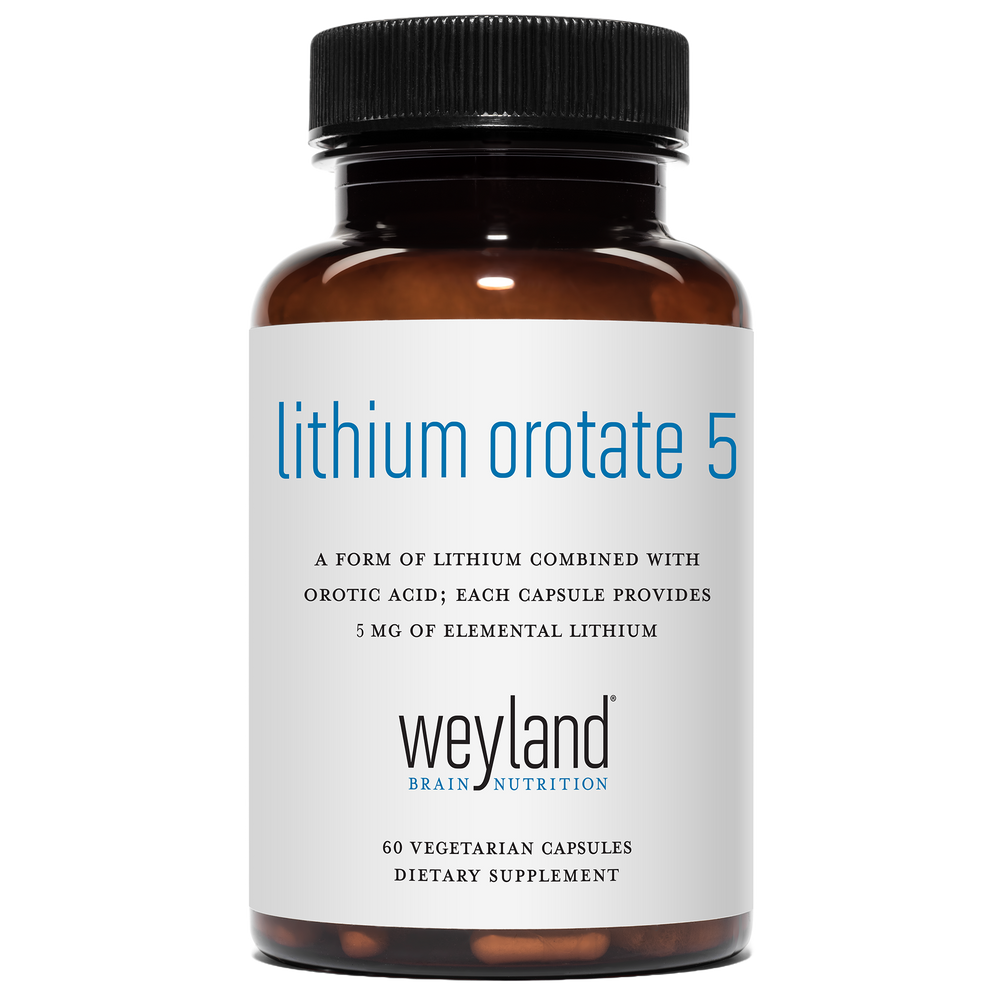
How Long Does Lithium Usually Take to Work?
Lithium orotate at low supplement doses is taken daily, with subtle shifts in mood, sleep, or focus often noticed within two to four weeks of consistent use. Prescription lithium carbonate runs on a different timeline entirely and should only be discussed with a doctor. Three things shape the answer for most people.
Lithium Orotate at Low Doses
A 5 mg lithium orotate capsule taken once daily rarely produces an overnight change. Most beginners notice the first faint shifts in the second or third week, and the pattern tends to feel more like a slow dimmer being turned up than a switch being flipped on.
Prescription Lithium for Comparison
Prescription lithium carbonate is dosed in hundreds of milligrams under medical supervision and follows a clinical monitoring plan. Anyone using that form should follow a doctor's plan, not a blog post. Lithium orotate sits in a separate category as a low-dose nutritional supplement and should never be used as a stand-in for prescription care.
Why Timelines Vary Person to Person
Two people taking the exact same lithium orotate capsule can feel very different things in the first month. Body chemistry, baseline stress, sleep habits, hydration, and whether the dose actually gets taken every day all play a part in how quickly anything becomes noticeable.

What Are the First Signs Lithium Is Working?
Early signs tend to be subtle, easy to miss without a little attention, and often show up in everyday moments rather than dramatic shifts:
-
The day feels less spiky, with fewer obvious mood swings between morning and evening
-
Background mental noise drops a notch, like someone turned the volume down on the chatter
-
Switching between tasks gets a little easier, with less of the usual mental drag
-
Mornings feel smoother before the obvious sleep changes show up
-
A general sense of calm hangs around longer than it used to
-
Small stressors stop replaying for hours after the moment has passed
When Do Most People Start Feeling a Shift?
Most people start to feel a shift somewhere in the two- to four-week range, and the change usually arrives gradually rather than all at once. The first month is best treated as a baseline-building stretch, not a final verdict on whether the supplement fits.
The First Week
Days one through seven are usually the quietest stretch. Most beginners feel almost nothing beyond the routine of taking a capsule, and that's normal. Nothing has gone wrong if nothing has shown up yet.
Two to Four Weeks In
The middle of the month is where the small stuff tends to surface. A calmer afternoon. A morning that felt easier than expected. A meeting that did not leave the same hangover it usually does. The shifts stay gentle.
Beyond the First Month
After about thirty days, a real pattern starts to form. Anyone keeping daily notes can usually look back and see a steadier baseline, even if no single day felt like a turning point. The pattern only shows up because the daily routine held steady long enough to make it visible.
Consistency Is the Lever
A 5 mg capsule, taken at the same time each day, gives the body a real chance to show its rhythm. Weyland's lithium orotate is formulated for exactly that kind of patient routine.
See the Formula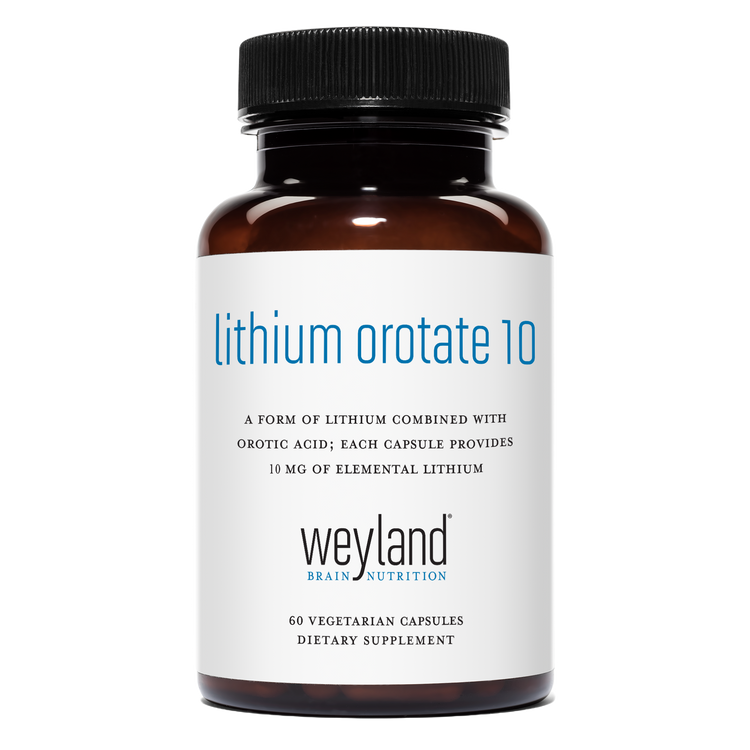
Why Does Lithium Work Faster for Some People?
Response time depends on a mix of personal and product-related factors that no two people share exactly. The same capsule, the same dose, the same time of day, and yet two bodies will land on different timelines. That's biology, not a flaw in the supplement.
Body Chemistry and Baseline Levels
Some bodies respond more quickly to mineral supplements than others. Baseline stress, hydration, recent sleep history, and overall health all affect how a low-dose supplement settles in. Faster does not equal better.
Dose Size and Consistency
A 5 mg capsule taken every single day at the same time tends to produce more reliable results than a higher dose taken on and off. Skipping days resets the rhythm, and the rhythm is doing most of the work. Consistency is the lever that actually moves things.
Lifestyle Factors Like Sleep and Stress
Sleep, hydration, food, and stress levels shape how any supplement feels in everyday life. A supplement layered onto a chaotic week has a harder time showing up in noticeable ways. Stable habits make subtle shifts easier to spot, the way a quiet room makes small sounds easier to hear.

What Should You Track to Notice the Changes?
A simple tracking habit makes early shifts much easier to spot, and a few areas tend to give the clearest signals:
-
Daily mood on a 1 to 10 scale, logged at roughly the same time each day
-
Sleep quality, including how rested mornings actually feel before coffee
-
Energy levels at different points, especially the late afternoon dip
-
Focus during work or routine tasks that need sustained attention
-
Reactions to small stressors, including how long the reaction sticks around
-
Any physical changes worth noting, even minor ones that feel new
What If You Don't Feel Anything Yet?
Not feeling a shift in the first few weeks does not mean the supplement is failing. Lithium orotate works gradually for most people, and the early stretch usually rewards patience over panic.
Give It More Time
Two weeks is the soonest most people can fairly judge a low-dose supplement. Four weeks is more realistic. Hold the same dose at the same time of day before making any adjustments.
Revisit the Dose
If a full month at 5 mg passes without any noticeable effects, talk to a healthcare provider before adjusting. Bumping to 7.5 or 10 mg is sometimes reasonable, but the right call depends on the bigger picture, including any medication already in the daily routine.
Look at the Bigger Routine
Sleep, hydration, stress, and food habits shape how any supplement feels. A supplement is one input among many, not a magic switch, and tightening the broader routine can sometimes make a bigger difference than reaching for a higher dose.
What's the Smartest Way to Move Forward?
Noticing how lithium works is more about patience and attention than chasing a fast result. Two to four weeks of consistent daily use, a simple tracking habit, and a steady routine usually reveal more than any single morning can. The shifts are quiet by design. The people who notice them are usually the ones paying attention to the small stuff.
Track the daily basics. Hold the same dose long enough to make a difference. Anyone exploring Weyland's low-dose lithium orotate can take that first capsule knowing the bottle was built for exactly this kind of slow, deliberate read on the body.
Pay Attention to the Small Stuff
Track the daily basics. Hold the same dose long enough to mean something. Weyland's low-dose lithium orotate was built for exactly that kind of careful, attentive routine.
Shop Weyland
Frequently Asked Questions
How long does lithium orotate take to work?
Most users notice subtle shifts in mood, sleep, or focus between two and four weeks of consistent daily use at a low-dose lithium orotate amount.
Can you feel lithium working on the first day?
Most people do not feel a noticeable shift on day one, since lithium orotate works gradually rather than producing an immediate effect.
What can affect how quickly lithium orotate is felt?
Dose consistency, body chemistry, sleep, hydration, and overall stress levels all shape how quickly a low-dose lithium orotate routine feels noticeable.
Does lithium orotate work better in the morning or at night?
Both timings work well for lithium orotate, and consistency at the same time each day matters more than the chosen window.
How do you know if the lithium orotate dose is right?
A daily 5 mg lithium orotate dose, held steady for at least four weeks and paired with simple tracking, usually indicates whether the dose fits the body or needs a small adjustment with a healthcare provider's input.
References
-
Office of Dietary Supplements. (2023, January 4). Dietary supplements: What you need to know. National Institutes of Health. https://ods.od.nih.gov/factsheets/WYNTK-Consumer/
-
U.S. Food and Drug Administration. (2024, October 1). Dietary supplements. U.S. Department of Health and Human Services. https://www.fda.gov/food/dietary-supplements
Medical Disclaimer
The content on this page is for informational purposes only and is not intended as medical advice, diagnosis, or treatment. Always consult a qualified healthcare professional before making changes to your health regimen.
*These statements have not been evaluated by the Food and Drug Administration. Our products are not intended to diagnose, treat, cure, or prevent any disease.