Posted by GC Support
on November 06, 2026

Table of Contents
Mom has taken lithium for 20 years. Lately, she has been losing track of the day and tells the same story twice in an hour. Is it dementia, or is it the medicine? Lithium and dementia connect in two ways: prescription lithium can confuse older adults, yet researchers are also studying low doses for brain aging.
At Weyland Brain Nutrition, we track lithium research and explain it in plain language. Sudden confusion needs medical care right away. Knowing the warning signs and what the research really shows helps families ask the right questions sooner.
Quick Review
Here are the key points to know about lithium and memory changes in older adults, including warning signs, possible causes, and what current research can tell us.
Confusion and Warning Signs
- Memory and Thinking: Lithium can cause confusion, memory problems, or slow thinking in older adults.
- Possible Toxicity: Sudden confusion, tremors, or slurred speech may be signs of lithium toxicity.
- Age-Related Sensitivity: Older adults are more sensitive to lithium because their bodies process it differently.
Other Causes and Symptom Timing
- Other Contributing Factors: Thyroid problems, high calcium, and dehydration can also affect memory and thinking.
- Timing Clues: Dementia usually develops slowly, while lithium-related confusion can appear quickly.
Research and Next Steps
- Dementia Research: Some studies link lithium use to a lower risk of dementia, but the evidence is not conclusive.
- Low-Dose Studies: Low-dose lithium is being studied for brain health, but it is not proven to prevent dementia.
- When to Contact a Doctor: Contact a doctor if new confusion develops while taking lithium.
MAKE INFORMED CHOICES ABOUT LITHIUM
Questions about lithium deserve clear information. Explore Weyland's supplement collection, review the ingredients and labeled amounts, and speak with your healthcare professional before deciding what belongs in your daily wellness routine.
Explore Weyland Supplements
Can Lithium Cause Confusion?
Prescription lithium can cause confusion, slowed thinking, or memory loss in older adults, most often when lithium levels creep too high. In later life, that can happen on a dose that worked well for years. The effects range from barely noticeable to a medical emergency.
Mild Mental Slowing at Normal Levels
Some people on lithium treatment describe fogginess, slower recall, or trouble finding words. Research is mixed, and a 2026 systematic review of randomized trials found that lithium neither clearly helped nor hurt cognitive function across four bipolar disorder trials.
Changes like these still deserve a call to the prescriber. A quick level check can show whether the dose needs adjusting.
Serious Confusion from Lithium Toxicity
Confusion with drowsiness, slurred speech, coarse tremor, or unsteady walking can signal lithium toxicity. Older adults can show these signs even inside the usual therapeutic window, so a "normal" blood result doesn't rule toxicity out.
A review in the International Journal of Bipolar Disorders (Int J Bipolar Disord) notes that lithium also affects the kidneys, thyroid, and parathyroid glands. Those organ effects can cloud thinking on their own, which is why regular blood tests matter.

Why Are Older Adults More Sensitive to Lithium Carbonate?
Older adults are more sensitive to lithium carbonate because aging changes how the body handles the drug, even when the dose stays the same. Small shifts in kidney function or body fluids can push levels up within days. Common reasons lithium levels climb in later life include:
-
Slower kidneys: Kidney function declines with age, so lithium leaves the body more slowly.
-
Less body water: The same dose ends up more concentrated in a smaller pool of fluid.
-
A weaker thirst signal: Dehydration sneaks up faster, especially in heat or illness.
-
More daily medicines: Some blood pressure drugs, water pills, and pain relievers called nonsteroidal anti-inflammatory drugs (NSAIDs) raise lithium levels.
-
Sudden illness: Vomiting, diarrhea, fever, or infection can push levels up quickly.
Experts recommend lower blood levels for older adults, often 0.4 to 0.8 millimoles per liter (mmol/L) for ages 60 to 79 and 0.4 to 0.7 mmol/L after 80. Doctors also recheck levels after any dose change or new medicine.
What Else Can Cause Memory Problems on Lithium?
Memory problems on lithium don't always come from the lithium level itself. The drug can affect other organs, and those changes can cloud cognitive function too.
An Underactive Thyroid
Lithium can slow the thyroid gland, and low thyroid hormone can cause slow thinking, forgetfulness, and fatigue. This side effect is more common in women and older adults, and a simple blood test checks for it.
High Calcium Levels
Lithium can overstimulate the parathyroid glands, four tiny glands in the neck that control calcium. Too much calcium in the blood can cause confusion, tiredness, and constipation.
Dehydration from Lithium's Kidney Effects
Lithium makes some people urinate more, so they lose water faster. Dehydration can confuse an older adult on its own, and it also raises lithium levels.
Each of these causes often improves once a doctor finds it. Reporting changes early gives the care team that chance.
Is It Lithium or Dementia?
Timing is often the best clue for telling lithium-related confusion apart from dementia. Alzheimer's disease and other forms, such as frontotemporal dementia, usually unfold over months or years, while medicine-related confusion tends to show up over days or weeks. Clues worth reporting to a doctor right away include:
-
Confusion that appeared or worsened over days or weeks
-
A new hand tremor, unsteady walking, or slurred speech
-
Nausea, vomiting, or diarrhea at the same time
-
A recent dose change, new medicine, illness, or heat wave
-
Extreme thirst or frequent urination
Families have good reason to watch closely. Bipolar disorder is one of the risk factors for dementia, and a 2020 meta-analysis found about three times the odds of dementia in people with bipolar disorder, so accelerated cognitive decline deserves a full checkup.
Only a doctor can sort out the cause, usually with a lithium level plus kidney, thyroid, and calcium tests. Don't stop lithium without medical advice, and get emergency care for sudden or severe confusion.
COMPARE WEYLAND'S SUPPLEMENT OPTIONS
You've seen why lithium research needs context. Give supplement choices the same care: compare Weyland's ingredients, labeled amounts, and serving information, then discuss your options with your healthcare professional before adding anything to your routine.
Compare Weyland Products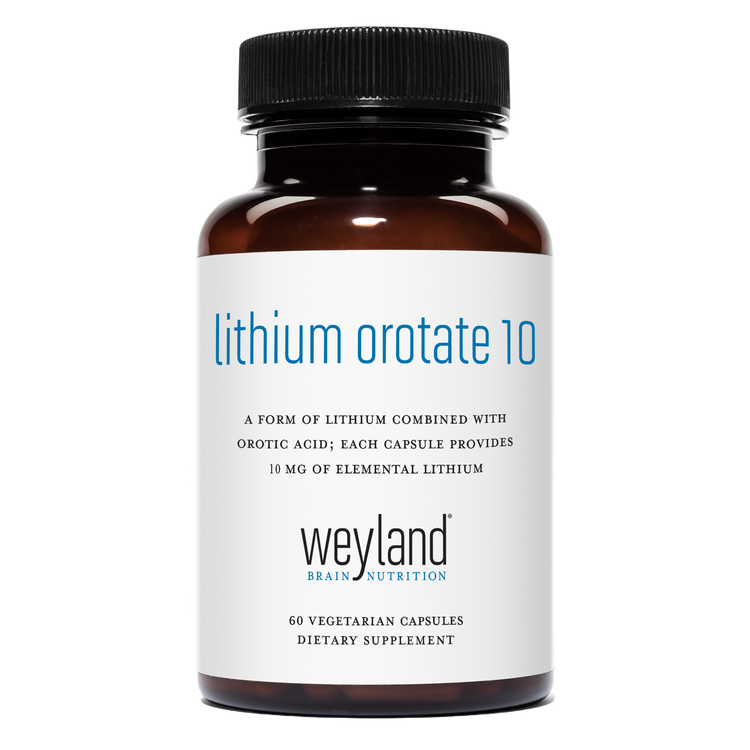
Does Lithium Raise or Lower Dementia Risk?
Current research doesn't show that lithium raises dementia risk, and several studies link it to lower risk. Here's the twist: high lithium levels can cloud thinking, yet much smaller amounts are under study for the opposite reason.
Lithium and Alzheimer's Disease: Lower Rates in Long-Term Users
Observational studies of lithium-treated patients have found fewer dementia diagnoses. A 2020 meta-analysis found that people with bipolar disorder who received lithium had about half the odds of dementia, and some studies of natural lithium exposure in drinking water point the same way.
These studies show a link, not proof. People who take lithium may differ from people who don't in ways the studies can't fully measure.
Mild Cognitive Impairment: Small Trials, Mixed Results
Clinical trials in mild cognitive impairment have been small, and the results point in different directions. A 2015 meta-analysis in the Journal of Alzheimer's Disease (J Alzheimers Dis) pooled three trials in people with mild cognitive impairment or AD dementia and found a statistically significant slowing of cognitive decline. Its secondary outcome measures, including spinal fluid markers of amyloid and tau, showed no clear difference.
A newer meta-analysis of six trials with 435 people found no clear benefit. Researchers hope low doses might slow disease progression, but that remains unproven.
The LATTICE Pilot Trial
The LATTICE pilot trial gave 80 adults aged 60 and older low-dose lithium carbonate or a placebo for two years. On one of the cognitive tests, a verbal memory test, the placebo group declined 1.42 points a year while the lithium group declined 0.73 points, but none of the six primary outcome measures met the trial's bar for statistical significance.
Safety and Open Questions
Serious adverse events occurred in 29% of people who received lithium and 23% of the placebo group, and investigators judged none definitely treatment-related. Previous clinical trials also mostly used lithium salts such as lithium carbonate, so results for other lithium compounds remain unknown.
Lithium Deficiency: A New Theory from Harvard
The idea of lithium deficiency as an early step in Alzheimer's disease gained traction with a 2025 Nature study. A Harvard Medical School team led by Bruce Yankner, with researchers from the Rush Alzheimer's Disease Center, measured 27 metals in human brain samples.
Lithium was the only metal clearly lower in people with mild cognitive impairment. Amyloid plaques trapped more of it as Alzheimer's disease advanced, which left less for the surrounding brain tissue.
Brain Changes in Lithium-Deficient Mice
The team found that endogenous lithium, the small amount the brain gets from food and water, helps maintain normal brain function in human and mouse brains. In mouse models, a lithium-deficient diet cut brain lithium levels by about half. The mice built up more amyloid beta and tau, lost connections between brain cells, and showed accelerated cognitive decline, partly through the enzyme glycogen synthase kinase-3 (GSK-3).
A Possible Feedback Loop
The loss also changed gene expression in all major brain cell types. Those results point to a possible positive feedback loop, where plaques trap lithium and low lithium lets more plaques form.
Lithium Orotate in Mouse Studies
Among the lithium compounds tested, lithium orotate bound least to amyloid. In AD mouse models and in mice with normal brain aging, it helped reduce amyloid plaques and tau pathology and prevented memory loss at about one-thousandth of the high doses used to treat bipolar disorder.
Limits of the Mouse Research
Animal models can't capture everything about the human brain, and Yankner has said mouse results need controlled human trials before anyone takes lithium for brain health. Lithium's mechanism and biological effects at supplement doses haven't been tested that way. None of this research shows that lithium supplements prevent or treat dementia.

Can Lithium Orotate Cause Confusion?
Confusion isn't a commonly reported effect of lithium orotate at typical supplement doses, which are a small fraction of prescription doses. Research in older adults is thin, though, so kidney function and other medicines still matter.
A Fraction of a Prescription Dose
Prescription doses of lithium are much larger than supplement doses. A 300 mg lithium carbonate tablet holds about 56 mg of elemental lithium, and many people take several tablets a day.
A lithium orotate dietary supplement usually lists elemental lithium in single-digit or low double-digit milligrams. Low doses like these haven't been studied closely in older adults with memory problems.
Limited Research in Older Adults
Few human studies have tested lithium orotate, and none have tested it in large groups of older adults. A 2026 review in JAMA Psychiatry called for a clinical trial of low-dose lithium orotate in mild cognitive impairment, noting that lower doses may carry less kidney and thyroid risk than higher-dose carbonate.
When to Check with a Doctor First
Talk to a doctor before starting if you have kidney disease, use NSAIDs regularly, or already have memory problems. The same goes for anyone taking prescription lithium, water pills, or angiotensin-converting enzyme (ACE) inhibitors, since these can raise lithium levels.
Stop the supplement and get checked if new confusion appears. Blood tests can show whether lithium or something else is behind it.
Lithium orotate supplements are not intended to diagnose, treat, cure, or prevent any disease. Adults without memory concerns who want to explore a low-dose option can browse Weyland's lithium orotate products after checking with a doctor.
Noticed a Change?
Lithium can cause confusion in older adults, often from rising lithium levels, thyroid changes, or high calcium, and many of these causes improve when caught early. If you've noticed a change, call the prescriber this week and ask for a lithium level plus kidney, thyroid, and calcium blood tests.
Bring a full list of medicines and supplements, and write down when the changes started. For sudden, severe confusion, call 911. One phone call now can turn a scary mystery into a fixable problem.
MAKE YOUR NEXT WELLNESS STEP AN INFORMED ONE
Once medical concerns have been addressed, explore Weyland's collection for your everyday wellness planning. Review your preferred product with your healthcare professional, then choose an option that fits the daily routine you've discussed together.
Shop Weyland Supplements
Frequently Asked Questions
Can lithium cause dementia?
Current research doesn't show that lithium causes dementia, though high levels can cause confusion that looks like it, and severe toxicity can rarely leave lasting problems.
Is lithium safe for elderly patients?
Many older adults take lithium safely with closer monitoring, including lower doses, lower target blood levels, and more frequent kidney and thyroid checks.
How often should lithium levels be checked in older adults?
Many clinicians check every three to six months once levels are steady, with extra checks after a dose change, a new medicine, or an illness.
Is confusion from lithium reversible?
Confusion from lithium usually clears once levels come down or a thyroid or calcium problem is treated, although severe toxicity can rarely cause lasting effects.
Can someone with dementia take lithium?
People with dementia sometimes take lithium for bipolar disorder or other mood disorders, which calls for lower doses, regular blood tests, and a caregiver who helps track doses and fluids.
References
-
Deng, R., Shargorodsky, A., Teopiz, K., Dri, C. E., Wong, S., Le, G. H., Zheng, Y. J., & McIntyre, R. S. (2026). Lithium and long-term cognitive outcomes in bipolar disorder and early dementia: A systematic review. CNS Spectrums, 31(1), Article e18. https://doi.org/10.1017/S1092852926100996
-
Gildengers, A. G., Ibrahim, T. S., Anderson, S. J., Emanuel, J. E., Santini, T., Diaz, J. L., Lopresti, B. J., Royse, S. K., Lopez, O. L., Zeng, X., de Almeida, B., Alkhateeb, S. K., Chu, C., Karikari, T. K., Lee, L., Weinstein, A. M., & Butters, M. A. (2026). Low-dose lithium for mild cognitive impairment: A pilot randomized clinical trial. JAMA Neurology, 83(4), 310–319. https://doi.org/10.1001/jamaneurol.2026.0072
-
Gitlin, M. (2016). Lithium side effects and toxicity: Prevalence and management strategies. International Journal of Bipolar Disorders, 4(1), Article 27. https://doi.org/10.1186/s40345-016-0068-y
-
Matsunaga, S., Kishi, T., Annas, P., Basun, H., Hampel, H., & Iwata, N. (2015). Lithium as a treatment for Alzheimer’s disease: A systematic review and meta-analysis. Journal of Alzheimer’s Disease, 48(2), 403–410. https://doi.org/10.3233/JAD-150437
-
Moore, G. J., Bose, N., Henter, I. D., & Manji, H. K. (2026). The 25-year evolution of lithium as a disease-modifying agent in dementia: A narrative review. JAMA Psychiatry, 83(9), 976–986. https://doi.org/10.1001/jamapsychiatry.2026.1296
-
National Institutes of Health. (2025, September 9). Lithium levels tied to Alzheimer’s disease and dementia. NIH Research Matters. https://www.nih.gov/news-events/nih-research-matters/lithium-levels-tied-alzheimers-disease-dementia
-
Neuroscience News. (2025, November 19). Lithium fails to slow cognitive decline in Alzheimer’s. https://neurosciencenews.com/lithium-cognition-alzheimers-29954/
-
Velosa, J., Delgado, A., Finger, E., Berk, M., Kapczinski, F., & de Azevedo Cardoso, T. (2020). Risk of dementia in bipolar disorder and the interplay of lithium: A systematic review and meta-analyses. Acta Psychiatrica Scandinavica, 141(6), 510–521. https://doi.org/10.1111/acps.13153
-
Zittema, D., & Dols, A. (2026). Pharmacological maintenance treatment in older age bipolar disorder. Current Opinion in Psychiatry, 39(5), 400–405. https://doi.org/10.1097/YCO.0000000000001101
Medical Disclaimer
The content on this page is for informational purposes only and is not intended as medical advice, diagnosis, or treatment. Always consult a qualified healthcare professional before making changes to your health regimen.
*These statements have not been evaluated by the Food and Drug Administration. Our products are not intended to diagnose, treat, cure, or prevent any disease.


