Posted by Dr. James Pendleton, ND, Chief Science Officer
on March 17, 2026

Researchers have begun exploring whether low-dose lithium might play a role in long-term brain health and dementia risk, with recent Harvard work renewing interest. Evidence remains preliminary and mixed. Lithium orotate is a dietary supplement — not a treatment, not a preventative, and not a substitute for medical evaluation. *These statements have not been evaluated by the FDA. This product is not intended to diagnose, treat, cure, or prevent any disease.*
Are you wondering if a simple trace mineral can support memory retention as you age? Many people have begun searching for information on the lithium orotate dementia connection after recent animal studies showed incredibly promising results.
Watching a loved one struggle with memory loss is terrifying. It makes sense that we actively seek ways to support cognitive health. While early research suggests low doses might support brain health, scientists still need more human data to confirm these benefits and entirely rule out potential side effects. Always talk to a doctor before starting any new supplement. Understanding the current science can help you make an informed decision about your cognitive wellness.
Support Your Brain Health Routine With Care
If you are exploring science-backed ways to support cognitive wellness, choose a low-dose lithium orotate supplement made with transparent labeling and quality-focused formulation.
View Lithium Orotate Options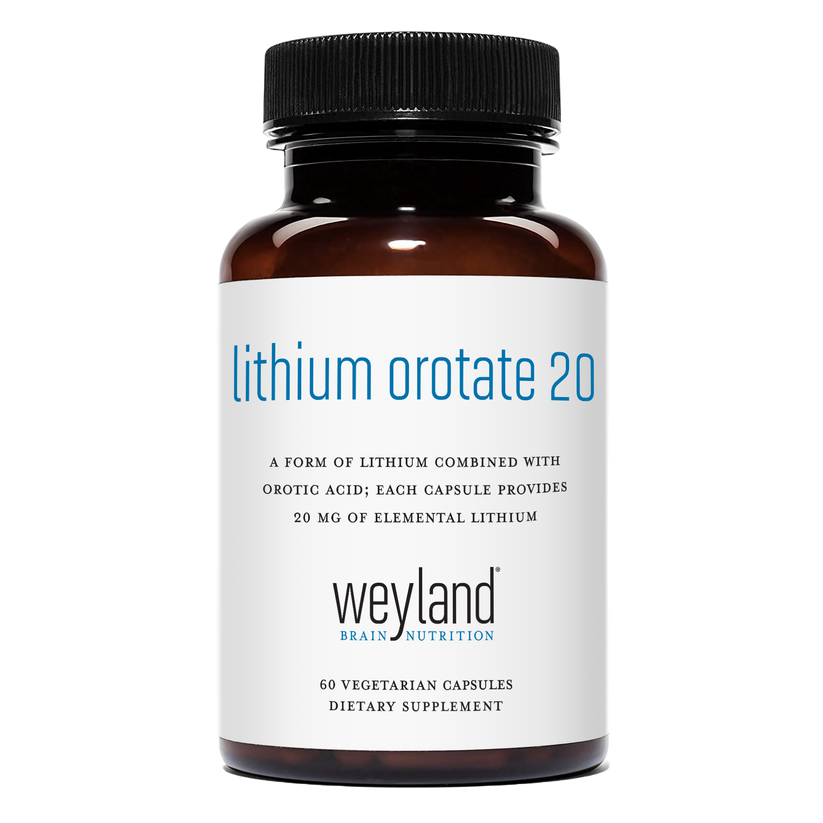
What Is Lithium Orotate?
Lithium orotate is a dietary supplement that binds a natural earth mineral with orotic acid. This specific pairing helps deliver very small amounts of the mineral to your body, supporting overall brain function. It comes from natural origins and differs completely from heavy medical treatments.
What Is Lithium as a Natural Mineral?
Lithium is a naturally occurring trace mineral found in various foods and local drinking water sources. It plays an important role as a trace mineral in the body and helps maintain healthy neurological pathways. People consume endogenous lithium naturally through regular diets every single day.
What Is Lithium Orotate and How Is It Different From Prescription Lithium?
Lithium orotate is an over-the-counter supplement. Prescription lithium carbonate is a powerful medication used to treat bipolar disorder and other severe mood disorders. The supplement version contains a drastically lower elemental lithium dose. Doctors run frequent blood tests for patients on prescription medication to prevent organ damage. Supplements provide gentle low doses aimed at basic cognitive preservation instead of treating major psychiatric conditions.

Why Are Scientists Studying Lithium for Dementia?
Researchers are investigating lithium therapy because it demonstrates neuroprotective effects against severe brain deterioration. Scientists want to know if this mineral can safely slow down cognitive decline and protect major brain cell types. The physical changes in an aging brain are complex, and we are only beginning to understand how this trace mineral might intervene.
What Happens in the Brain During Dementia?
Dementia causes severe physical damage to brain tissue. This leads to irreversible cognitive impairment and significant memory loss. Conditions like Alzheimer’s disease involve the dangerous buildup of negatively charged amyloid plaques and twisted tau tangles. This structural damage triggers chronic inflammation and extreme synaptic loss between multiple brain cell types.
How Might Lithium Affect These Processes?
Lithium might protect the aging brain by successfully blocking an enzyme called glycogen synthase kinase (GSK-3). Inhibiting this specific enzyme can drastically reduce inflammation and provide vital support against oxidative stress. It also encourages the active growth of new neurons. This helps support brain cell health in the presence of Alzheimer's pathology.
What Have Lithium Orotate Studies Found So Far?
Recent research published in journals like JAMA Psychiatry highlights the positive physiological effects of targeted lithium treatment. Studies reveal fascinating molecular targets that could lead to breakthroughs in precision medicine. Animal models and human population data are providing clearer insights into this mineral.
Looking Into Low-Dose Lithium for Brain Support?
Take the next step with a carefully formulated option designed for adults who want to build a thoughtful, wellness-focused routine for long-term brain health.
Explore Brain Support FormulasWhat Did Recent Mouse Studies Show?
Tests on AD mouse models showed that lithium significantly reduced plaque buildup and dangerous tau pathology in the brain. Researchers observed clear plaque-free regions and noted that the treatment reversed memory loss in these animals. The findings reveal physiological effects that improved memory tasks in ageing wild-type mice compared to normal mice. Some tests even reversed cognitive decline.
What Is the Lithium Deficiency Theory?
The lithium deficiency theory suggests that a strict lack of this mineral accelerates cognitive decline and negatively impacts long-term cognitive wellness. Scientists examining human brain samples found much lower lithium levels in patients with severe memory issues. They believe a lithium-deficient diet directly reduces endogenous cortical li. This eventually leads to harmful amyloid binding and lithium depletion.
What Do Drinking Water Studies Suggest?
Studies analyzing municipal drinking water show that regions with higher levels of naturally occurring lithium have much lower dementia rates. Researchers at institutions such as Harvard Medical School have repeatedly noted these observational findings on dementia rates. Regular exposure to small amounts of this mineral in water seems to offer excellent long-term protective benefits for overall brain health.

Does Lithium Orotate Prevent Dementia in Humans?
Current human clinical trials cannot officially confirm that low-dose lithium orotate directly prevents dementia. Studies on alzheimer’s mice are exciting, but science still requires more large-scale randomized clinical trials on humans to know for sure. Previous clinical trials using different formulations, such as lithium citrate, yielded mixed results. A promising supplement is never a proven medical cure for conditions like mild cognitive impairment (MCI).
Is Lithium Orotate Safer Than Lithium Carbonate?
Lithium orotate is generally considered much safer for daily supplementation because it uses a remarkably lower dose than standard medical prescriptions. Any form of this mineral still requires careful thought and medical supervision. The safety differences between the two forms are significant.
How Do Dosage Levels Compare?
A standard low-dose supplement provides a tiny fraction of the elemental lithium found in a therapeutic prescription dose. Supplements usually aim to support normal li homeostasis and basic li bioavailability. Prescription medications deliver massive amounts to act as an aggressive mood stabilizer.
What Are the Known Risks of Lithium Carbonate?
High-dose lithium carbonate carries very serious known risks of kidney and thyroid toxicity. The medication has a notoriously narrow therapeutic window. The actual difference between a helpful dose and a toxic dose is incredibly small. Patients absolutely need constant monitoring to prevent dangerous organ damage.
What Do We Know About Lithium Orotate Safety?
We know that the drastically lower dose of lithium orotate vastly reduces the immediate risk of severe side effects. There is still limited long-term human data regarding decades of continuous daily use. More research will eventually clarify its exact safety profile as a long-term replacement therapy.

Can Low-Dose Lithium Support Memory and Cognitive Function?
Low doses of lithium may support memory and overall cognitive function by enhancing cellular neuronal communication. Early-stage human observations suggest that gentle li replacement might help individuals experiencing the very early signs of mental decline. You have to combine any single supplement with a highly comprehensive brain health approach for the absolute best results.
What Is the Recommended Lithium Orotate Dosage for Brain Support?
Finding the right dose depends heavily on your specific health goals and current baseline wellness. Most experts focus strictly on very small amounts for daily cognitive support.
What Dose Is Commonly Used in Supplements?
Most over-the-counter supplements contain 5-20 mg of active elemental lithium. This small amount mimics a healthy, natural diet. It completely avoids the known risks associated with high medical doses. Many functional medicine doctors are currently recommending lithium orotate at these exact levels.
How Long Might It Take to Notice Effects?
You might need to take lithium supplements consistently for several months before noticing any gradual cognitive support. Individual variation plays a massive role in exactly how quickly you feel tangible changes in brain function. It takes time for the human body to correct a li deficiency and alter specific gene expression.
Who Should Avoid Lithium Supplements?
People with active kidney disease or known thyroid disorders must strictly avoid all lithium supplements. You must also avoid this mineral if you currently take certain medications, such as blood pressure drugs or standard diuretics. Always consult a licensed doctor before starting any new li salt regimen.
How Do Diet and Lifestyle Affect Dementia Risk?
Your daily habits and specific food choices dramatically impact your long-term cognitive health. A balanced lifestyle can naturally protect your brain and drastically support long-term cognitive wellness. Your dinner plate and your daily routine really do make a noticeable difference.
Can Trace Lithium in Food Play a Role?
Trace levels of lithium in your daily human diet or in a controlled mouse diet can play a highly significant role in maintaining cognitive health. You can easily find endogenous li in basic whole grains, root vegetables, and regional drinking water. A severely deficient diet might quietly contribute to accelerated cognitive decline over many years.
What Other Factors Influence Cognitive Decline?
High daily sugar intake, chronic stress, poor sleep, and a lack of physical activity heavily influence your overall risk of cognitive decline. Eating excess sugar vastly increases brain inflammation. Poor sleep prevents the brain from clearing out daily toxins. Regular exercise and active stress management remain absolutely essential to protect your prefrontal cortex.
Should You Consider Lithium Orotate for Dementia Prevention?
You should only consider lithium orotate for dementia prevention after discussing it thoroughly with your personal healthcare provider. You need a clear decision framework to evaluate if this specific supplement actually fits your unique medical needs. Are you currently under medical supervision? Are you taking any other medications that might interact negatively? Consider focusing on complete brain health rather than relying on a single pill to fix everything.
How Can You Support Your Brain With Thoughtful, Science-Backed Nutrition?
Choosing the absolute best supplements requires transparent labeling of elemental lithium and a strict commitment to manufacturing quality. You should always look for third-party tested supplements meticulously designed for long-term cognitive wellness. We highly encourage speaking with a healthcare provider before adding any brand-new element to your morning routine. Weyland Brain Nutrition provides carefully formulated, science-backed options to help you nourish your mind safely.
Choose a Smarter Approach to Cognitive Wellness
When researching lithium orotate for memory and brain health, it helps to start with a product that prioritizes purity, dosage clarity, and everyday quality.
See Weyland Brain NutritionFrequently Asked Questions
Can lithium orotate prevent dementia?
Current human clinical trials cannot definitively prove that lithium orotate completely prevents dementia, though early animal studies show very exciting neuroprotective effects against cognitive decline.
Is lithium deficiency linked to Alzheimer’s disease?
Researchers analyzing human brain samples strongly suggest that a severe li deficiency might accelerate cognitive decline and actively worsen Alzheimer’s pathology over time.
How much lithium orotate is used in research studies?
Studies specifically focusing on basic cognitive preservation generally use very low doses of elemental lithium, typically 5-20 mg.
Is lithium orotate safe for older adults?
Low-dose lithium orotate is generally considered safer than prescription lithium carbonate, but older adults must still consult a doctor to avoid kidney and thyroid toxicity.
How long does it take for lithium to affect memory?
It can easily take several months of highly consistent low-dose lithium therapy to gradually correct a deficiency and visually support improved memory tasks.
References
- Hooper, C., Killick, R., & Lovestone, S. (2008). The GSK3 hypothesis of Alzheimer’s disease. Journal of Neurochemistry, 104(6), 1433–1439. https://doi.org/10.1111/j.1471-4159.2007.05194.x
- Kessing, L. V., Gerds, T. A., Knudsen, N. N., Jørgensen, L. F., Kristiansen, S. M., Voutchkova, D., Ernstsen, V., Schullehner, J., Hansen, B., Andersen, P. K., & Ersbøll, A. K. (2017). Association of Lithium in Drinking Water With the Incidence of Dementia. JAMA psychiatry, 74(10), 1005–1010. https://doi.org/10.1001/jamapsychiatry.2017.2362
- National Institute on Aging. (2021, April 12). What is mild cognitive impairment? U.S. Department of Health and Human Services, National Institutes of Health. https://www.nia.nih.gov/health/memory-loss-and-forgetfulness/what-mild-cognitive-impairment
- National Institute of Mental Health. (2024, December). Bipolar disorder. U.S. Department of Health and Human Services, National Institutes of Health. https://www.nimh.nih.gov/health/topics/bipolar-disorder
- Office of Dietary Supplements. (2023, January 4). Dietary supplements: What you need to know. National Institutes of Health. https://ods.od.nih.gov/factsheets/WYNTK-Consumer/
About our sourcing: Our lithium orotate active ingredient is sourced from a European EU supplier. We purposely source more ingredients from Europe, where food safety regulations are stricter and more stringent than in many other supplement-ingredient origin countries.
Medical Disclaimer
The content on this page is for informational purposes only and is not intended as medical advice, diagnosis, or treatment. Always consult a qualified healthcare professional before making changes to your health regimen.
*These statements have not been evaluated by the Food and Drug Administration. Our products are not intended to diagnose, treat, cure, or prevent any disease.