Posted by GC Support
on August 07, 2026

Table of Contents
Lithium lives in two very different worlds. In one, it is a prescription medicine a doctor watches closely. In the other, it is a trace mineral found in soil, food, and tap water. Same word, two realities that could not be further apart.
That gap is exactly why low-dose lithium confuses so many people. Someone hears "lithium" and pictures a strong prescription drug, when the supplement on the shelf is a tiny fraction of that, sold as a dietary product.
What follows is a plain guide to what low-dose lithium is and the safety basics worth knowing before trying it. For readers exploring the category carefully, Weyland Brain Nutrition offers third-party-tested, low-dose lithium, and the sections below explain what to look for, no matter which brand you consider.
Discover Trace-Mineral Lithium
Explore our easily absorbed, over-the-counter lithium supplements designed for everyday wellness and nutritional support.
Shop Low-Dose Lithium
What Is Low-Dose Lithium?
Low-dose lithium is a small amount of a naturally occurring mineral, sold as a dietary supplement and measured in micrograms. It is not the same as the prescription drug, and telling the two apart is the first step to using it sensibly. The difference comes down to amount, purpose, and who oversees it.
A Trace Mineral, Not a Medication
Low-dose lithium is a trace mineral, not a medication. It shows up in nature in tiny amounts, and supplement versions deliver those same small amounts in a measured form. Because it is sold as a dietary supplement, it belongs in the same general group as other trace minerals people take for everyday well-being, not in the medicine cabinet next to prescriptions.
How It Differs From Prescription Lithium
Prescription lithium differs from the supplement in scale, category, and oversight. A prescription form, such as lithium carbonate, is measured in hundreds of milligrams and managed by a doctor. A low-dose supplement is measured in micrograms, hundreds of times smaller. One is a drug a clinician prescribes and follows. The other is a supplement a person can buy on their own. Any question about the prescription form belongs with a doctor or pharmacist.
Where Lithium Occurs Naturally
Lithium occurs naturally in small amounts across the environment. It sits in soil and rock, and water carries it as it moves through the ground, which is why trace amounts of lithium turn up in tap and drinking water in many places. Some foods carry small amounts too, drawn from the soil they grow in. So most people already take in a little naturally occurring lithium every day without thinking about it.

What Forms Does Low-Dose Lithium Come In?
Low-dose lithium comes in a few supplement forms, mainly capsules and liquids. The forms differ in format more than anything else, and the amount and quality matter far more than which one a person picks. Here is how the common options compare.
Lithium Orotate
Lithium orotate is one of the most common supplement forms. It comes in a capsule with a measured amount of the mineral, making it easy to follow a set routine. For a closer look at this specific form, see the dedicated lithium orotate guides on the site, since the focus here stays on safety across the whole category.
Ionic and Liquid Lithium
Ionic and liquid lithium deliver the mineral in liquid form rather than in capsules. This type is often paired with other naturally occurring minerals and taken by the dropperful, usually in water. It suits people who would rather not swallow a pill or who like to adjust the amount in small steps. Weyland Brain Nutrition's liquid drops fall into this category.
Why the Form Is Less Important Than the Dose and Quality
The form matters less than the dose and the quality behind it. Capsule or liquid, what counts is how much elemental lithium sits in each serving and whether the product has been tested. A clear label and solid testing tell a person far more than any debate over which format is best. Focus there first, and the form becomes a simple matter of preference.
Know What's In Your Supplement
Our formulas are carefully crafted, third-party tested, and clearly labeled so you always know exactly what you're taking.
View Our Products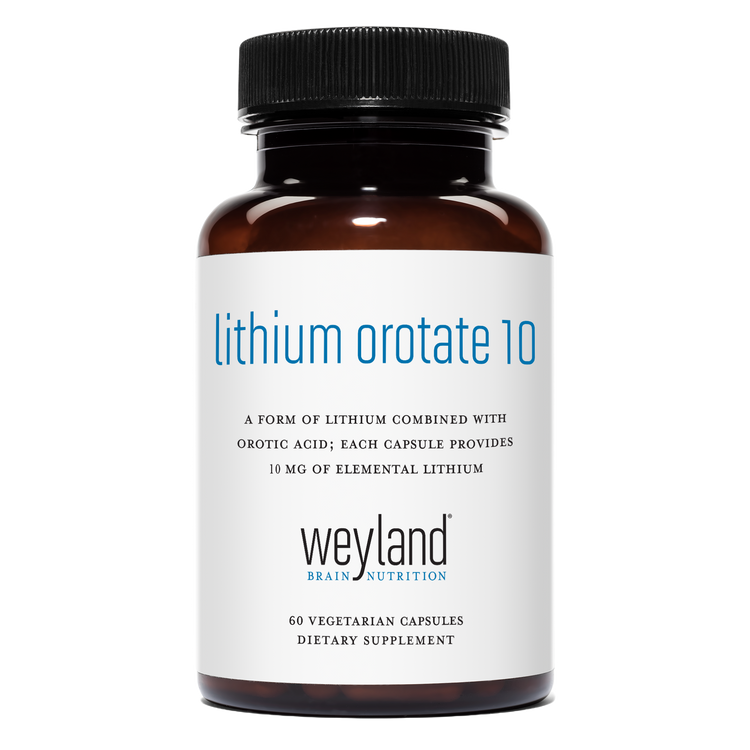
Is Low-Dose Lithium Safe?
Low-dose lithium is generally well tolerated at the small amounts found in supplements, which sit far below prescription levels. That said, it is not risk-free, and a sensible approach matters. Safety comes down to respecting the amount and knowing when to check with a doctor.
Generally Well Tolerated at Low Amounts
At the small amounts in supplements, low-dose lithium is generally well tolerated by healthy adults. These trace amounts are a tiny fraction of a prescription dose, which is a big reason the two carry such different safety profiles. Well tolerated does not mean risk-free, though, so the goal is a careful, informed start rather than a casual one.
Why It Still Deserves Respect
Low-dose lithium still deserves respect because it is biologically active, even in small amounts. That means the label is worth following closely, and more is not better. Taking extra in the hope of a bigger effect runs counter to the whole idea of a low, steady amount. Sticking to the serving on the label is the sensible move.
When to Talk to a Doctor First
Some people should talk to a doctor before trying it at all. Anyone taking prescription lithium or another prescription medication should check with a clinician first, and so should people managing a health condition. A short conversation clarifies whether a supplement fits a person's situation, something a label alone cannot do.
Who Should Be Cautious or Ask First?
A few groups should speak with a clinician before trying low-dose lithium:
-
Anyone already taking prescription lithium or another prescription medication managed by a doctor.
-
People managing a kidney or thyroid condition.
-
Anyone who is pregnant or nursing.
-
People taking any prescription medications.
-
Anyone with an existing health condition who is unsure how a supplement fits.
A clinician can weigh personal factors a label never could, and prescription lithium is never something to adjust based on an article.

What Should You Check Before Trying It?
A few checks help anyone approach low-dose lithium sensibly:
-
The elemental lithium amount per serving, printed clearly on the label.
-
Third-party testing or a Certificate of Analysis, so an outside lab has verified the contents.
-
Manufacturing in an FDA-registered, cGMP-compliant facility, which points to consistent quality control.
-
A clear ingredient list without unnecessary additives.
-
A conversation with a clinician if taking any medication or managing a health condition.
Weyland Brain Nutrition's low-dose lithium is third-party tested and made in an FDA-registered, cGMP-compliant facility, so those first checks are easy to confirm on the label.
Thinking About Trying Low-Dose Lithium?
Low-dose lithium is a trace-mineral supplement, separate from prescription lithium, and generally well tolerated at the small amounts sold over the counter. The sensible path is simple to remember: check the label, respect the dose, and talk to a clinician whenever anything about personal health is uncertain.
For readers who have done that homework and want a tested option, Weyland Brain Nutrition's low-dose lithium is clearly labeled and third-party tested, so the amount in each serving is easy to see before the first drop or capsule.
Ready to Support Your Brain Health?
Take the guesswork out of daily nutrition. Browse our full line of targeted wellness supplements designed to support your active lifestyle.
Shop the Full Collection
Frequently Asked Questions
Is low-dose lithium safe to take daily?
Low-dose lithium is generally well tolerated at the small amounts in supplements, though anyone on medication or managing a health condition should check with a clinician first.
How is low-dose lithium different from prescription lithium?
Low-dose lithium is a trace-mineral supplement measured in micrograms, while prescription lithium is a doctor-managed medication measured in hundreds of milligrams.
Do you need blood tests for low-dose lithium supplements?
Prescription lithium requires medical monitoring, so for a low-dose supplement it is best to ask a clinician what makes sense for your situation.
How much lithium is in a low-dose supplement?
A low-dose supplement holds a small, measured amount of elemental lithium, usually listed in micrograms on the label.
Can you buy lithium without a prescription?
Low-dose lithium supplements are sold over the counter, but prescription lithium requires a doctor, and a clinician should guide any supplement use.
References
-
Malhi, G. S., Bell, E., Outhred, T., & Berk, M. (2020). Lithium therapy and its interactions. Australian prescriber, 43(3), 91–93. https://doi.org/10.18773/austprescr.2020.024
-
Szklarska, D., & Rzymski, P. (2019). Is lithium a micronutrient? From biological activity and epidemiological observation to food fortification. Biological Trace Element Research, 189(1), 18–27. https://doi.org/10.1007/s12011-018-1455-2
-
Strawbridge, R., & Young, A. H. (2024). Lithium: how low can you go?. International journal of bipolar disorders, 12(1), 4. https://doi.org/10.1186/s40345-024-00325-y
Medical Disclaimer
The content on this page is for informational purposes only and is not intended as medical advice, diagnosis, or treatment. Always consult a qualified healthcare professional before making changes to your health regimen.
*These statements have not been evaluated by the Food and Drug Administration. Our products are not intended to diagnose, treat, cure, or prevent any disease.