Posted by GC Support
on August 05, 2026

Table of Contents
Is 300 mg of lithium a low dose? Three hundred milligrams sounds tiny. It fits on the tip of a finger. But with lithium, the number on its own tells you almost nothing, because the form it comes in changes everything.
People ask whether 300 mg of lithium is a low dose for one of two very different reasons. Some are looking at a prescription bottle. Others are comparing it to a small trace-mineral supplement they saw online. Those are not the same product, and mixing them up leads to real confusion.
This is where the difference matters. A 300 mg figure usually points to a prescription form of lithium, while trace-mineral lithium supplements, like the low-dose products made by Weyland Brain Nutrition, sit in a completely separate category measured in far smaller amounts. Knowing which lithium you are dealing with is the first step to understanding what "low dose" really means.
Discover Trace-Mineral Support
Looking for a wellness-focused supplement outside the prescription aisle? Explore our easily absorbed, trace-mineral lithium options.
Shop Lithium Supplements
What Does a 300 mg Lithium Dose Refer To?
A 300 mg lithium figure almost always refers to a prescription product, not a dietary supplement. That amount refers to a common prescription tablet, and it is measured and used very differently from trace-mineral supplements sold over the counter. Getting this distinction right clears up most of the confusion around the number.
A Common Prescription Tablet Strength
The 300 mg number typically describes a lithium carbonate tablet, which is a prescription medication. Lithium carbonate is the form most often written on a prescription, and 300 mg is one of its standard strengths. A doctor prescribes it, and a pharmacist fills it. That alone sets it apart from anything found on a supplement shelf, where lithium orotate and ionic lithium appear in much smaller amounts.
The Compound vs the Element
Here is the part that trips people up: 300 mg of lithium carbonate is not 300 mg of pure lithium. The tablet is a compound, meaning the lithium is bound to other elements. Only a portion of that 300 mg is actual elemental lithium, the pure mineral itself. So the number on the bottle refers to the entire compound, not the lithium inside it. That distinction becomes important later, when comparing a prescription form to naturally occurring lithium in trace amounts.

Is 300 mg a Low, Standard, or High Dose?
Whether 300 mg is low, standard, or high depends entirely on the medical context, and only a doctor can judge it. There is no single answer that fits everyone, because the right amount changes from person to person. What looks low for one situation may not be for another, which is why this question belongs in a clinic, not a comment section.
It Depends on the Prescriber's Judgment
Deciding if any prescription amount is low or high is a clinical call made by a doctor. A prescriber weighs a person's whole health picture before landing on a dose, and that picture is different for everyone. No article can see those details. That judgment stays with the doctor who knows the person and reviews the body's response over time.
Why Only a Doctor Can Say
Prescription lithium is managed with regular medical testing, which is another reason dosing questions belong with a prescriber. A doctor tracks how a person is doing and adjusts as needed, using tools no website has. Anyone taking a prescription form and wondering about the amount should bring that question straight to the doctor or pharmacist who manages it.
Third-Party Tested for Peace of Mind
You deserve to know exactly what goes into your routine. Our over-the-counter formulas are rigorously tested and clearly labeled.
View Our Products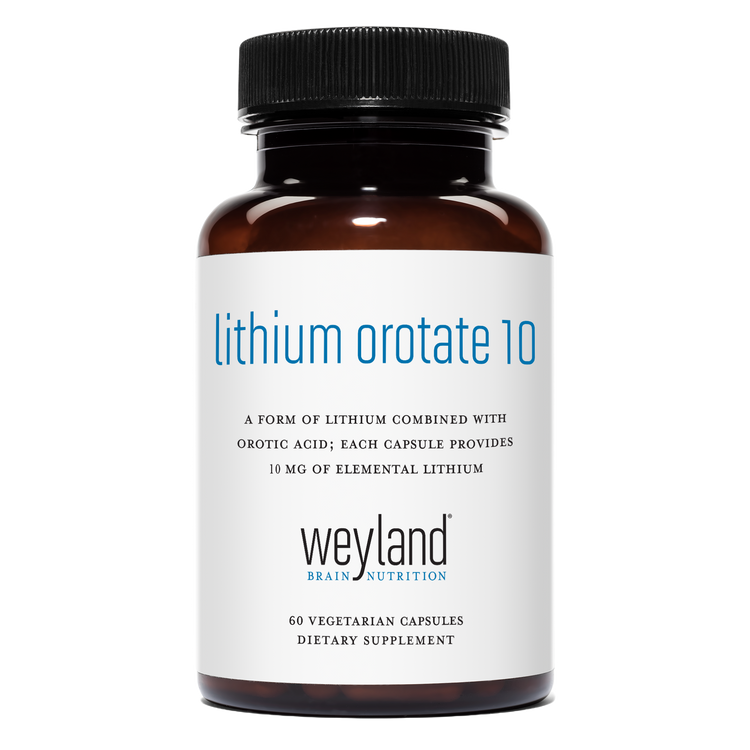
How Is Prescription Lithium Different from a Supplement?
Prescription lithium and trace-mineral lithium supplements are entirely different categories, from the amount inside to how they are used. One is a medication a doctor oversees. The other is a dietary supplement taken for general wellness. Seeing how far apart they sit makes the whole "300 mg" question easier to understand.
Milligrams vs Micrograms
The clearest difference is size. A prescription dose is measured in hundreds of milligrams, while a trace-mineral supplement is measured in micrograms, a much smaller unit. To put that in plain terms, a typical low-dose supplement serving of 500 micrograms is a tiny fraction of a single 300 mg prescription tablet. The two are not close. They differ by orders of magnitude, which is why comparing them one-to-one makes no sense.
Prescription vs Nutritional Use
The two also serve different purposes. Prescription lithium is a monitored medication that a doctor prescribes and follows closely. Low-dose lithium supplements, by contrast, are dietary products people take to support general wellness, the way they might take any trace mineral. That difference in purpose is just as real as the difference in amount.
Different Questions, Different Experts
Because they are separate categories, they lead to separate questions for separate experts. Anything about a prescription belongs with a doctor or pharmacist. General questions about a trace-mineral supplement can start with the product label and a conversation with a clinician. Matching the question to the right expert saves a lot of guesswork.

What Should You Do with a Lithium Dose Question?
Where a lithium question should go depends on what kind of lithium it is:
-
Taking prescription lithium and wondering about the dose? Ask the prescribing doctor or pharmacist, and never adjust it on your own.
-
Curious about a trace-mineral lithium supplement? Read the label and talk with a clinician before starting.
-
Comparing the two? Remember, they differ by orders of magnitude and serve completely different purposes.
-
Pregnant, nursing, or taking other medication? Speak with a clinician before starting any supplement.
One rule holds above all the rest: prescription lithium is never something to start, stop, or change based on an article.
So, Is 300 mg of Lithium a Low Dose?
In most cases, 300 mg means a prescription tablet, and whether that amount is low is a medical judgment only a doctor can make. The number by itself does not settle the question, because the person and the context decide it. The bigger takeaway is simpler and worth holding onto: prescription lithium and trace-mineral lithium supplements are two different things and should not be confused for each other.
Anyone with questions about a prescription should bring them to a doctor. For readers looking specifically at the trace-mineral category, Weyland Brain Nutrition makes low-dose lithium supplements that are third-party tested and clearly labeled, so the amount in each serving is easy to see and understand.
Ready to Support Your Brain Nutrition?
Take the guesswork out of trace minerals. Browse our full collection of brain and wellness supplements designed for your daily routine.
Shop the Collection
Frequently Asked Questions
How much elemental lithium is in a 300 mg lithium carbonate tablet?
Only part of that 300 mg is elemental lithium, since the tablet is a compound; a pharmacist or doctor can confirm the exact amount.
What is a normal dose of prescription lithium?
There is no single normal dose, because a doctor sets the amount based on each person, so this question belongs with a prescriber.
Is low-dose lithium the same as prescription lithium?
No, low-dose lithium supplements are trace-mineral products measured in micrograms, while prescription lithium is a medication measured in hundreds of milligrams.
How much lithium is in a supplement compared to a prescription?
A trace-mineral supplement holds a tiny fraction of a prescription dose, often hundreds of times less elemental lithium per serving.
Can you take lithium without a prescription?
Trace-mineral lithium supplements are sold over the counter, but prescription lithium requires a doctor, and a clinician should guide any supplement use.
References
-
Chokhawala, K. P., Lee, S., & Saadabadi, A. (2024). Lithium. In StatPearls. StatPearls Publishing. https://pubmed.ncbi.nlm.nih.gov/30085604/
-
Roxane Laboratories, Inc. (2011). Lithium carbonate tablets USP, lithium carbonate capsules USP, lithium oral solution USP [Prescribing information]. U.S. Food and Drug Administration. https://www.accessdata.fda.gov/drugsatfda_docs/label/2011/017812s028,018421s027lbl.pdf
Medical Disclaimer
The content on this page is for informational purposes only and is not intended as medical advice, diagnosis, or treatment. Always consult a qualified healthcare professional before making changes to your health regimen.
*These statements have not been evaluated by the Food and Drug Administration. Our products are not intended to diagnose, treat, cure, or prevent any disease.