Posted by GC Support
on August 19, 2026

Table of Contents
What does lithium do? The honest answer is that it depends on which lithium you mean. The same element sits inside a phone battery, on a pharmacy shelf, and in a glass of tap water, and it plays a different part in each.
That one word covering three very different things trips people up constantly. A metal, a medicine, and a mineral all share the name, and they are not interchangeable.
What follows is a plain look at what lithium does in each of those three roles, as an element, as a medication, and as a trace mineral. For readers interested in the last one, Weyland Brain Nutrition makes third-party-tested low-dose lithium, and the goal here is clarity, not a sales pitch.
Curious About Lithium as a Trace Mineral?
While lithium powers batteries and serves as medication, it's also a naturally occurring dietary mineral. Explore our low-dose trace mineral supplements to seamlessly support your daily wellness.
Shop Low-Dose Lithium
What Is Lithium?
Lithium is a single chemical element that people meet in three very different forms. It is a single substance on the periodic table, yet it shows up in industry, medicine, and the diet. Sorting those three apart is the key to understanding what lithium actually does.
A Lightweight Metallic Element
Lithium is the lightest metal on the periodic table, sitting at element number 3. It is soft, silvery, and reactive, so reactive that it does not appear on its own in nature and instead shows up bound inside minerals and dissolved in water. Those physical traits are exactly what make it useful in so many places.
Three Very Different Roles
Lithium fills three separate roles: an industrial element, a prescription medication, and a naturally occurring trace mineral. Each one uses the same atom but in a completely different way and at a completely different scale. The sections ahead take them one at a time, starting with the metal and ending with the mineral found in food and water.

What Does Lithium Do as a Chemical Element?
As a chemical element, lithium is prized in industry for its light weight and reactivity. Those properties make it valuable in power storage and manufacturing, jobs that have nothing to do with health. This is lithium as a raw material, not something people consume.
Powers Rechargeable Batteries
Lithium's biggest industrial job is powering rechargeable batteries. Its light weight and readiness to give up an electron make it ideal for the lithium-ion batteries inside phones, laptops, and electric cars. That single property, how easily it moves energy, is why lithium sits at the heart of modern electronics.
Used in Industry and Manufacturing
Lithium also shows up across manufacturing in smaller but steady ways. It goes into certain types of glass and ceramics to make them tougher, and into greases used as industrial lubricants. These uses rely on the metal's chemistry, and none of them involve taking lithium into the body.
What Does Lithium Do as a Medication?
Lithium is also a long-established prescription medication, one that doctors have used for decades. In this role, it is a carefully managed drug, prescribed and monitored by a medical professional. The details of how it is used belong with a doctor, not a general article.
A Prescription Mood Medication
As a medication, lithium is a prescription drug that a doctor prescribes and oversees. Forms such as lithium carbonate and lithium citrate are approved medications, and a healthcare professional decides whether and how they are used. What matters here is simple: this is a doctor-managed medicine, and anyone with questions about it should speak with a prescriber.
Managed Only by a Doctor
Prescription lithium is always taken under medical supervision. A doctor manages it from start to finish, with regular check-ins that only a medical professional can provide. Any question about the medication, what it is for, how it is taken, or anything else, belongs with a doctor or pharmacist, full stop.
Trust the Quality of Your Trace Minerals
Discover third-party tested, cGMP-compliant low-dose lithium supplements designed for peace of mind and crafted purely for everyday wellness.
View Our Trusted Formulas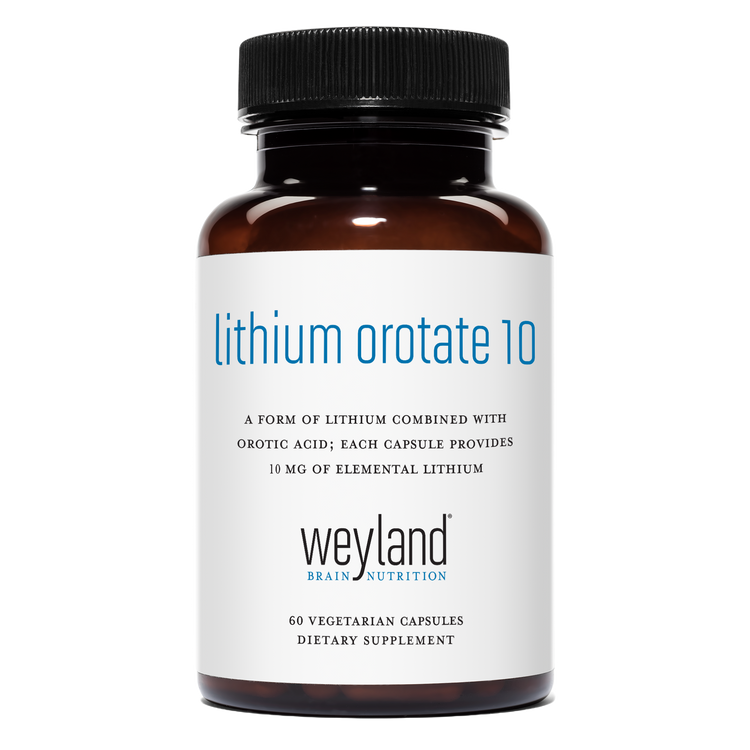
What Does Lithium Do as a Trace Mineral?
As a trace mineral, lithium occurs naturally in the diet in tiny amounts. It is part of the everyday environment, turning up in water, soil, and some foods. This is a completely different thing from the prescription drug, and the difference comes down to amount and purpose.
A Naturally Occurring Dietary Trace Mineral
Lithium is a naturally occurring trace mineral that people take in through everyday eating and drinking. It dissolves into groundwater from rock and soil, and small amounts reach the diet through drinking water and certain foods. So most people already take in trace amounts of lithium daily without ever thinking about it.
Available as a Low-Dose Supplement
Low-dose lithium is also sold as a dietary supplement, in microgram amounts far below prescription levels. Forms like lithium orotate deliver a small, measured amount of the mineral as part of a daily routine. These are dietary products taken for general wellness and are found in the supplement aisle, not the pharmacy.
A Different Category From the Medication
The trace mineral and the prescription drug are entirely different categories, and mixing them up causes real confusion. One is a small dietary amount, measured in micrograms; the other is a medication, measured in hundreds of milligrams, managed by a doctor. Same element, wildly different amount and purpose, and never meant to be treated as the same thing.

How Do the Three Forms of Lithium Compare?
The same element plays three separate roles, each at a very different scale:
-
As an element: an industrial metal used in batteries and manufacturing, not consumed for health.
-
As a medication: a prescription drug in milligram doses, prescribed and managed by a doctor.
-
As a trace mineral: small microgram amounts from diet, water, and low-dose supplements.
The gap in amount between the medication and the supplement is vast, hundreds of times over. Knowing which lithium is being discussed is the key to understanding what it does.
Which Lithium Are You Asking About?
Lithium is an element with three distinct roles: powering the batteries in everyday electronics, serving as a doctor-prescribed medication, and occurring as a trace mineral in food and water. The three are not interchangeable, and the amounts involved are worlds apart.
The takeaway is simple. Match the question to the right lithium, and remember that anything about the medication always belongs with a doctor.
For readers interested specifically in the trace-mineral form, Weyland Brain Nutrition's low-dose lithium is clearly labeled and third-party tested, so the exact amount in each serving is easy to see.
Ready to Support Your Brain Nutrition?
Take the guesswork out of finding premium trace minerals. Browse our complete line of targeted wellness supplements designed to support your active lifestyle.
Shop the Full Collection
Frequently Asked Questions
What is lithium used for?
Lithium is used as a metal in rechargeable batteries, as a doctor-prescribed medication, and as a trace mineral found in food, water, and low-dose supplements.
Is the lithium in supplements the same as prescription lithium?
It is the same element, but supplement lithium is a trace-mineral dose in micrograms, while prescription lithium is a doctor-managed medication in much larger amounts.
What does lithium do in the body?
Lithium is a naturally occurring trace mineral that people consume daily in small amounts from water and food; any questions about the prescription medication's effects belong with a doctor.
Is lithium a metal or a medicine?
Lithium is a metallic element that is also used as a prescription medicine and occurs naturally as a dietary trace mineral, so it is all three depending on the context.
Do you need a prescription for lithium?
Prescription lithium requires a doctor, while low-dose lithium supplements are sold over the counter, though a clinician should guide any supplement use.
References
-
Chokhawala, K. P., Lee, S., & Saadabadi, A. (2024). Lithium. In StatPearls. StatPearls Publishing. https://pubmed.ncbi.nlm.nih.gov/30085604/
-
Razzaque, M. S., & Wimalawansa, S. J. (2025). Minerals and Human Health: From Deficiency to Toxicity. Nutrients, 17(3), 454. https://doi.org/10.3390/nu17030454
Medical Disclaimer
The content on this page is for informational purposes only and is not intended as medical advice, diagnosis, or treatment. Always consult a qualified healthcare professional before making changes to your health regimen.
*These statements have not been evaluated by the Food and Drug Administration. Our products are not intended to diagnose, treat, cure, or prevent any disease.