Posted by GC Support
on September 25, 2026

Table of Contents
- 1. What Makes an Energy Drink Healthy?
- 2. Which Energy Drink Ingredients Should You Prioritize?
- 3. How Do Popular Energy Drink Options Stack Up?
- 4. Why Is Ingredient Quality More Important Than Marketing?
- 5. How Do You Identify Cleaner Alternatives?
- 6. Can Energy Drinks Support Mental Performance?
- 7. Is There a Healthier Way to Stay Energized?
- 8. What's the Smarter Alternative to Typical Energy Drinks?
- 9. Make the Healthiest Energy Choice
Energy drinks fill entire coolers, yet two cans on the same shelf can differ by more than 50 grams of sugar and 200 milligrams (mg) of caffeine. The healthiest energy drink keeps caffeine moderate, sugar low, and the ingredient list short enough to follow. Pick the wrong one, and you may get a pounding heart, a restless night, or a sugar habit that adds up week after week.
Weyland Brain Nutrition makes supplements for daily brain health and energy support, and the same question applies to any product you buy: what does each ingredient actually do for your body? A drink earns the word "healthy" on its label, not in its ads.
LOOK PAST THE CAN AND CHECK THE FORMULA
A healthier energy choice starts with knowing exactly how much caffeine you are getting and what comes with it. Weyland Energy Tablets offer a measured 200 mg caffeine serving with B vitamins and selected botanicals, without the sugar or artificial colors found in many canned drinks.
See the Energy Formula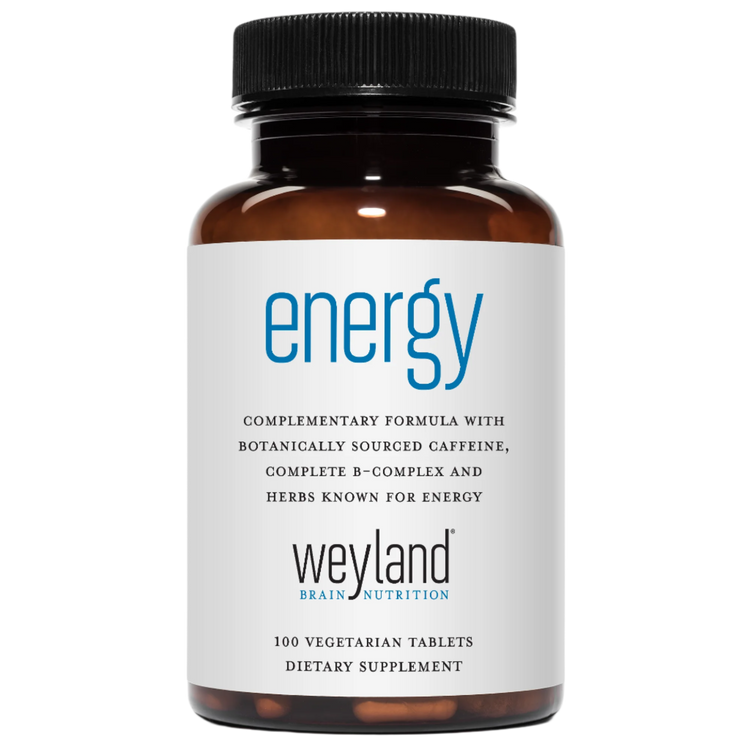
What Makes an Energy Drink Healthy?
An energy drink is healthier when it pairs a moderate dose of caffeine with little or no added sugar and few artificial additives. Those traits decide how you feel an hour later and how the habit affects you years from now. Each one shows up on the label if you know where to look.
Clean Ingredient Profile
A clean profile keeps the ingredient list short, skips artificial colors such as Red 40, and states the caffeine content in milligrams. The U.S. Food and Drug Administration (FDA) doesn't require drinks to list total caffeine. Brands that print the number make side-by-side comparison much easier.
Balanced Energy Release
Balanced energy depends mostly on the dose. Caffeine from coffee beans, guarana, or yerba mate reaches the bloodstream at a similar pace, and human studies offer little support for claims that naturally sourced caffeine releases more slowly. A moderate caffeine amount, like the 30 to 50 mg in a cup of green tea or the roughly 95 mg in 8 ounces of black coffee, gives a gentler lift than a 300 mg can.
No Harsh Crash
A harsh crash usually follows a big dose of sugar, caffeine, or both. Sugar spikes blood sugar fast, and the dip afterward can leave you tired and hungry. Caffeine works by blocking the brain's sleep signals, which return once it fades. Low-sugar drinks and smaller caffeine doses soften that drop, although no product can promise to erase it.

Which Energy Drink Ingredients Should You Prioritize?
The healthiest energy drinks share certain science-backed components:
-
Natural caffeine sources (green tea, guarana, yerba mate)
-
Amino acids like L-theanine, which may help support focus
-
Electrolytes for hydration balance
-
B vitamins for energy metabolism
Natural caffeine acts exactly like lab-made caffeine in the body, so total caffeine matters more than the caffeine source. Green tea adds L-theanine, an amino acid that may enhance focus alongside caffeine, but higher doses of concentrated green tea extract have been linked to rare liver injury. B vitamins support energy production from the food you eat. Electrolytes matter most after heavy sweating, and coconut water supplies them naturally along with some sugar.
How Do Popular Energy Drink Options Stack Up?
Most cans on the shelf fit one of three groups: sugary classics, functional formulas, and clean label drinks. Each trades taste, price, and health a little differently. The total sugars and caffeine lines on the label show which group you're holding.
Sugary Classics Carry the Most Sugar and Calories
Traditional energy drinks lean on sugar for flavor. One 16-ounce can of a leading brand lists 54 grams (g) of added sugar, more than the 50 g Daily Value for an entire day. Those calories count toward your daily calorie intake, but a drink rarely fills you up the way food does. Most major brands now sell sugar-free options, too.
Functional Formulas Add Extras of Mixed Value
Functional energy drinks promise added benefits beyond caffeine. Some include branched-chain amino acids (BCAAs), which athletes often use for muscle recovery. Many list added vitamins C, B6, and B12 at 100% to 500% of the Daily Value.
Extra vitamins rarely boost energy in people who already eat a balanced diet, and BCAAs have little evidence as an energy source. Many of these cans also carry high caffeine, sometimes 300 mg, and a few add other stimulants on top of it.
Clean Label Drinks Often Come Out Ahead
Clean label drinks keep formulas simple. Many are zero sugar and sweetened with stevia leaf extract, which has zero calories. Others use a splash of organic agave nectar, which still counts as added sugar. Some are brewed from organic green tea or yerba mate, with flavors like orange ginger, cherry lime, and tropical punch, and a few use real ginger root. For many shoppers, the best energy drink for health goals ends up being the plainest one in the cooler.
SWAP THE SUGAR FOR A CLEARER CAFFEINE DOSE
Some energy drinks hide a lot behind bright packaging, from added sugar to oversized caffeine servings. Weyland Energy Tablets make the key number easy to track with 200 mg of caffeine per tablet, plus L-theanine, B vitamins, and selected herbs for daily energy support.
Explore a Can-Free Option
Why Is Ingredient Quality More Important Than Marketing?
Ingredient quality decides what a drink does in your body, while marketing only shapes what you expect it to do. Terms like "clean" and "performance" have no legal definition on a drink label, and the FDA has never formally defined "natural" for foods. Those ingredients can affect your long-term health, thinking, and focus on an ordinary day.
Ingredients Shape Your Long-Term Health
Daily choices shape overall health more than any single can. When consumed regularly, sugary drinks add empty calories, and heavy caffeine intake can raise blood pressure and heart rate in some people. Artificial sweeteners cut the sugar, though the World Health Organization (WHO) advised against relying on them for weight control in 2023.
The American Academy of Pediatrics (AAP) says children and teens should skip energy drinks entirely. The American College of Obstetricians and Gynecologists (ACOG) advises keeping caffeine under 200 mg a day during pregnancy. People who drink energy drinks daily and have a heart condition should check with a doctor.
Ingredients Decide How Well You Focus
Caffeine can sharpen reaction time and attention, which is why caffeinated beverages are a staple in offices and dorm rooms. More isn't better, though. Above about 200 mg at once, some people get shaky or anxious, and that works against improving focus.
Ingredients Affect Your Sleep and Next-Day Clarity
Clear thinking on an ordinary day depends on sleep as much as caffeine. Caffeine late in the day can negatively affect sleep. In a 2013 study in the Journal of Clinical Sleep Medicine, 400 mg taken six hours before bed still cut total sleep by more than an hour. A short night then drags down focus the next morning, which often sends people back for another can.
How Do You Identify Cleaner Alternatives?
Spotting a cleaner option means looking past the front of the can and checking the label for these basics:
-
Botanically sourced active compounds
-
Sensible amounts of essential vitamins
-
No artificial dyes or heavy sweeteners
Check the total sugars, added sugar, and caffeine lines first. A drink that leaves out the caffeine amount hasn't earned a spot in your cart.

Can Energy Drinks Support Mental Performance?
Energy drinks can deliver a quick lift in alertness, and nearly all of it comes from the caffeine. How long that lift lasts, and whether it helps you think, depends on dose, timing, and sleep. A short burst works very differently from all-day clarity.
Energy Drinks Can Sharpen Focus in the Short Term
A moderate dose usually kicks in within about 45 minutes and can keep you sharper for a few hours. In most healthy adults, blood caffeine levels drop by about half every five hours, though that pace varies a lot. One drink can make sense before a demanding task, as long as bedtime is far off.
Energy Drinks Rarely Support All-Day Clarity
Energy drinks struggle to keep you clear all day. Repeated cans build tolerance, and large amounts of caffeine can cause jitters and digestive issues such as an upset stomach. The focus you gain in the morning can turn into restlessness by late afternoon.
Modest Caffeine Supports Focus Better Than Big Doses
Focus holds up better when caffeine comes in modest amounts with food, water, and enough rest. Green tea fits well because it pairs lower caffeine with natural L-theanine. Early research on that pairing points to better attention on some tasks, though most studies are small.

Is There a Healthier Way to Stay Energized?
The healthiest energy comes from consistent habits that cover your body's basic needs before caffeine enters the picture. Instead of relying only on energy drinks, consider these lifestyle and nutrition strategies:
-
Prioritize consistent sleep quality
-
Stay hydrated throughout the day
-
Choose nutrient-dense snacks
-
Use supplements with ingredients studied in peer-reviewed research
Good snacks pair protein, fiber, and healthy fats, like apple slices with peanut butter or yogurt with seeds. A balanced diet supplies the essential nutrients your body uses to make energy, so caffeine can stay a small part of your day.
What's the Smarter Alternative to Typical Energy Drinks?
For many adults, the smarter alternative is a known caffeine dose in a form that fits health goals, such as black coffee, plain tea, or a supplement tablet. Each lets you control total caffeine without extra sugar or carbonation. Supplements deserve a closer look before you switch.
Brain Nutrition Supplements
Brain nutrition supplements are capsules or tablets that combine caffeine or other active ingredients with vitamins and herbs. Most have little or no sugar content and no carbonation. The caffeine still counts, so a 200 mg tablet deserves the same respect as a 200 mg can.
Thoughtfully Researched Formulas
A thoughtfully researched formula names its caffeine source and dose and uses ingredients with published research. Panax ginseng, rhodiola, and ashwagandha have been studied for fatigue and stress, with mixed results. Herbs can also interact with medicines. Panax ginseng may interfere with blood thinners like warfarin, so anyone taking prescriptions should get professional medical advice before starting.
Weyland's Science-First Approach
Weyland Brain Nutrition makes its products in the USA in an FDA-registered facility that follows current Good Manufacturing Practice (cGMP), and it third-party tests its products for quality. Weyland Energy Tablets print the caffeine source and amount on the label: 200 mg per tablet from guarana seed extract.
Make the Healthiest Energy Choice
The healthiest energy drink keeps caffeine moderate, sugar low, and artificial colors and sweeteners off the label. If you want energy without the can, Weyland Energy Tablets pair 200 mg of botanically sourced caffeine from guarana seed extract with a complete B-vitamin complex that helps support normal energy metabolism, plus L-theanine, rhodiola rosea, panax ginseng, and ashwagandha.
Count every caffeine source, keep the tablets away from kids, and talk with a doctor first if you're pregnant or take medicines such as blood thinners. Read labels like a skeptic, and choose Weyland Energy Tablets for a known caffeine dose without the can.
These statements have not been evaluated by the Food and Drug Administration. This product is not intended to diagnose, treat, cure, or prevent any disease.
MAKE YOUR ENERGY ROUTINE EASIER TO READ
The smartest energy choice is one you can understand at a glance. Weyland Energy Tablets combine a clearly listed caffeine amount with B vitamins and botanicals in a simple tablet format designed to support everyday energy and mental performance.
Shop Weyland Energy Tablets
References
-
American College of Obstetricians and Gynecologists. (2010). ACOG Committee Opinion No. 462: Moderate caffeine consumption during pregnancy. Obstetrics & Gynecology, 116(2, Pt. 1), 467–468. https://doi.org/10.1097/AOG.0b013e3181eeb2a1
-
Committee on Nutrition and the Council on Sports Medicine and Fitness. (2011). Sports drinks and energy drinks for children and adolescents: Are they appropriate? Pediatrics, 127(6), 1182–1189. https://doi.org/10.1542/peds.2011-0965
-
Drake, C., Roehrs, T., Shambroom, J., & Roth, T. (2013). Caffeine effects on sleep taken 0, 3, or 6 hours before going to bed. Journal of Clinical Sleep Medicine, 9(11), 1195–1200. https://doi.org/10.5664/jcsm.3170
-
Gelski, J. (2026, August 31). Caffeine labeling – FDA is considering its options. Food Business News. https://www.foodbusinessnews.net/articles/30924-caffeine-labeling-fda-is-considering-its-options
-
Neinast, M., Murashige, D., & Arany, Z. (2019). Branched chain amino acids. Annual Review of Physiology, 81, 139–164. https://doi.org/10.1146/annurev-physiol-020518-114455
-
U.S. Food and Drug Administration. (2025, April 22). HHS, FDA to phase out petroleum-based synthetic dyes in nation’s food supply. https://www.fda.gov/news-events/press-announcements/hhs-fda-phase-out-petroleum-based-synthetic-dyes-nations-food-supply
-
World Health Organization. (2023, May 15). WHO advises not to use non-sugar sweeteners for weight control in newly released guideline. https://www.who.int/news/item/15-05-2023-who-advises-not-to-use-non-sugar-sweeteners-for-weight-control-in-newly-released-guideline
Medical Disclaimer
The content on this page is for informational purposes only and is not intended as medical advice, diagnosis, or treatment. Always consult a qualified healthcare professional before making changes to your health regimen.
*These statements have not been evaluated by the Food and Drug Administration. Our products are not intended to diagnose, treat, cure, or prevent any disease.