Posted by GC Support
on September 28, 2026

Table of Contents
- 1. Why Choose Sugar-Free Energy Drinks?
- 2. What Sweeteners Replace Sugar in Energy Drinks?
- 3. Do Sugar-Free Options Still Deliver Energy?
- 4. How Do Popular Sugar-Free Energy Drinks Compare?
- 5. What Should You Watch Out for in Sugar-Free Energy Drinks?
- 6. Are Energy Tablets a Smarter Alternative to Sugar-Free Drinks?
- 7. Can Sugar-Free Energy Support Mental Performance?
- 8. Stay Sharp without the Sugar
A sugar-free can often holds as much caffeine as the regular version, and sometimes much more. That surprises many shoppers who pick sugar-free energy drinks thinking they're the gentler option. Cutting sugar removes empty calories, but it swaps in sweeteners, keeps the caffeine, and can add a long list of other ingredients.
Weyland Brain Nutrition makes supplements for brain health and daily energy support, and the best way to judge any energy product is by its ingredient list, not its ads. Sugar-free is a good start, but the sweetener, caffeine dose, and extras determine whether a drink is worth buying.
SKIP THE SUGAR AND KNOW YOUR CAFFEINE DOSE
Sugar-free drinks remove added sugar, but they can still come with sweeteners, acids, and a surprising amount of caffeine. Weyland Energy Tablets offer a clearly measured 200 mg caffeine serving without the sweeteners or carbonation found in many cans.
Explore Weyland Energy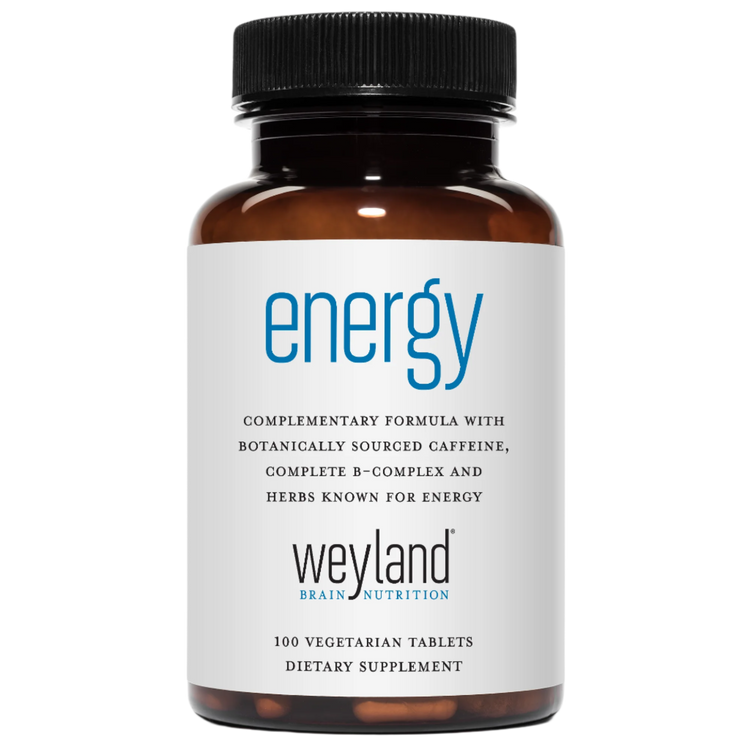
Why Choose Sugar-Free Energy Drinks?
People choose sugar-free energy drinks mainly to cut calories and avoid the sugar rush of a regular can. The trade-off is that sweeteners replace sugar, and those sweeteners raise new questions. Here's how the main benefits hold up.
Reduced Calorie Load
Calories are the clearest win. A standard 8.4-ounce regular energy drink has about 110 calories and 27 grams (g) of sugar, while the same size sugar-free version has about 10 calories and no added sugar. Switching one daily can to sugar-free saves about 700 calories a week.
Less Blood Sugar Impact
Without sugar, a can won't cause the fast rise in blood sugar that regular energy drinks do. Sweeteners aren't a free pass, though. A 2022 study in the journal Cell found that sucralose and saccharin changed gut bacteria and blood sugar responses in some healthy adults.
Cleaner Energy Appeal
Much of the pull is image. "Sugar-free" sounds cleaner, but under U.S. Food and Drug Administration (FDA) rules, the label only means a serving has less than 0.5 g of sugar. The same can may still contain artificial colors, acids, preservatives, and a large dose of caffeine.

What Sweeteners Replace Sugar in Energy Drinks?
Sugar-free energy drinks often rely on alternative sweeteners and functional compounds:
-
Artificial sweeteners (sucralose, acesulfame potassium, aspartame)
-
Natural non-nutritive sweeteners (stevia, monk fruit)
-
Sugar alcohols (erythritol)
-
Flavor enhancers without added calories
Each sweetener works a little differently in the body and on your tongue:
| Sweetener | Where It Comes From | Sweetness vs. Sugar | Worth Knowing |
|---|---|---|---|
| Sucralose | Made from sugar in a lab | About 600 times | Studied for effects on gut bacteria |
| Acesulfame potassium (Ace-K) | Made in a lab | About 200 times | Often paired with other sweeteners |
| Aspartame | Made in a lab | About 200 times | Contains phenylalanine |
| Stevia leaf extract | Leaves of a plant native to South America | 200 to 400 times | Can leave a hint of bitterness |
| Monk fruit | Small melon grown in southern China | 100 to 250 times | Often blended with erythritol |
| Erythritol | Sugar alcohol made by fermentation | About 70% as sweet | Large amounts can upset the stomach |
All of these are cleared for use in U.S. foods, and none adds meaningful calories. The open questions are about long-term effects. In 2023, a World Health Organization (WHO) cancer agency labeled aspartame "possibly carcinogenic," while a separate WHO expert group kept its daily safety limit unchanged and the FDA disagreed with the label. That same year, a study tied high blood levels of erythritol to a higher risk of heart attack and stroke, though it showed a link rather than proof.
Do Sugar-Free Options Still Deliver Energy?
Sugar-free options deliver a similar energy boost because most of the lift comes from caffeine. Sugar adds calories, but caffeine is what makes you feel alert. Amino acids and vitamins play smaller supporting roles.
Caffeine Delivers Most of the Energy Boost
Many brands use lab-made caffeine, while others list guarana, green coffee beans, or tea. The body handles all of them the same way because the caffeine molecule is identical. Sugar-free cans often hold a lot of it. A standard 8.4-ounce can often has about 80 milligrams (mg), many 16-ounce zero-sugar cans have about 150 mg, and some fitness drinks reach 300 mg.
Amino Acids Add Only a Small Assist
Two amino acids show up most often. Taurine appears in many popular brands, but research hasn't shown that it adds much alertness on its own. L-theanine, found in tea, may help focus when paired with caffeine, based on a handful of small studies.
B Vitamins Rarely Add a Noticeable Lift
B vitamins help your body turn food into usable energy, which is why nearly every can lists them. Many sugar-free cans, for example, add vitamins B3, B5, B6, and B12. Most people already get enough from food, so the extra amounts rarely add a noticeable lift.
WANT ENERGY WITHOUT THE SWEETENERS?
A sugar-free label does not mean an ingredient-free formula. If you would rather skip sucralose, stevia, erythritol, and carbonation, Weyland Energy Tablets provide a simple tablet format with a clearly listed caffeine amount plus B vitamins, L-theanine, and selected botanicals.
See the Tablet Formula
How Do Popular Sugar-Free Energy Drinks Compare?
Popular sugar-free energy drinks mostly differ by sweetener, caffeine dose, and extras. Taste-test videos can tell you how a drink tastes, but only the label tells you what it does. Most brands fall into three broad styles.
Artificial Sweetener Drinks Taste Closest to Sugar
The biggest brands mostly use artificial sweeteners, since a tiny amount goes a long way and the flavor comes close to sugar. A common blend pairs aspartame with acesulfame potassium. Drinks with aspartame also carry a phenylalanine warning for people with phenylketonuria (PKU), a rare genetic condition.
Natural Sweetener Drinks Taste Less Like Sugar
Brands that use stevia or monk fruit market themselves as more natural, and these sweeteners do come from plants. Many people notice a hint of bitterness or a licorice note, so brands often blend them with erythritol to round out the flavor. That means a "natural" can may still contain a sugar alcohol that can cause bloating in large amounts.
Functional Clean Label Drinks Offer the Shortest Ingredient Lists
Functional clean label drinks aim for short ingredient lists, no artificial colors, and plant-based caffeine. Many add extras like electrolytes or L-theanine. Some sweeten lightly or not at all, and unsweetened options can take some getting used to.

What Should You Watch Out for in Sugar-Free Energy Drinks?
Three warning signs matter most on a sugar-free label: stacked additives, very high caffeine, and missing details. Look for these red flags:
-
Excessive artificial additives
-
Overly high caffeine levels
-
Lack of transparency in labeling
In 2025, the FDA asked food makers to remove most petroleum-based dyes, including Red 40, by the end of 2026. Caffeine above 200 mg in one can exceeds the single dose European food safety experts consider safe for healthy adults.
The FDA also doesn't require drinks to list caffeine, so a can without a number is worth skipping. Check the can size too, since a 16-ounce can holds nearly twice as much as an 8.4-ounce one. Read these lines before a variety pack lands in your cart.
Are Energy Tablets a Smarter Alternative to Sugar-Free Drinks?
Energy tablets can be a smarter fit for people who want caffeine without any sweeteners, since a tablet doesn't need them. The trade-off is flexibility, because you can't sip a tablet slowly over an hour the way you can a can. Format, ingredients, and research all matter.
Tablets Travel Easily and Skip Sweeteners
A tablet fits in a bag or a desk drawer at work and doesn't need a fridge. It skips carbonation, acids, and sweeteners entirely. Take it with a glass of water, since a tablet won't count toward your fluids the way a drink does.
Tablets Can Pack More Caffeine Than Many Sugar-Free Cans
A balanced tablet pairs a clearly listed caffeine dose with nutrients that make sense next to it. Weyland Energy Tablets, for example, combine 200 mg of caffeine from guarana seed extract with a full set of B vitamins, vitamin C, and L-theanine. That caffeine dose equals about two and a half standard 8.4-ounce cans, so one tablet is plenty for most people.
Tablets with Herbs Call for a Safety Check
A science-informed formula uses ingredients with published research and names its caffeine source. Weyland's formula includes rhodiola rosea, panax ginseng, and ashwagandha, traditional herbs that researchers have studied for stress and fatigue, with mixed results so far. Herbs can interact with medicines, and Panax ginseng may affect blood thinners. Talk with a doctor first if you take prescriptions or are pregnant.

Can Sugar-Free Energy Support Mental Performance?
Sugar-free energy can sharpen alertness and focus for a few hours, and caffeine does nearly all of that work. Removing sugar helps some people avoid a later-day slump. How long the benefit lasts depends on the dose and how you take it.
Sugar-Free Energy Sharpens Alertness within an Hour
Most people feel caffeine within 30 to 60 minutes. A small dose often does the job, since the 80 mg in a standard 8.4-ounce can is about the same as a cup of home-brewed coffee. Starting small also shows you how your body and heart rate respond before you try anything stronger.
Sugar-Free Energy Avoids the Sugar Dip but Still Fades
Staying sharp for hours is harder. Cutting sugar removes the dip that can follow a sugar spike, but caffeine still fades, and daily use builds tolerance. Sipping one can slowly over an hour spreads out the dose instead of delivering it all at once.
Sugar-Free Energy Works Best in Moderate, Well-Timed Doses
Better focus usually comes from pairing a moderate caffeine dose with water and a protein-rich snack. Finish your caffeine early in the day, since it can disrupt sleep many hours later. Save caffeine for when you need it most, rather than making it an all-day habit.
Stay Sharp without the Sugar
Sugar-free energy drinks cut calories and added sugar, but they still carry caffeine, sweeteners, and sometimes dyes, so check the label before you buy. If you'd rather skip sweeteners altogether, Weyland Energy Tablets deliver 200 mg of botanically sourced caffeine from guarana seed extract, a complete B-vitamin complex that helps support normal energy metabolism, and herbs like rhodiola rosea, panax ginseng, and ashwagandha.
One tablet holds more caffeine than two small cans, so count every source, keep it away from kids, and ask a doctor first if you're pregnant or take medications. Try Weyland Energy Tablets for a sugar-free lift with no added sugar.
These statements have not been evaluated by the Food and Drug Administration. This product is not intended to diagnose, treat, cure, or prevent any disease.
STAY SHARP WITHOUT REACHING FOR ANOTHER CAN
If a measured caffeine dose fits your routine, Weyland Energy Tablets offer a can-free option with 200 mg of caffeine from guarana seed extract, a complete B-vitamin complex, L-theanine, and selected herbs for everyday energy support.
Shop Weyland Energy Tablets
Frequently Asked Questions
Are sugar-free energy drinks healthier than regular ones?
Sugar-free energy drinks usually have far fewer calories and no added sugar, which makes them a better pick for most people, but they carry the same caffeine and use sweeteners with some open long-term questions.
Do sugar-free energy drinks cause crashes?
Sugar-free energy drinks skip the sugar crash, but caffeine can still leave you tired once it wears off, especially after a large dose.
What sweeteners are used in sugar-free energy drinks?
Most sugar-free energy drinks use sucralose, acesulfame potassium, or aspartame, while some use stevia, monk fruit, or erythritol.
Can sugar-free energy drinks help with focus?
The caffeine in sugar-free energy drinks can sharpen focus and alertness for a few hours, and amino acids like L-theanine may add a small extra benefit.
Are tablets better than sugar-free energy drinks?
Energy tablets suit people who want a set caffeine dose with no sweeteners or carbonation, while drinks suit people who like to sip slowly and want the added water.
References
-
Suez, J., Cohen, Y., Valdés-Mas, R., Mor, U., Dori-Bachash, M., Federici, S., Zmora, N., Leshem, A., Heinemann, M., Linevsky, R., Zur, M., Ben-Zeev Brik, R., Bukimer, A., Eliyahu-Miller, S., Metz, A., Fischbein, R., Sharov, O., Malitsky, S., Itkin, M., . . . Elinav, E. (2022). Personalized microbiome-driven effects of non-nutritive sweeteners on human glucose tolerance. Cell, 185(18), 3307–3328.e19. https://doi.org/10.1016/j.cell.2022.07.016
-
U.S. Food and Drug Administration. (2007, September). Guidance for industry and FDA: Dear manufacturer letter regarding sugar free claims. https://www.fda.gov/regulatory-information/search-fda-guidance-documents/guidance-industry-and-fda-dear-manufacturer-letter-regarding-sugar-free-claims
-
U.S. Food and Drug Administration. (2025, February 27). Aspartame and other sweeteners in food. https://www.fda.gov/food/food-additives-petitions/aspartame-and-other-sweeteners-food
-
U.S. Food and Drug Administration. (2025, April 22). HHS, FDA to phase out petroleum-based synthetic dyes in nation’s food supply. https://www.fda.gov/news-events/press-announcements/hhs-fda-phase-out-petroleum-based-synthetic-dyes-nations-food-supply
-
World Health Organization. (2023, July 14). Aspartame hazard and risk assessment results released. https://www.who.int/news/item/14-07-2023-aspartame-hazard-and-risk-assessment-results-released
Medical Disclaimer
The content on this page is for informational purposes only and is not intended as medical advice, diagnosis, or treatment. Always consult a qualified healthcare professional before making changes to your health regimen.
*These statements have not been evaluated by the Food and Drug Administration. Our products are not intended to diagnose, treat, cure, or prevent any disease.