Posted by Dr. James Pendleton, ND, Chief Science Officer
on April 06, 2026

Low-dose lithium orotate is studied for its potential role in supporting mood, but evidence in depression is preliminary and not clinically established. It is a dietary supplement, not a substitute for evaluation, prescription medication, or therapy. Anyone experiencing depressive symptoms should consult a licensed provider. *These statements have not been evaluated by the FDA. This product is not intended to diagnose, treat, cure, or prevent any disease.*
Table of Contents
- 1. What Is Lithium Orotate?
- 2. Why Do People Connect Lithium Orotate With Depression?
- 3. Can Lithium Orotate Help With Depression?
- 4. How Is Lithium Orotate Different From Prescription Lithium?
- 5. What Does Current Research Say About Lithium and Depression?
- 6. What Are the Possible Risks and Side Effects of Lithium Orotate?
- 7. Who Should Be Careful With Lithium Orotate?
- 8. What Should You Know About Lithium Orotate Dosage?
- 9. What Are the Warning Signs That Depression Needs Professional Support?
- 10. How Can You Evaluate Online Claims About Lithium Orotate and Depression?
- 11. What Questions Should You Ask Before Trying Lithium Orotate?
- 12. When Might a Reader Look at Broader Mood Support Strategies Instead?
- 13. Looking for a More Informed Way to Compare Lithium Orotate Options?
Does this supplement actually help, or is it just another hollow internet promise? People are actively searching for the lithium orotate depression link because they want genuine relief. We know lithium has a deep history in medicine. But over-the-counter formulas are entirely different from the heavy-duty prescription versions.
Before you try it, you really need to know what this supplement actually does. Understanding the gap between mood support claims and current evidence helps set realistic expectations. Keep in mind that clinical depression is a serious condition. Dietary supplements cannot replace proper professional healthcare. Getting the facts straight is the best way to protect mental health and safely explore a potentially accessible supplement.
Support Your Brain Health
Explore Weyland’s Lithium Orotate Options
If you are learning how lithium orotate compares to prescription lithium, browse Weyland’s collection to review available formats and product details in one place.
Shop the Collection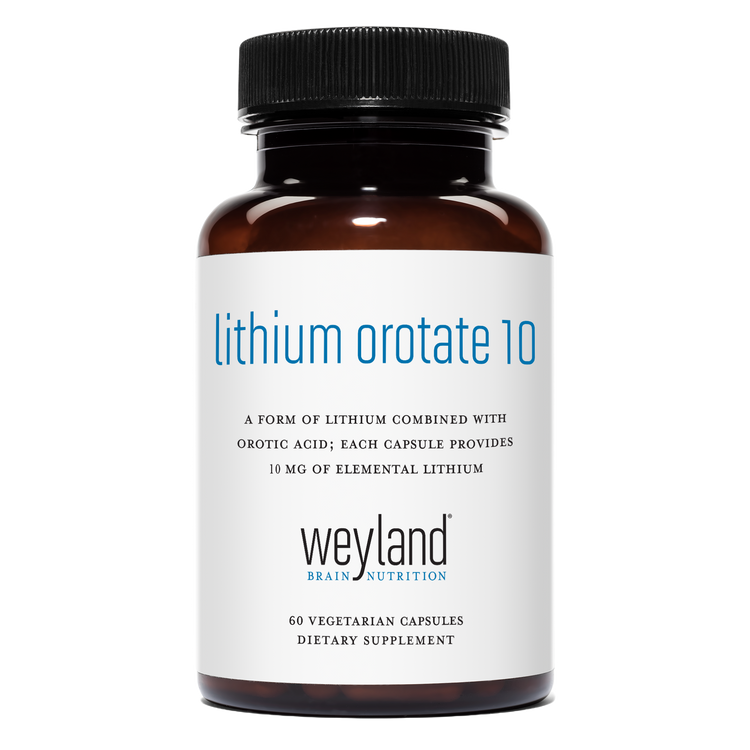
What Is Lithium Orotate?
Lithium orotate is simply a dietary supplement that binds elemental lithium with orotic acid. Manufacturers use this specific pairing to create a stable lithium supplement you can take by mouth.
This product is worlds apart from the intense prescription formulas used in hospitals or clinics. Doctors prescribe those heavy, medical-grade forms to treat serious conditions like bipolar disorder and major depressive episodes. Over-the-counter options provide much lower doses of the mineral. They also bypass the strict approval process required for pharmaceutical drugs. Instead, people generally buy these low-dose supplements to support everyday brain health and normal cognitive function.
Why Do People Connect Lithium Orotate With Depression?
Many of us occasionally struggle with emotions. That naturally drives people to look for ways to manage low mood and find a better sense of balance. Much of this curiosity comes directly from the long track record of lithium treatment in modern psychiatry.
Medical professionals have successfully used targeted lithium drugs for decades. They rely on them to calm severe mood swings and help patients through bipolar depression. Given this history, supplement brands often imply that their products can do the same. They suggest that taking lower doses might build stress resilience or help lift stubborn brain fog. However, you should know that the clinical evidence for these over-the-counter products is incredibly limited compared to the mountains of data supporting formal medical care.
Can Lithium Orotate Help With Depression?
Some people feel that taking lithium orotate helps support their daily mood. Yet researchers have not proven it to be a valid treatment for clinical depression.
Prescription lithium definitely has a recognized place in medicine. Doctors use it for highly specific mood disorders, which sometimes include cases of depression with mixed features. On the flip side, the evidence supporting retail lithium orotate supplements is simply not strong enough to back up any major medical claims. The FDA strictly requires companies to say these products “may support mood” rather than claiming to cure a disease. If you are dealing with real depressive symptoms, your safest bet is always talking directly to a qualified health professional.

How Is Lithium Orotate Different From Prescription Lithium?
These two items differ drastically in chemical makeup, strength, and overall purpose. Grasping this difference is crucial for safety. You should never treat a potentially accessible supplement as a direct swap for a necessary prescription drug.
Is Lithium Orotate the Same as Lithium Carbonate?
No, they are completely different. Lithium carbonate is a tightly controlled prescription drug that requires doctors to constantly monitor a patient’s blood levels. Lithium orotate is just an everyday supplement offering a tiny fraction of that mineral. You cannot safely interchange these two formats in any kind of clinical practice.
Why Does the Difference Matter for Readers?
When you pick up a supplement, safety expectations are understandably different than when you take a prescription. Heavy-duty medications demand strict medical supervision to prevent organ toxicity, which is why doctors mandate a regular blood test. Supplements do not require that level of tracking. Because they are sold over the counter, the large-scale, randomized controlled trials required for pharmaceutical drugs are usually absent.
What Does Current Research Say About Lithium and Depression?
Modern science confidently backs the psychiatric use of heavy lithium for severe conditions like bipolar disorder and stopping suicidal thoughts. But the data on store-bought versions is still very much in its infancy.
Much of the current interest stems from epidemiological observations. Researchers found that communities with naturally occurring trace amounts of lithium in their drinking water often reported better public mental health. Publications like J Psychiatry, Br J Psychiatry, and Biol Trace Elem Res have all noted links between these trace amounts and lower suicide rates.
There is also growing interest in low-dose lithium supplementation for aging brains. Early proof-of-concept study results from institutions such as King’s College London and the Psychiatry Research Trust highlight some fascinating potential benefits. They suggest the mineral might support brain resilience and cognitive health in the context of Alzheimer’s disease. Even so, this early science does not guarantee that swallowing an over-the-counter pill will successfully reverse or stop cognitive decline.
What Are the Possible Risks and Side Effects of Lithium Orotate?
Just because you can buy something without a doctor’s note does not mean it is perfectly harmless. Any pill that carries biological activity can trigger an unexpected physical reaction.
Users sometimes report mild stomach aches, unexpected changes in sleep quality, or sudden bouts of anxiety. Paying attention to your body is important here. Over time, some people develop a tolerance or notice strange shifts in the natural circadian rhythm. Taking higher doses than the bottle recommends will drastically increase your risk of a bad reaction.
Compare Before You Choose
Find the Product Format That Fits Your Routine
Different lithium orotate options may suit different preferences. Review Weyland’s product lineup to compare formats, strengths, and details before deciding what to explore further.
Compare Products
Who Should Be Careful With Lithium Orotate?
Certain groups of people are much more likely to experience serious side effects. Pre-existing health issues and daily medications complicate things very quickly. You have to put basic safety ahead of a sudden desire to improve your mood.
-
People with kidney or thyroid concerns: Poor kidney function can cause this mineral to build up to toxic levels. It can also disrupt normal thyroid hormone production and lead to other conditions.
-
Individuals taking other medicines: Mixing this product with other supplements or prescriptions can change how the body processes daily medications. Always consult a pharmacist before combining pills.
-
Those who need a doctor’s guidance first: See a doctor if you have been diagnosed with depression or worsening symptoms. Pregnant women and anyone taking mental health medications need medical approval, as health organizations warn that lithium use requires careful monitoring.
What Should You Know About Lithium Orotate Dosage?
You always need to stick to the recommended dose printed on the bottle. There is zero established medical dosage for treating depression with an over-the-counter supplement.
People often ask how much to take for cognitive health or basic memory support. But trying to self-treat a real mental hurdle is dangerous. Even though these bottles contain much lower doses than hospital drugs, risks remain. You really need professional advice to figure out if a certain type of low-dose lithium is actually right for your body.

What Are the Warning Signs That Depression Needs Professional Support?
If you feel constantly weighed down by sadness or have lost interest in your favorite hobbies, you likely need professional help. Watch out for sudden, dramatic changes in sleep patterns or appetite.
If you find yourself losing normal stress resilience and cannot handle daily tasks, it is time to call a doctor. A retail supplement cannot fix a severe depressive crash. Ignoring these red flags usually just makes the situation harder to handle.
How Can You Evaluate Online Claims About Lithium Orotate and Depression?
Be incredibly skeptical of websites promising a quick “cure” or immediate results. Many blogs rely on unverified stories from the field of functional psychiatry rather than on solid clinical data.
You also have to watch out for sneaky marketing. Some brands try to blur the line between basic food fortification and serious medicine. Good, honest information will clearly separate hospital-grade research from retail supplement marketing. It will also tell you the truth about common internet myths, like the idea of a widespread lithium deficiency in the general public.
What Questions Should You Ask Before Trying Lithium Orotate?
Take a hard look at your medical chart and think about your overall expectations. You need to ask yourself a few honest questions to ensure this is a safe choice:
-
Are you looking for a little daily support, or are you secretly trying to treat a diagnosed illness on your own?
-
Do you have any underlying kidney or thyroid problems?
-
Are you expecting miracle results that studies in journals like Curr Alzheimer Res or Biol Trace Elem do not actually support?
-
Have you run this idea past a primary care doctor yet?
When Might a Reader Look at Broader Mood Support Strategies Instead?
Sometimes the best approach has nothing to do with a pill. If you want sustainable, long-term emotional balance, you might want to start with daily habits:
-
Rest and stress management: Getting enough sleep and actively managing daily stress can completely change how you feel.
-
Nutrition and hydration: Eating good food and drinking plenty of water keep the brain running smoothly.
-
Therapy or counseling: Sitting down with a professional is incredibly powerful if you are dealing with complex emotions or depression with mixed features.
-
Medical guidance: Seeking real medical help is always the smartest move when you feel stuck.

Looking for a More Informed Way to Compare Lithium Orotate Options?
Figuring out the best way to support cognitive health takes patience, solid research, and a clear understanding of the facts. You have to know the difference between a dietary supplement and a pharmaceutical drug to keep yourself safe. Looking closely at verified product details is the only way to avoid falling for sneaky marketing tricks.
See Weyland Brain Nutrition’s lithium orotate resources, compare product formats, and review ingredient details before deciding what fits your routine. Exploring these clear educational materials gives you the power to make a smart, confident choice for daily wellness.
Make an Informed Next Step
Review Weyland Products After Reading the Full Guide
Now that you have a clearer view of the research, safety questions, and product differences, explore Weyland’s collection to see which option aligns best with your routine.
View All Products
Frequently Asked Questions
Can lithium orotate help with depression?
It might offer some general mood support for a few people, but it is definitely not a proven, reliable treatment for clinical depression.
Is lithium orotate the same as prescription lithium?
No, the supplement is an over-the-counter option, while the prescription version is a heavily regulated drug meant for severe psychiatric conditions.
Is lithium orotate safe to take every day?
Taking low-dose lithium supplements every day is generally safe for healthy adults who strictly follow the label and check in with a doctor.
What are the side effects of lithium orotate?
Some users experience mild stomach discomfort, changes in sleep schedules, and occasional bouts of brain fog or anxiety.
Should I talk to a doctor before taking lithium orotate for mood support?
You absolutely need to consult a health professional to ensure the product will not interact poorly with current medications or underlying health issues.
References
Food and Drug Administration. (2017, November 24). The FDA’s drug review process: Ensuring drugs are safe and effective. https://www.fda.gov/drugs/information-consumers-and-patients-drugs/fdas-drug-review-process-ensuring-drugs-are-safe-and-effective
Food and Drug Administration. (2024, March 28). Structure/function claims. https://www.fda.gov/food/nutrition-food-labeling-and-critical-foods/structurefunction-claims
Hedya, S. A., Avula, A., & Swoboda, H. D. (2026). Lithium toxicity. In StatPearls. StatPearls Publishing. https://www.ncbi.nlm.nih.gov/books/NBK499992/
National Institute of Mental Health. (2023, December). Mental health medications. https://www.nimh.nih.gov/health/topics/mental-health-medications
Office of Dietary Supplements. (2023, January 4). Dietary supplements: What you need to know. National Institutes of Health. https://ods.od.nih.gov/factsheets/WYNTK-Consumer/
About our sourcing: Our lithium orotate active ingredient is sourced from a European EU supplier. We purposely source more ingredients from Europe, where food safety regulations are stricter and more stringent than in many other supplement-ingredient origin countries.
Medical Disclaimer
The content on this page is for informational purposes only and is not intended as medical advice, diagnosis, or treatment. Always consult a qualified healthcare professional before making changes to your health regimen.
*These statements have not been evaluated by the Food and Drug Administration. Our products are not intended to diagnose, treat, cure, or prevent any disease.