Posted by GC Support
on June 12, 2026

Table of Contents
Two bottles, same name, very different products inside. Staring at a shelf trying to compare lithium orotate supplements can get confusing fast, especially when the front labels look completely identical. Spotting a truly reliable low-dose lithium supplement means digging past the marketing to check ingredient purity and the exact mg of elemental lithium listed on the back. These tiny details are incredibly important for anyone looking into gentle mood support and tracking long term brain health.
Weyland Brain Nutrition makes third-party-tested products and prioritizes clear, honest information so shoppers can navigate these choices safely. Learning what to look for on a label completely changes how you approach overall wellness.
Not All Labels Are Created Equal
Weyland lists exact elemental lithium per serving and third-party-tests every batch, so what is on the label is what is in the bottle.
See What Sets Us Apart
What Makes Lithium Orotate Supplements Different?
The label "lithium orotate" covers a massive range of different over-the-counter dietary supplements, and just a few main factors explain the quality gap between brands. Gaining a basic understanding of the biological activity behind these options helps people pick the best low dose form to support healthy brain aging. Because low-dose lithium orotate is available in non-prescription doses unlike lithium carbonate, it remains highly accessible for simple, daily wellness routines.
Elemental Lithium per Serving
The actual amount of elemental lithium per serving is the single most important number on the box. This dose varies wildly between brands, ranging from tiny trace amounts measured in micrograms up to a full 20 mg. Specifically, lithium orotate contains 3.83 mg of elemental lithium per 100 mg of the total compound. Look for this calculation first.
For comparison, prescription lithium carbonate contains 18.8 mg of elemental lithium per 100 mg. Doctors prescribe those massive clinical amounts to patients who require intensive psychiatric use to manage bipolar disorder or deep depression.
Capsule, Tablet, or Liquid Form
Delivery formats vary quite a bit across the market. You will mostly see standard capsules, hard tablets, and liquid drops. The format you choose changes how convenient the product is to travel with, as well as how much dose flexibility you have when trying to support emotional stability and natural mood balance. Finding a delivery method that feels comfortable is key to maintaining daily consistency over time.
Single Ingredient or Blend
Some brands sell straight lithium orotate on its own, while others blend it with extra nutrients or herbs meant to promote calmness. No matter what you choose, checking for raw purity is essential to avoid contamination with heavy metals in a complex dietary supplement blend. Opting for clean low-dose supplements helps support long-term use safely without unwanted extras. Ultimately, remember that lithium orotate is a dietary supplement containing lithium bound to orotic acid, which helps the mineral move through the body efficiently.

How Do You Compare Lithium Orotate Quality?
A few specific quality markers immediately separate a well-made nutritional supplement from a cheap, rushed alternative:
-
Clearly stated elemental lithium per serving, not just total compound weight
-
Independent third-party testing for mineral purity and label accuracy
-
Manufacturing located inside an FDA-registered, cGMP-compliant facility
-
A short, transparent ingredient list completely free of mystery fillers
-
Clean vegetarian or specialized capsule options to fit dietary needs
-
A reputable, open brand that easily publishes clear product information
Weyland Brain Nutrition's lithium orotate meets every single one of these rigorous benchmarks. Scientific data on the efficacy and safety of lithium orotate is still limited compared with prescription lithium, which is exactly why high manufacturing standards matter so much.
Interestingly, an epidemiological observation of trace amounts running through local drinking water has long linked natural lithium levels to lower rates of dementia. This fascinating discovery continues to prompt real scientific interest in high-quality food fortification and smart, targeted supplementation.
How Do You Spot a High-Quality Lithium Orotate Supplement?
Keep this simple checklist handy to quickly evaluate any bottle you pull off the shelf:
| Feature | Premium Quality | Common Red Flags |
|---|---|---|
| Lithium Dose | Lists exact elemental lithium | Shows only total compound weight |
| Purity | Third-party tested | No independent lab testing |
| Facilities | cGMP-compliant | Hidden manufacturing details |
| Ingredients | Clean, minimal formula | Loaded with unnecessary fillers |
| Format | Options like drops or capsules | Rigid, one-size-fits-all tablets |
Find the Right Dose and Format
From 1,000 mcg to 20 mg, in capsules or liquid drops, Weyland offers clearly labeled options so you can match a serving to your routine.
Compare the Options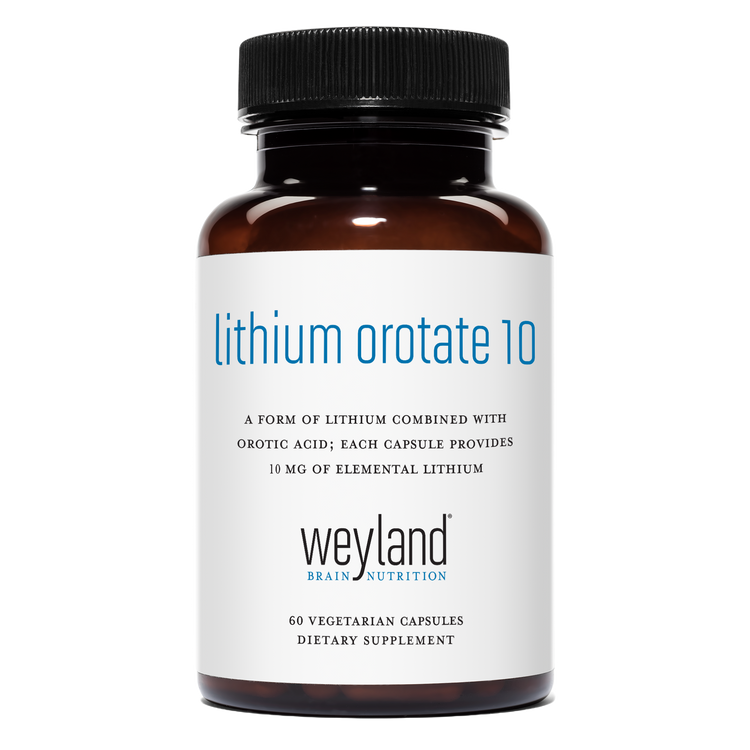
Which Lithium Orotate Dose Is Right for a Routine?
Finding the ideal supplement depends heavily on the exact strength you need to support memory and cognitive function. Getting the right amount of a low-dose lithium supplement helps maintain healthy brain function and protects overall health over time. Real evidence indicates that lithium orotate may achieve therapeutic brain concentrations at lower doses, and because of this efficiency, lithium orotate is generally considered safer than lithium carbonate for everyday use.
Lower Doses for a Gentle Start
Small amounts, usually anywhere from 1,000 mcg up to 5 mg of elemental lithium, are the most common starting points if you are completely new to low-dose lithium supplementation. These low doses of lithium orotate are generally well tolerated by the human body. In a typical routine, lithium orotate is typically taken at 5 mg daily to support cognitive function and brain health. This subtle nutritional level supports brain cell growth and builds cellular resilience.
Early research published in Biological Trace Element Research and spearheaded by Pacholko AG using various mouse models explores how the mineral influences tau phosphorylation, which is a structural process deeply linked to alzheimer's disease. Researchers study this mechanism to understand how low-dose lithium orotate may help support cellular health during normal age-related cognitive decline.
Higher Doses for Established Routines
Larger daily amounts, like 10 mg to 20 mg, work better for people who have already tried lower levels and want a slightly stronger dose. Some nutritional experts recommend up to 20 mg per day strictly under professional supervision. While daily doses of lithium orotate typically range from 5 to 20 mg for most adults, you have to be careful because exceeding recommended doses increases the risk of side effects.
For perspective, a dramatic case report noted mild lithium toxicity after a massive 2.16-gram overdose. It is well documented that long-term use of high doses of lithium can lead to serious kidney damage, and because long-term safety studies on lithium orotate are limited, staying within smart boundaries is just common sense.
Matching the Format to Daily Habits
Capsules are fantastic for fixed, predictable daily doses of lithium orotate, while liquid forms give you the freedom to make tiny adjustments. In fact, daily doses of lithium orotate are measured in micrograms when you opt for precision liquid drops instead of pills. Even though low doses are considered safe, lithium orotate may cause side effects even at low doses if your body is highly sensitive, so precise measurement helps minimize risk.
When handled correctly, low-dose lithium orotate may promote emotional clarity and mood balance. This happens because lithium supports the long-term health of specialized brain cells. It might provide natural antioxidant benefits and enhance brain detoxification, meaning it can help manage feelings of low mood or stress without any of the heavy, systemic impacts caused by prescription lithium.
What Sets the Real Difference?
Ultimately, lithium orotate supplements are simply not interchangeable. The exact dose, the delivery form, the raw purity, and rigorous lab testing are the variables that truly separate a high-end product from the rest. Finding your proper dosing is essential because lithium orotate may enhance stress resilience and emotional stability safely only when used correctly.
Take some time to compare Weyland Brain Nutrition's third-party-tested lithium orotate range so you can pick the exact dose and format that fit your careful daily routine. Naturally, consulting a healthcare provider or qualified healthcare professional is recommended before starting lithium orotate to ensure optimal safety for your body.
Choose Quality You Can Verify
Browse Weyland's full range of third-party-tested lithium orotate, made in a cGMP facility with clear labels and honest information.
Shop the Range
Frequently Asked Questions
What should you look for in a lithium orotate supplement?
Always check for clearly labeled elemental lithium per serving, rigorous third-party testing, cGMP manufacturing, and a clean ingredient list.
How many milligrams of lithium orotate are in a typical supplement?
Products range from microgram amounts up to about 20 mg of elemental lithium per serving.
Is liquid or capsule lithium orotate better?
Capsules give fixed and convenient doses while liquids allow finer adjustments, making the choice come down to personal preference.
Does the brand of lithium orotate matter?
Quality and transparency vary significantly between companies, so rigorous testing and clear labeling are always worth checking.
How can you tell if a lithium orotate supplement is high quality?
You should look for third-party testing, cGMP facilities, and accurate elemental lithium labeling to verify product safety.
References
-
Lee, J. W., Hasegawa, T., Ikedo, A., Mizuno, K., Amizuka, N., & Kong, S. W. (2026). Lithium and the Brain-Bone Axis: A Bridge between Osteoporosis and Alzheimer's Disease. Current osteoporosis reports, 24(1), 7. https://doi.org/10.1007/s11914-026-00954-5
-
Nielsen, F. H., & Vincent, J. B. (Eds.). (2016). Biological Trace Element Research, 170(2). Springer. https://link.springer.com/journal/12011
-
Pacholko, A. G., & Bekar, L. K. (2021). Lithium orotate: A superior option for lithium therapy?. Brain and behavior, 11(8), e2262. https://doi.org/10.1002/brb3.2262
Medical Disclaimer
The content on this page is for informational purposes only and is not intended as medical advice, diagnosis, or treatment. Always consult a qualified healthcare professional before making changes to your health regimen.
*These statements have not been evaluated by the Food and Drug Administration. Our products are not intended to diagnose, treat, cure, or prevent any disease.