Posted by GC Support
on May 22, 2026

Table of Contents
Two bottles on the shelf. One labeled lithium orotate 5mg, one labeled 10mg. Same question every time: which one belongs in a daily routine? Both serving sizes show up on store shelves and online listings for a reason, and neither is automatically the right answer.
The choice has less to do with "stronger is better" and more to do with routine fit, starting point, and how the body responds over several weeks. A thoughtful pick beats a higher number on the label almost every time. Weyland Brain Nutrition makes lithium orotate for the kind of reader who actually reads the supplement facts panel before adding anything new to a routine.
Not Sure Which Dose Yet? Start Small, Adjust Later
Weyland's lithium orotate range starts at 2.5 mg and steps up to 20 mg, so the routine can shift over time without switching brands or guessing on the label.
View the Dose Range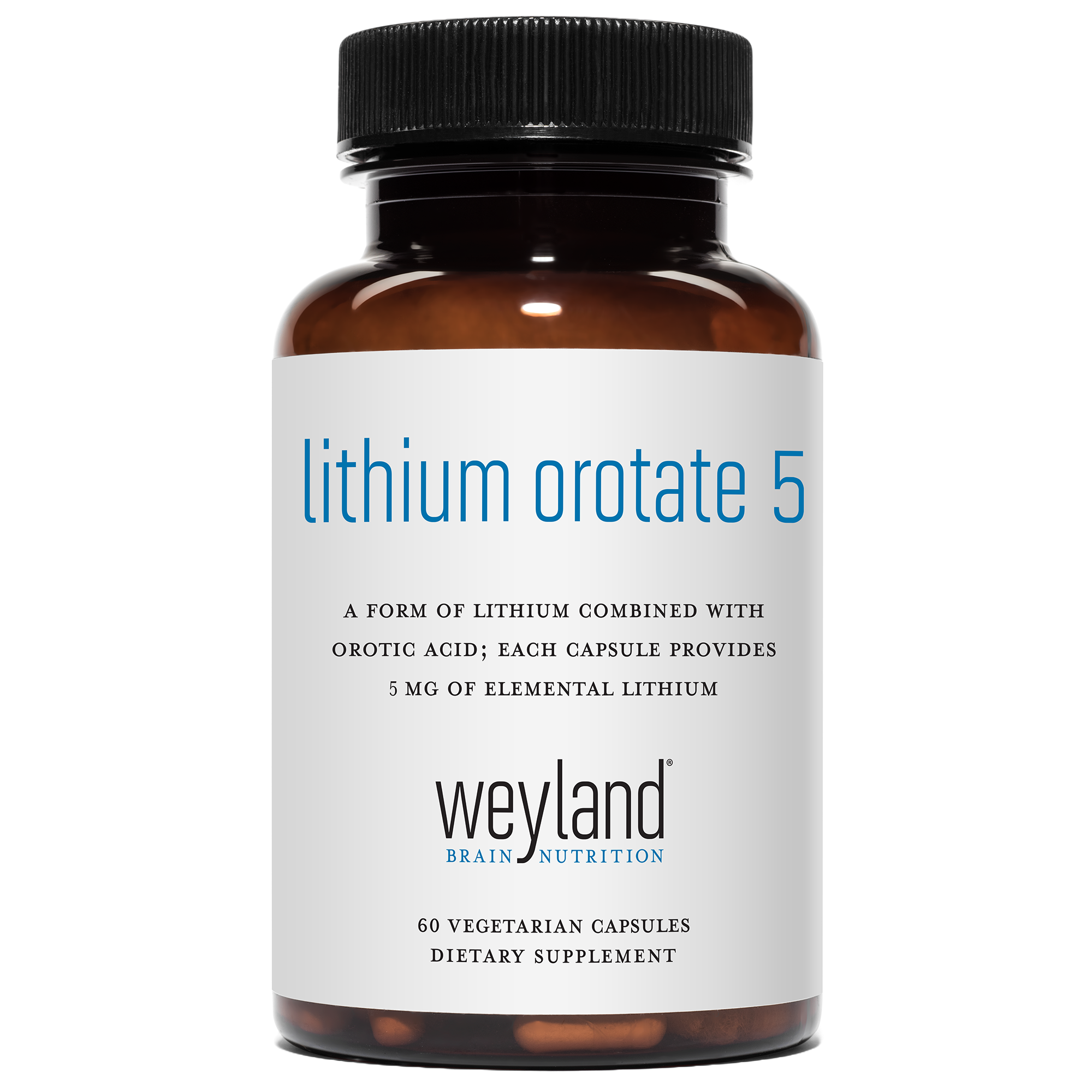
What are Lithium Orotate 5mg and 10mg?
Lithium orotate 5mg and 10mg are the two most common serving sizes of a low-dose lithium dietary supplement, both delivering elemental lithium paired with orotic acid in a capsule. The number on the label is the most important detail to verify before buying, since not every brand lists it the same way.
Two Common Serving Sizes of Low-Dose Lithium
The 5 mg capsule is the entry point for most readers, and the 10 mg capsule is twice that amount and a common step-up after several weeks of comfortable use. Both fall well below any prescription lithium carbonate dose used in psychiatric care, which runs in the hundreds of milligrams.
Numbers That Refer to Elemental Lithium
The 5 mg or 10 mg on the label can refer either to the total lithium orotate compound or to the elemental lithium content, depending on how the brand reports it. Most reputable brands list elemental lithium per serving on the supplement facts panel, so checking that panel is the cleanest way to know what is actually in each capsule.

What is the Difference Between 5mg and 10mg?
The practical differences between the two serving sizes come down to a few clear factors:
-
Total daily lithium delivered, with 10 mg providing twice the amount per capsule
-
Starting point flexibility, since 5 mg offers a smaller increment for first-time users
-
Routine adjustment, where 5 mg makes it easier to step up by half-doses
-
Capsule count, since some routines call for 5 mg in the morning and 5 mg at night, rather than a single 10 mg
-
Sensitivity considerations, since some people prefer the lower starting amount when adding any new supplement
-
Long-term routine fit, where 10 mg suits readers who have used 5 mg comfortably and want a single-capsule serving
Who Tends to Start with 5mg?
Lithium orotate 5mg tends to attract three reader profiles: people new to lithium altogether, readers who feel things quickly from new supplements, and routine builders who like to move in small steps. The framing is descriptive, not prescriptive, since serving size always comes down to personal context and a conversation with a healthcare provider.
First-Time Users of a Lithium Supplement
A first-time lithium user usually picks 5 mg because the body has never been exposed to a daily lithium dietary supplement. Starting at the lower amount makes it easier to track how a routine feels over the first month without changing two things at once.
People Sensitive to New Supplements
Readers who notice quick reactions to new supplements, vitamins, or even certain foods often start at 5 mg for the same reason. The smaller serving size gives the body room to adjust before any decision to increase.
Routines Built Around Gradual Adjustment
A 5 mg capsule suits routines built around slow titration, where the dose increases by 2.5 or 5 mg steps every few weeks. That gradual approach is what most published guidance suggests for any new low-dose lithium supplement.
5 mg to Start. 10 mg When You're Ready
Both servings come from the same third-party tested, USA-made lithium orotate line, so stepping up later is a one-click change instead of a brand swap.
See 5 mg and 10 mg
Who Tends to Choose 10mg?
Lithium orotate 10mg tends to attract readers already comfortable with 5 mg, people who prefer one capsule per day, and routines built around consistent daily use. Same descriptive framing applies here, since neither dose is universally better than the other.
Users Already Comfortable with 5mg
Readers who have used 5 mg comfortably for several weeks often move to 10 mg as the next logical step. The shift usually happens once the body has shown clear tolerance and the routine has settled into a habit.
Readers Wanting a Single-Capsule Serving
A 10 mg capsule simplifies a routine for people who want one serving per day instead of two. The single-capsule format tends to fit better with morning supplement stacks or a bedtime wind-down, depending on personal preference.
Routines Built Around Consistent Daily Use
A 10 mg serving works well in routines that prioritize consistency above all else, since the daily dose matters more than the higher number on the label. A consistent 5 mg routine still beats an inconsistent 10 mg one.

How Do You Decide Between the Two?
A short decision checklist helps narrow the choice without overthinking it:
-
Start with 5 mg if the routine is new and the body has not yet been exposed to a daily lithium supplement
-
Choose 10 mg if 5 mg has been used comfortably for several weeks and a single-capsule serving fits the routine better
-
Consider 5 mg if a split-dose routine (morning and afternoon) is preferred
-
Pick the serving size that pairs with realistic adherence, since the dose taken consistently matters more than the higher number on the label
-
Speak with a qualified healthcare professional before starting either, especially when taking prescription medications, managing kidney function concerns or thyroid conditions, or pregnant or breastfeeding
-
Track how a routine feels over weeks, not days, before changing anything
What Should You Look for in a Quality Product?
The milligram number is only one part of the decision. Manufacturing quality and clear labeling matter just as much, especially in a category like lithium, where trace contamination is a real concern.
Third-Party Tested Batches
Third-party tested batches verify that what is on the label matches what is in the capsule, and that heavy metals such as lead and arsenic are below safe thresholds. The testing certificate should be available on request from any reputable brand.
Manufactured in an FDA-Registered, cGMP-Compliant Facility
A product manufactured in an FDA (Food and Drug Administration)-registered, cGMP (Current Good Manufacturing Practice)-compliant facility undergoes quality controls that catch most production issues. Weyland offers lithium orotate in 2.5 mg, 5 mg, 10 mg, and 20 mg capsules, plus a 5 mg formula with magnesium and vitamin E, and ionic liquid drops, all manufactured in the USA and third-party tested.
Clear Supplement Facts Labeling
A clear supplement facts panel lists elemental lithium per serving, the form (orotate, citrate, or another salt), capsule count, and any additional ingredients. Vague labels with marketing language but no clear elemental amount are worth skipping.
Which Dose Fits Your Daily Routine?
The 5 mg serving is the common starting point and the easier increment for adjustment over time, while the 10 mg serving suits readers who have already used 5 mg comfortably and want a single-capsule routine. Neither is universally better, and the right pick depends on routine fit, sensitivity, and personal response over weeks rather than days.
Explore Weyland's lithium orotate range across 2.5 mg, 5 mg, 10 mg, and 20 mg capsules, plus the 5 mg with magnesium and vitamin E formula and ionic liquid drops. Compare the formats and pick the strength that fits a routine.
Made Your Pick? The Right Strength Is Waiting
2.5 mg, 5 mg, 10 mg, 20 mg, plus the 5 mg with magnesium and vitamin E formula and ionic liquid drops, all third-party tested and shipped from the USA.
Shop the Full Range
Frequently Asked Questions
Is 5mg or 10mg of lithium orotate better?
Neither is universally better. The right pick depends on routine fit, sensitivity, and personal response, with 5 mg as the common starting point and 10 mg as a step up for readers already comfortable with daily use.
Can you take 10mg of lithium orotate daily?
Yes, 10 mg daily falls within the common supplement range used in clinical literature, though anyone on prescription medications or managing kidney or thyroid concerns should consult a healthcare professional first.
How long does it take for 5mg lithium orotate to work?
Most published guidance suggests tracking how a low-dose lithium supplement feels over several weeks rather than a few days, since responses build gradually.
Can you split a 10mg lithium orotate into two doses?
A 10 mg capsule cannot be split cleanly, but taking a 5 mg capsule in the morning and another in the afternoon delivers the same total daily lithium dose with the flexibility of a split-dose routine.
What is the maximum daily dose of lithium orotate?
Research and clinical guidance commonly cite 20 mg of elemental lithium per day as the upper end for nutritional use, with higher amounts reserved for prescription use under medical supervision.
References
-
National Institutes of Health, Office of Dietary Supplements. (2023, January 4). Dietary supplements: What you need to know. https://ods.od.nih.gov/factsheets/WYNTK-Consumer/
-
National Library of Medicine. (2017, April 15). Lithium. MedlinePlus. https://medlineplus.gov/druginfo/meds/a681039.html
-
U.S. Food and Drug Administration. (2024, April 24). Current good manufacturing practices (CGMPs) for food and dietary supplements. https://www.fda.gov/food/guidance-regulation-food-and-dietary-supplements/current-good-manufacturing-practices-cgmps-food-and-dietary-supplements
Medical Disclaimer
The content on this page is for informational purposes only and is not intended as medical advice, diagnosis, or treatment. Always consult a qualified healthcare professional before making changes to your health regimen.
*These statements have not been evaluated by the Food and Drug Administration. Our products are not intended to diagnose, treat, cure, or prevent any disease.