Posted by GC Support
on August 12, 2026

Table of Contents
Search interest in lithium supplements has climbed fast, and the reaction it gets is telling. Say "lithium" and most people picture a serious prescription, so a version sold on a supplement shelf raises eyebrows and questions in equal measure.
That gap between what people expect and what these products actually are is a big part of the buzz. Lithium supplements use a trace mineral in tiny amounts, which is a world away from the prescription drug of the same name.
What follows is an honest look at why lithium supplements are drawing attention, what they actually are, and how to think about the interest without getting swept up in hype. For readers looking closely, Weyland Brain Nutrition makes third-party-tested low-dose lithium, and the goal here is context, not a sales pitch.
Discover the Trace Mineral Everyone is Talking About
Explore our carefully formulated, low-dose lithium supplements designed to seamlessly support your daily wellness routine.
Shop Low-Dose Lithium
Why Are Lithium Supplements Suddenly Popular?
Lithium supplements are getting more attention for a few plain reasons, not one big breakthrough. Rising interest in everyday wellness, more online conversation about trace minerals, and simple curiosity about a familiar name in an unfamiliar form all play a part. The pull is real, but it helps to see what is behind it.
Growing Interest in Everyday Wellness
The wider wellness boom is a major driver. More people are exploring dietary supplements as part of their daily routine, and lesser-known trace-element options tend to get swept up in that curiosity. Lithium, long known only as a prescription medication, is now being recognized in its low-dose supplement form as part of that broader search.
A Familiar Name in a New Form
The name itself fuels attention. Lithium carries weight because most people associate it with medicine, so seeing it as a low-dose supplement sparks questions about what it even is. That surprise, more than any single claim, is part of why the topic keeps coming up online.
Curiosity Outpacing Clear Information
Interest has grown faster than plain, reliable explanation. A lot of what circulates online is confusing or overstated, which leaves people searching for a clear answer to a simple question: what is this, really? That information gap is exactly what keeps drawing clicks and questions.

What Are Lithium Supplements, Really?
Lithium supplements are dietary products that contain a small amount of a naturally occurring mineral, measured in micrograms. That places them far away from prescription lithium, which is a different thing entirely. Clearing up that difference answers most of the questions behind the attention.
A Trace Mineral, Not a Prescription
Lithium supplements use lithium as a trace mineral, not as a prescription medication. The mineral occurs naturally in soil, food, and water, and supplement forms deliver the same small amounts in a measured amount. Prescription lithium, such as lithium carbonate, is a doctor-managed drug given in far larger doses, and any question about it belongs with a clinician.
The Common Supplement Forms
Low-dose lithium shows up in a couple of familiar forms. Lithium orotate is a common capsule, made by pairing lithium with orotic acid, while ionic and liquid versions deliver the mineral in drops, often alongside other naturally occurring minerals. For a deeper look at each form, the dedicated guides on the site cover them, so the attention here stays on the bigger picture.
Skip the Hype. Trust the Quality.
All of our supplements are third-party tested and cGMP-compliant, so you know exactly what you're getting without the guesswork.
View Our Trusted Formulas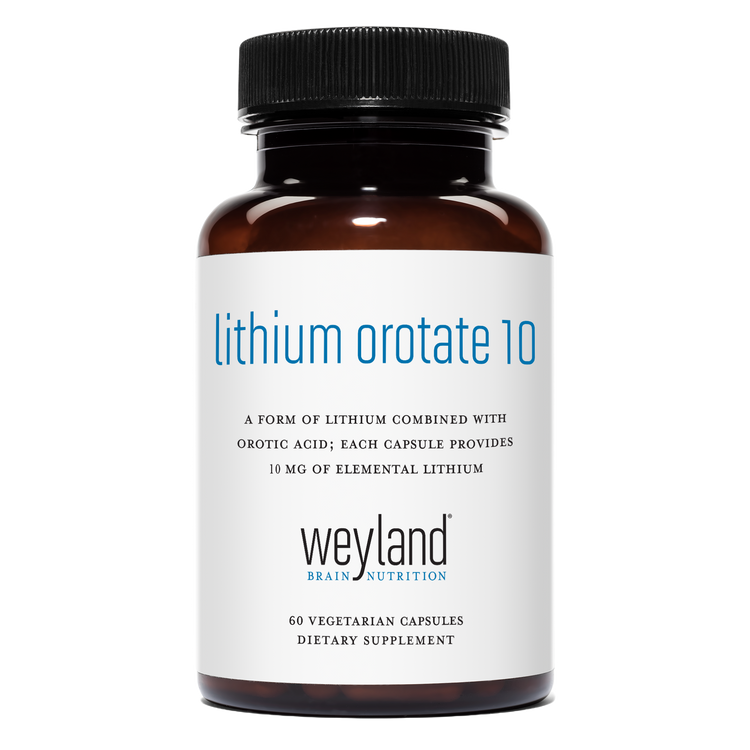
Is the Attention Worth Paying Attention To?
The interest is understandable, but curiosity is not a reason to skip the basics. Lithium supplements are generally well tolerated at the small amounts on the label, though "well tolerated" is not the same as "right for everyone." A little caution keeps the enthusiasm grounded.
Generally Well Tolerated, Not Risk-Free
At the trace amounts in supplements, low-dose lithium is generally well tolerated by healthy adults, since these amounts sit far below prescription levels. That safety cushion is real, but it does not mean the label can be ignored. The mineral is biologically active even in small doses, so more is never better, and the serving size is there for a reason.
When to Slow Down and Ask First
Some people should talk to a healthcare provider before trying it, no matter how much buzz it generates. That includes anyone taking prescription lithium or another prescription medication, people managing a kidney or thyroid condition, and anyone who is pregnant or nursing. A short conversation with a healthcare professional can determine whether a supplement fits a person's situation, something no trending article can do.

How to Separate Hype From a Quality Product?
Cutting through the hype comes down to reading the label, not the headlines. A few details tell you far more than any viral post about whether a lithium supplement is worth considering:
-
The elemental lithium amount per serving, printed clearly on the label.
-
Third-party testing or a Certificate of Analysis from an outside lab.
-
Manufacturing in an FDA-registered, cGMP-compliant facility.
-
A clean, short ingredient list without unnecessary additives.
-
Clear guidance to check with a clinician if taking medication or managing a health condition.
Weyland Brain Nutrition's low-dose lithium is third-party tested and made in an FDA-registered, cGMP-compliant facility. Hence, those checks are easy to confirm before the attention turns into a purchase.
Should Lithium Supplements Be on Your Radar?
Lithium supplements are getting attention because a familiar name has shown up in an unfamiliar, low-dose form just as everyday wellness interest surges, and curiosity has outrun clear information. The sensible takeaway cuts through all of it: these are trace-mineral dietary supplements, separate from prescription lithium, generally well tolerated in small amounts, and best judged by label and quality rather than buzz.
For readers whose curiosity has turned into a real question, Weyland Brain Nutrition's low-dose lithium is clearly labeled and third-party tested, so the facts are easy to check before deciding whether the attention is worth acting on.
Ready to Upgrade Your Brain Nutrition?
Take the guesswork out of finding premium trace minerals. Browse our full collection today and support your active lifestyle.
Shop the Full Collection
Frequently Asked Questions
Why are lithium supplements becoming popular?
Lithium supplements are drawing attention as interest in everyday wellness grows and people become curious about a familiar name appearing in a low-dose, trace-mineral form.
Are lithium supplements the same as prescription lithium?
No, lithium supplements are trace-mineral dietary products measured in micrograms, while prescription lithium is a doctor-managed medication in much larger doses.
Are lithium supplements safe to take daily?
Low-dose lithium supplements are generally well tolerated at the small amounts on the label, though anyone on medication or managing a health condition should ask a clinician first.
What are lithium supplements made of?
Most contain a small, measured amount of a naturally occurring mineral, either as lithium orotate in capsules or as ionic lithium in liquid drops.
Do you need a prescription for lithium supplements?
Low-dose lithium supplements are sold over the counter, but prescription lithium requires a doctor, and a clinician should guide any supplement use.
References
-
Lazarus J. H. (2009). Lithium and thyroid. Best practice & research. Clinical endocrinology & metabolism, 23(6), 723–733. https://doi.org/10.1016/j.beem.2009.06.002
-
Strawbridge, R., & Young, A. H. (2024). Lithium: how low can you go?. International journal of bipolar disorders, 12(1), 4. https://doi.org/10.1186/s40345-024-00325-y
-
Szklarska, D., & Rzymski, P. (2019). Is lithium a micronutrient? From biological activity and epidemiological observation to food fortification. Biological Trace Element Research, 189(1), 18–27. https://doi.org/10.1007/s12011-018-1455-2
Medical Disclaimer
The content on this page is for informational purposes only and is not intended as medical advice, diagnosis, or treatment. Always consult a qualified healthcare professional before making changes to your health regimen.
*These statements have not been evaluated by the Food and Drug Administration. Our products are not intended to diagnose, treat, cure, or prevent any disease.