Posted by GC Support
on September 21, 2026

Table of Contents
Weight gain is one of the most feared side effects of lithium, and worry about it leads some people to stop a medicine that works. So, does lithium cause weight gain? It can, but the latest research shows the average gain on prescription lithium is much smaller than its reputation suggests.
The real risks come from a few specific changes in the body: increased thirst, increased water intake, a slower thyroid, and food cravings. You can spot each one early and manage it with a doctor's help.
Weyland Brain Nutrition makes supplements designed to support everyday mental performance, and people who look into low-dose lithium often ask about weight first. When it comes to weight, the dose of lithium matters far more than the name on the bottle.
PUT LITHIUM DOSE INTO PERSPECTIVE
Weight concerns often depend on how much lithium a person is actually taking. If you are exploring low-dose nutritional options for everyday wellness, compare Weyland's products and review the elemental lithium amount on each label.
Explore Low-Dose Options
Why Can Lithium Cause Weight Gain?
Lithium can cause weight gain through thirst, fluid retention, thyroid changes, and cravings. How much each one matters depends on the person, the dose, and the other medicines in the treatment plan. A few factors shape how lithium and other minerals affect body weight:
-
Specific chemical form and the dose it delivers
-
Interaction with metabolic and endocrine (hormone) systems
-
Changes in hydration levels and appetite signals

How Does Prescription Lithium Affect Weight?
Prescription lithium adds little weight for most people, but it can cause weight gain in some through a few specific causes. Doctors use lithium carbonate as a first-line treatment for bipolar disorder, so knowing what to expect helps you plan ahead.
Lithium Usually Adds Little Weight
A 2022 review and meta-analysis found that weight gain with lithium was not statistically significant, averaging about 0.46 kilograms (kg), or roughly 1 pound. That's much smaller than the drug's reputation suggests.
Lithium Adds Less Weight Than Other Mood Stabilizers
Other mood stabilizers often fare worse. A 2023 study of drug safety reports found that severe weight gain was reported more often with olanzapine, quetiapine, and valproate than with lithium. Carbamazepine is the exception, tending to cause less weight gain than both lithium and valproate.
Still, some people do gain weight on lithium. In a 2026 Psychiatric Times review, David Osser, MD, a Harvard psychiatry professor and a leader in the U.S. Department of Veterans Affairs (VA) bipolar telehealth program, described four ways it can happen:
-
Increased thirst: Lithium is a salty compound, so it makes people thirsty. Weight goes up when that thirst is met with sugary sodas or fruit juice. He recommends water, sugar-free sodas, or sugar-free sports drinks, and asking patients what they like to drink before they start lithium.
-
Water retention: Lithium can make the body hold onto salt, and water with it. This explains why a few patients gain weight very quickly, since fat builds up much more slowly.
-
Slowed metabolism from hypothyroidism: Lithium can cause an underactive thyroid, which leads to slow, gradual weight gain. He advises checking thyroid levels at least every six months.
-
Carbohydrate cravings: Some patients crave bread, candy bars, cookies, and other sugary baked goods, though some had these cravings before starting lithium. He stresses warning patients ahead of time so they have a plan ready.
He also raises a separate factor that isn't one of the four. Bipolar depression often comes with increased appetite, and lithium doesn't treat depression well. So some weight gain blamed on lithium may come from the depression itself or from other medicines added to treat it, such as quetiapine.
COMPARE THE DOSE, NOT JUST THE NAME
Prescription lithium and nutritional lithium sit on very different dose scales. Weyland's supplement collection makes it easier to compare low-dose options intended for everyday wellness rather than prescription treatment.
Compare Weyland Supplements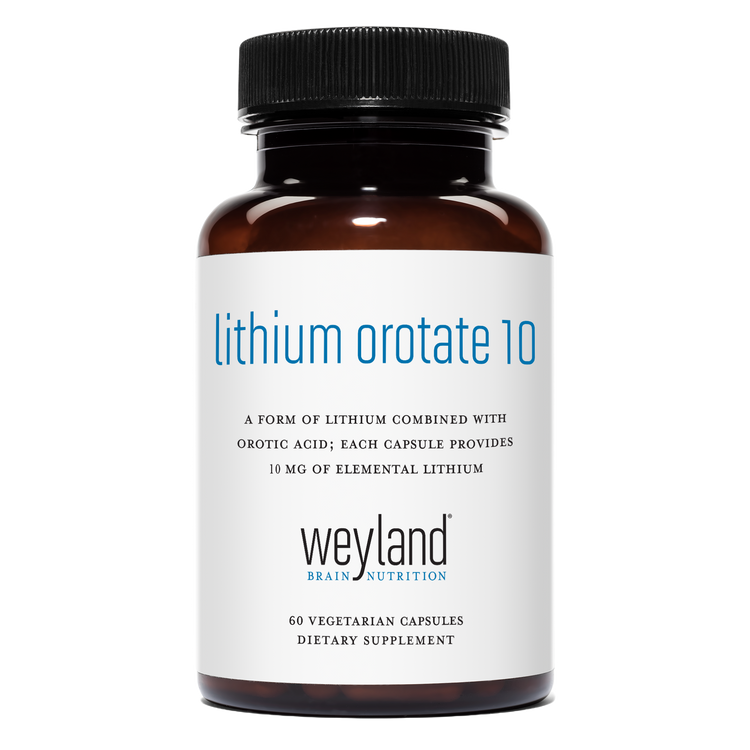
How Does Lithium Dose Affect Weight Gain?
Higher lithium doses raise blood levels, and many side effects tied to weight gain, including thirst, grow stronger as those levels rise. The gap between a prescription dose and a supplement dose is also enormous, so the two carry very different weight risks.
Higher Blood Levels Make Weight-Related Side Effects More Likely
As lithium blood levels rise, weight-related side effects become more likely. Thirst and frequent urination, which drive much of lithium's weight gain, tend to grow stronger at higher levels. The kidney and thyroid effects linked to weight also show up in the range prescription doses aim for, along with early side effects like nausea and hand tremor.
Prescription Doses Are High Enough to Affect Weight
Prescription doses deliver enough lithium to reach the blood levels where weight gain can happen. Lithium carbonate is often taken at 600 to 1,800 milligrams (mg) a day. A 300 mg capsule holds about 56 mg of elemental lithium, which is the lithium itself without the salt it is bound to. That means a daily dose delivers roughly 110 to 340 mg of lithium.
Supplement Doses Are Far Less Likely to Affect Weight
Supplement doses are far less likely to affect weight because they contain much less lithium. Most over-the-counter (OTC) lithium orotate supplements provide 1 to 20 mg of elemental lithium per serving, and 5 mg is common. A typical prescription dose holds about 20 to 70 times more lithium than a 5 mg supplement, so blood levels stay far below the prescription range.
A Moderate Dose Can Mean Fewer Weight-Gaining Medicines
A moderate lithium dose can reduce the need for other medicines that often cause weight gain. In a six-month study published in the American Journal of Psychiatry, 283 outpatients with bipolar disorder received personalized treatment with or without a moderate dose of lithium. Fewer people in the lithium group needed second-generation antipsychotics, a drug class often linked to weight gain.

Can Low-Dose Nutritional Lithium Change Body Weight?
Low-dose lithium supplements are unlikely to change body weight because the doses are so small, though no study has tested this directly. Weight research on lithium comes almost entirely from people taking prescription doses, so what's known about supplements comes from comparing doses.
Low Doses Make Weight-Related Side Effects Unlikely
Low doses keep blood lithium far below the level where weight-related side effects usually appear. Lithium orotate supplements often deliver 5 mg or less of elemental lithium a day, an amount much closer to what some people get from food and water than to a prescription dose.
At that level, the kidney-related thirst and thyroid problems behind lithium weight gain are unlikely. Check the Supplement Facts panel or product page for the elemental lithium amount, since that's the number to compare.
Research Has Not Yet Tested Low-Dose Lithium and Weight
To date, no clinical trials have tracked weight in people taking low-dose lithium orotate, so the lower risk is an informed estimate. People use these supplements for general mood and brain support, and they are not intended to diagnose, treat, cure, or prevent any disease.
Weight Changes on Any Lithium Product Deserve a Checkup
New thirst, swelling, or weight changes while using any lithium product are worth discussing with a doctor. Anyone taking prescription lithium should also talk with a doctor before adding a supplement, since both add to the same blood level.

How Can You Manage Weight While Taking Lithium?
Steady daily habits and a plan made with your doctor are the most reliable ways to keep weight in check while taking lithium. Small choices about food, drinks, movement, and sleep add up over months. The habits that support a healthy metabolism include:
-
Consistent daily physical activity and movement
-
Balanced nutrition rich in whole foods and lean proteins
-
Adequate hydration throughout the day
-
Routine sleep schedules for hormonal balance
-
Regular check-ins with your doctor
Move Your Body Every Day
Regular movement helps your body use energy well and can make mood easier to manage. Adults should aim for about 150 minutes of moderate activity a week, and brisk walking counts. On hot days or during hard workouts, drink extra water, since heavy sweating can raise lithium levels.
Build Meals around Whole Foods and Lean Protein
Meals built on vegetables, fruit, whole grains, and lean protein keep you full longer and leave less room for sweets. Cravings need a plan, too. Keeping fruit, nuts, or plain yogurt on hand makes it easier to avoid sweets when a craving hits.
Skip crash diets and sudden cuts in salt, since big changes in eating or sodium can shift lithium levels. Talk with your doctor before starting any new diet.
Drink Water to Manage Lithium Thirst
For people on lithium, drink choices matter most. Before starting treatment, think about what you reach for when you feel thirsty. Water, sparkling water, and sugar-free drinks can calm thirst without adding calories, while regular soda and fruit juice are full of sugar. The easiest way to cope with lithium thirst is to keep a water bottle within reach and switch to it before grabbing anything sweet.
Keep a Regular Sleep Schedule
Short sleep raises hunger hormones and makes high-calorie foods harder to resist. Aim for at least seven hours a night, and go to bed and wake up at the same times each day. A steady schedule also supports mood stability, which matters for people with bipolar disorder.
Check In with Your Doctor Regularly
Regular checkups let your doctor spot weight changes early and adjust your plan. Bring up any weight change at each visit, and tell your doctor about every medicine and supplement, since drug interactions can change lithium levels.
Never switch or stop lithium on your own, because symptoms can come back or get worse quickly. A thoughtfully formulated supplement can round out a healthy routine, but the daily habits do most of the work.
Take Control of Weight and Wellness with Smarter Choices
Does lithium cause weight gain? Prescription lithium can, mostly through thirst, fluid retention, thyroid changes, and cravings, but recent studies put the average gain at about 1 pound. Low-dose supplements deliver only a small fraction of that dose.
Weyland Brain Nutrition offers lithium orotate from 2.5 mg to 20 mg, so you can start low with a trace mineral that may help support a calm, balanced mood. If you take prescription lithium, talk with your doctor first. Start with the lowest dose that fits your goals, and explore Weyland's lithium orotate as a low-dose option for everyday wellness.
These statements have not been evaluated by the Food and Drug Administration. This product is not intended to diagnose, treat, cure, or prevent any disease.
BUILD A SMARTER DAILY WELLNESS ROUTINE
Understanding dose, hydration, nutrition, and daily habits can help you make more informed supplement choices. Browse Weyland's collection to find low-dose options designed to fit a simple, consistent wellness routine.
Browse Weyland's Collection
Frequently Asked Questions
Does lithium orotate cause weight gain?
Research has not yet measured weight change from lithium orotate, but its low doses of about 1 to 20 mg of elemental lithium make the thirst and thyroid effects seen with prescription lithium much less likely.
Why do certain prescription forms increase appetite?
Prescription lithium can bring on cravings for sweets and strong thirst that people often satisfy with high-calorie food and drinks, and a slower thyroid can add to weight gain over time.
Can trace minerals slow down metabolism?
Trace amounts of minerals from food and low-dose supplements are unlikely to slow metabolism, while prescription lithium can lead to hypothyroidism, which slows metabolism and calls for regular thyroid monitoring.
What is the difference between lithium carbonate and lithium orotate?
Lithium carbonate is a prescription medicine for bipolar disorder given at high doses with blood monitoring, while lithium orotate is a low-dose dietary supplement sold over the counter.
How much lithium is considered safe for daily cognitive support?
Experts have not set an official safe daily amount for lithium supplements, so follow the label, which usually lists 1 to 20 mg of elemental lithium, and check with a doctor first, especially if you take other medicines.
References
-
Gomes-da-Costa, S., Marx, W., Corponi, F., Anmella, G., Murru, A., Pons-Cabrera, M. T., Giménez-Palomo, A., Gutiérrez-Arango, F., Llach, C. D., Fico, G., Kotzalidis, G. D., Verdolini, N., Valentí, M., Berk, M., Vieta, E., & Pacchiarotti, I. (2022). Lithium therapy and weight change in people with bipolar disorder: A systematic review and meta-analysis. Neuroscience & Biobehavioral Reviews, 134, 104266. https://doi.org/10.1016/j.neubiorev.2021.07.011
-
Greil, W., de Bardeci, M., Müller-Oerlinghausen, B., Nievergelt, N., Stassen, H., Hasler, G., Erfurth, A., Cattapan, K., Rüther, E., Seifert, J., Toto, S., Bleich, S., & Schoretsanitis, G. (2023). Controversies regarding lithium-associated weight gain: Case–control study of real-world drug safety data. International Journal of Bipolar Disorders, 11, Article 34. https://doi.org/10.1186/s40345-023-00313-8
-
Nierenberg, A. A., Friedman, E. S., Bowden, C. L., Sylvia, L. G., Thase, M. E., Ketter, T., Ostacher, M. J., Leon, A. C., Reilly-Harrington, N., Iosifescu, D. V., Pencina, M., Severe, J. B., & Calabrese, J. R. (2013). Lithium Treatment Moderate-Dose Use Study (LiTMUS) for bipolar disorder: A randomized comparative effectiveness trial of optimized personalized treatment with and without lithium. American Journal of Psychiatry, 170(1), 102–110. https://doi.org/10.1176/appi.ajp.2012.12060751
-
Osser, D. N. (2026, April 17). Management of lithium’s adverse effects: Update on weight gain. Psychiatric Times, 43(4). https://www.psychiatrictimes.com/view/management-of-lithiums-adverse-effects-update-on-weight-gain
Medical Disclaimer
The content on this page is for informational purposes only and is not intended as medical advice, diagnosis, or treatment. Always consult a qualified healthcare professional before making changes to your health regimen.
*These statements have not been evaluated by the Food and Drug Administration. Our products are not intended to diagnose, treat, cure, or prevent any disease.