Posted by Dr. James Pendleton, ND, Chief Science Officer
on March 27, 2026

Lithium orotate and lithium aspartate are both dietary-supplement forms pairing trace lithium with an organic carrier. Both deliver low-dose elemental lithium (≈0.2–0.8 mg per serving). Choice typically comes down to formulation, third-party testing, and personal tolerance. Neither is the prescription pharmaceutical lithium carbonate. *These statements have not been evaluated by the FDA. This product is not intended to diagnose, treat, cure, or prevent any disease.*
Table of Contents
- 1. What Is Lithium and Why Is It Used in Supplements?
- 2. What Is Lithium Orotate?
- 3. What Is Lithium Aspartate?
- 4. What Are the Main Differences Between Lithium Aspartate and Orotate?
- 5. How Do Lithium Orotate and Aspartate Fit Into Daily Routines?
- 6. What Are the Potential Benefits People Look For in Each Form?
- 7. What Side Effects and Safety Considerations Should You Know?
- 8. How Do You Choose Between Lithium Aspartate and Orotate?
- 9. How Should Lithium Supplements Be Used Safely?
- 10. How Can You Find a Lithium Supplement That Fits Your Routine?
Comparing lithium aspartate vs orotate can feel confusing, especially when product labels and online claims make the differences sound bigger than the evidence shows. Prescription lithium salts such as lithium carbonate are used under medical supervision because lithium can affect serum levels, kidney function, and thyroid function at therapeutic doses, so clear and measured information matters when reviewing nonprescription options for brain health and cognitive wellness. Understanding what each form is, where the evidence is limited, and what questions to ask can make the comparison more useful.
Compliance Note: This content is for educational purposes only and is not intended as medical advice. Consult a qualified healthcare provider before use.
Quick Review
Lithium orotate and lithium aspartate are two forms of supplemental lithium. The main difference comes down to the carrier molecule attached to the lithium, so it helps to compare the form, label clarity, and serving details before choosing a product.
Start Here
Explore Weyland’s Low-Dose Lithium Options
Looking into lithium supplements? Browse Weyland’s collection to compare low-dose options, review product details, and find a format that fits your routine.
Shop Weyland Products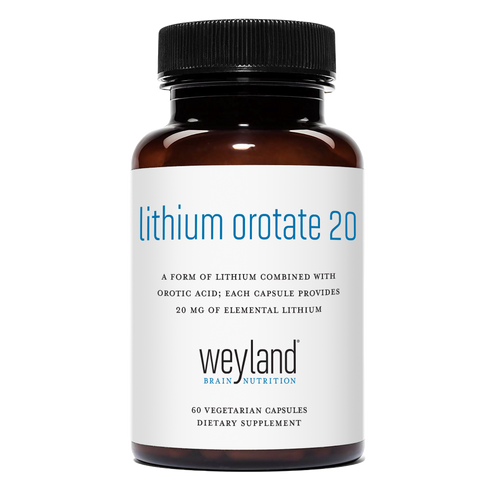
What Is Lithium and Why Is It Used in Supplements?
Lithium is a naturally occurring alkali metal found in rocks, soil, and water. Some people use lithium supplements for mental well-being and cognitive health, but published evidence on nonprescription lithium salts remains limited. It might sound intense, but lithium exists across a wide range of contexts, from prescription lithium therapy to low-dose dietary supplement products.
What Does Low-Dose Lithium Mean?
Low-dose lithium refers to amounts much smaller than prescription lithium. Doctors use prescription lithium carbonate and lithium citrate under medical supervision for conditions such as bipolar disorder, and those products require serum lithium, kidney, and thyroid monitoring. Supplemental lithium provides much less elemental lithium, but a lower dose does not remove the need for caution.
Why Are Different Forms of Lithium Used in Supplements?
Manufacturers combine elemental lithium with other molecules to create different lithium salts, such as lithium orotate and lithium aspartate. Those differences may affect how a product is formulated, but direct head-to-head evidence on absorption, blood-brain barrier transport, and clinical outcomes remains limited.
What Is Lithium Orotate?
Lithium orotate is a compound made of lithium bound to orotic acid. This form is used in dietary supplement products, often in low-dose formulations.
How Is Lithium Orotate Commonly Used in Supplements?
People often look at lithium orotate supplements when comparing low-dose lithium products marketed for mood balance and cognitive function. Research interest exists, but published clinical trials in this area remain sparse; benefit claims should be viewed with caution.
Why Is Lithium Orotate Often Found in Low-Dose Products?
Manufacturers often position lithium orotate in low-dose products because the compound is marketed for supplemental use rather than prescription lithium treatment. That marketing position does not prove better absorption, safer dosing, or better outcomes for every user.

What Is Lithium Aspartate?
Lithium aspartate consists of lithium attached to aspartic acid, which is an amino acid. This bond creates another option found in some nonprescription supplement products, although published evidence on safety and efficacy is limited.
How Is Lithium Aspartate Used in Supplements?
Consumers sometimes compare lithium aspartate with other forms of lithium used in dietary supplements when looking at low-dose products. Research on lithium aspartate remains sparse, and one recent randomized clinical trial did not find benefit at 10 to 15 mg/day for post-COVID fatigue and cognitive dysfunction.
What Makes Lithium Aspartate Different From Other Forms?
The main difference is the carrier molecule attached to the lithium. At this stage, the evidence is insufficient to confirm a clear clinical advantage of lithium aspartate over other lithium salts.
Compare Your Options
Want a Simpler Way to Choose the Right Formula?
If you are weighing ingredients, dosage levels, or delivery formats, Weyland’s product lineup makes it easier to compare your options in one place before you buy.
Check Out the CollectionWhat Are the Main Differences Between Lithium Aspartate and Orotate?
The core difference always comes back to the carrier molecule attached to the elemental lithium. Orotates use orotic acid. Aspartate is an amino acid. Here is a quick look at how the two options compare.
|
Feature |
Lithium Orotate |
Lithium Aspartate |
|
Chemical Structure |
Bound to orotic acid |
Bound to aspartic acid |
|
Supplement Formats |
Commonly sold in capsules and liquids |
Often sold in capsules or tablets |
|
Evidence Base |
Limited published clinical evidence |
Sparse published evidence |
|
Typical Positioning |
Commonly marketed for low-dose supplemental use |
Appears in some nonprescription formulas |
How Do Lithium Orotate and Aspartate Fit Into Daily Routines?
Both options can be included in daily supplement routines, but the better fit usually depends on the dose, label directions, medication use, and guidance from a healthcare provider. How a person structures the day matters less than product quality, dose, and safety review.
Why Do Some People Prefer Low-Dose Lithium Orotate?
Some people choose low-dose lithium orotate because it is commonly sold in small elemental lithium amounts. That preference is not the same as proof of better brain absorption or a better effect on mild cognitive impairment.
How Is Lithium Aspartate Used in Routine-Based Supplements?
Lithium aspartate may be included in broader supplement regimens, but evidence on its routine use for energy, focus, or cognitive decline remains limited. This form appeals to people who want to compare different carrier molecules, not to anyone seeking guaranteed results.
What Are the Potential Benefits People Look For in Each Form?
People often look to these products for support with mood balance, mental well-being, and cognitive health. Even so, further research is needed, and current evidence does not confirm that nonprescription lithium salts can diagnose, treat, cure, or prevent mood disorders, major depressive disorder, Alzheimer’s disease, or other neurodegenerative disorders. Here is a safer way to frame what people usually look for:
- Mood regulation: Some users seek support for mood stability and day-to-day emotional balance.
- Cognitive function: Clinical research and preliminary studies suggest ongoing interest in low-dose lithium and cognitive function, but results remain limited and mixed.
- Brain health: Researchers continue to study lithium salts, serum lithium levels, and brain function in both animal models and early human work.
- Mild cognitive impairment and Alzheimer’s disease: These topics appear in clinical research and reviews, but supplement-level conclusions cannot be made from the current evidence.
- MRI biomarkers and secondary outcomes: Some clinical trials track MRI biomarkers and other secondary outcomes, but those findings are still early and do not establish a product benefit.

What Side Effects and Safety Considerations Should You Know?
Safety must always come first when adding any new mineral to the diet. Even low-dose products deserve caution because lithium can affect serum lithium levels, kidney function, and thyroid function at higher exposures or in sensitive people. Keep these points in mind:
- Kidney function: High levels of lithium salts can place stress on the kidneys, which is one reason prescription lithium is monitored closely.
- Lithium toxicity: Taking too much can raise the risk of lithium toxicity, including tremor, confusion, and other serious symptoms.
- Blood lithium levels: Prescription lithium therapy relies on blood lithium levels and regular follow-up because the therapeutic window is narrow.
- Medication interactions: Existing prescribed medications can affect how the body handles lithium, so a healthcare provider should review potential interactions first.
- Study quality: It helps to look for clinical trials that include a placebo group, as this provides a clearer picture of both benefits and adverse events.
How Do You Choose Between Lithium Aspartate and Orotate?
Choosing the right supplement depends heavily on personal goals, the amount of published evidence, and how clearly the label presents the elemental lithium content.
What Factors Should You Consider Before Choosing a Lithium Supplement?
You should first discuss any plan with a healthcare provider to make sure the supplement will not interfere with current treatments or prescribed medications, especially in the setting of bipolar disorder or other mood disorders. It also helps to decide what matters most to you, such as dose transparency, supplement format, or tolerance.
Why Do Some People Choose Lithium Orotate for Low-Dose Options?
Many people choose lithium orotate because it is widely available in low-dose supplement formats. Current research does not prove that lithium orotate is better than lithium aspartate for every goal or every person.
How Does Product Quality and Transparency Affect Your Decision?
Trustworthy brands clearly list the elemental lithium content rather than only the total compound weight. Transparent labeling helps you compare products more accurately and avoid confusion about the actual dose.

How Should Lithium Supplements Be Used Safely?
Proper use helps reduce avoidable side effects and decides to take a supplement more responsible.
- Professional Guidance: Always consult a healthcare professional before starting any new dietary supplement.
- Dosage Limits: Follow the labeled serving size unless a qualified healthcare professional gives different guidance.
- Medication Checks: Ask your doctor if the supplement could interact with prescribed medications, lithium therapy, or other mood stabilizers.
- Symptom Tracking: Monitor for side effects or adverse events and stop use if symptoms raise concern.
- Consistent Habits: Use the product only as directed; do not adjust the dose yourself.
How Can You Find a Lithium Supplement That Fits Your Routine?
When you compare lithium aspartate vs orotate, the biggest differences are the carrier molecule, the amount of published research, and the level of labeling clarity you get from the brand. Weyland offers clearly labeled lithium orotate options designed for people who want low-dose products with transparent elemental lithium content. Review the label, compare the dose, and bring any questions to a qualified healthcare professional before use.
Ready to Take the Next Step?
Browse Weyland Supplements With Clear Labeling
Now that you have the key takeaways, explore Weyland’s full collection to see ingredient details, product formats, and low-dose options designed for informed shoppers.
View All ProductsFrequently Asked Questions
What is the difference between lithium aspartate and lithium orotate?
Lithium aspartate binds the mineral to aspartic acid, while lithium orotate binds it to orotic acid. The main difference is the carrier molecule, not a proven universal difference in benefit.
Is lithium orotate better than lithium aspartate?
There is not enough evidence to say lithium orotate is universally better than lithium aspartate. Current research is too limited to support a one-size-fits-all answer.
Can lithium supplements be taken every day?
Some low-dose lithium supplements are marketed for daily use, but the right schedule depends on dose, medication use, kidney function, thyroid function, and guidance from a qualified healthcare professional.
Why do some supplements use lithium orotate instead of aspartate?
Manufacturers may choose orotate for formulation and positioning reasons, but current evidence does not prove a universal absorption or safety advantage over aspartate.
What should you look for when choosing a lithium supplement?
You should look for a trustworthy brand that clearly displays the exact elemental lithium content on the label and gives clear serving directions.
References
- Boivin, E., Le Daré, B., Bellay, R., Vigneau, C., Mercerolle, M., & Bacle, A. (2023). Long-term lithium therapy and risk of chronic kidney disease, hyperparathyroidism and hypercalcemia: a cohort study. International journal of bipolar disorders, 11(1), 4. https://doi.org/10.1186/s40345-023-00286-8
- Holeček M. (2023). Aspartic Acid in Health and Disease. Nutrients, 15(18), 4023. https://doi.org/10.3390/nu15184023
- Fiorillo, A., Sampogna, G., Albert, U., Maina, G., Perugi, G., Pompili, M., Rosso, G., Sani, G., & Tortorella, A. (2023). Facts and myths about the use of lithium for bipolar disorder in routine clinical practice: an expert consensus paper. Annals of general psychiatry, 22(1), 50. https://doi.org/10.1186/s12991-023-00481-y
- Gitlin M. (2016). Lithium side effects and toxicity: prevalence and management strategies. International journal of bipolar disorders, 4(1), 27. https://doi.org/10.1186/s40345-016-0068-y
- Ji, Y. B., Gao, Q., Tan, X. X., Huang, X. W., Ma, Y. Z., Fang, C., Wang, S. N., Qiu, L. H., Cheng, Y. X., Guo, F. Y., & Chang, J. (2021). Lithium alleviates blood-brain barrier breakdown after cerebral ischemia and reperfusion by upregulating endothelial Wnt/β-catenin signaling in mice. Neuropharmacology, 186, 108474. https://doi.org/10.1016/j.neuropharm.2021.108474
- Murbach, T. S., Glávits, R., Endres, J. R., Hirka, G., Vértesi, A., Béres, E., & Szakonyiné, I. P. (2021). A toxicological evaluation of lithium orotate. Regulatory toxicology and pharmacology : RTP, 124, 104973. https://doi.org/10.1016/j.yrtph.2021.104973
- Pacholko, A. G., & Bekar, L. K. (2021). Lithium orotate: A superior option for lithium therapy?. Brain and behavior, 11(8), e2262. https://doi.org/10.1002/brb3.2262
About our sourcing: Our lithium orotate active ingredient is sourced from a European EU supplier. We purposely source more ingredients from Europe, where food safety regulations are stricter and more stringent than in many other supplement-ingredient origin countries.
Medical Disclaimer
The content on this page is for informational purposes only and is not intended as medical advice, diagnosis, or treatment. Always consult a qualified healthcare professional before making changes to your health regimen.
*These statements have not been evaluated by the Food and Drug Administration. Our products are not intended to diagnose, treat, cure, or prevent any disease.