Posted by GC Support
on August 17, 2026

Table of Contents
Drops or capsules? Once someone decides to try low-dose lithium, that is usually the next question, and the answer has more to do with daily habits than with chemistry. Both forms deliver the same trace mineral, so neither is a wrong pick.
Liquid lithium appeals to people who like to mix a supplement into water and adjust the amount, while capsules suit those who want a fixed dose they can grab and go.
What follows compares the two formats honestly, so a reader can choose the one that fits. Weyland Brain Nutrition makes both third-party-tested liquid lithium drops and capsule lithium, so this look at the difference comes from a maker of each, not a pitch for one over the other.
Prefer a Pre-Measured Dose? Try Lithium Capsules
If liquid drops aren't for you, our Lithium Orotate 5 capsules provide exactly 5 mg of elemental lithium per serving in a convenient, grab-and-go format.
Shop Lithium Orotate 5
What Is Liquid Lithium?
Liquid lithium, in the supplement world, is a small amount of the trace mineral delivered in drop form. It is not lithium metal, and it is not the prescription drug. Clearing up that mix-up matters, since the same two words describe very different things.
A Low-Dose Trace-Mineral Supplement
Liquid lithium here means the low-dose trace mineral in a liquid, not the reactive metal or a prescription. The word "lithium" also names an industrial metal and a medication, which is where the confusion starts. In a mineral supplement, though, it simply refers to tiny amounts of a naturally occurring mineral, the same kind found in small amounts in water and foods.
How the Liquid Form Is Made
Liquid lithium is produced by dissolving ionic lithium in a liquid medium, often alongside other naturally occurring minerals. The lithium is present as an ion, dissolved and ready to mix into water or juice. Weyland's ionic-liquid lithium drops are drawn from concentrated, low-sodium seawater, which carries trace minerals like magnesium and potassium along with the lithium.

How Do Liquid Lithium and Capsules Differ?
Liquid lithium and capsules differ in format, not in the mineral inside. Both deliver low-dose lithium, so the real differences come down to convenience, dosing, and taste. Here is how the two compare in daily use.
Format and Convenience
The clearest difference is how each one is taken. Capsules and tablets are pre-measured and easy to carry, making them simple to take on travel or during a busy morning. Liquid drops are taken by the dropperful, usually stirred into water, so they call for a few extra seconds but skip the pill entirely.
Dosing Flexibility
Liquid lithium wins on fine-tuning the quantity. With drops, a person can adjust the amount up or down in small steps, which some people like. A capsule gives a fixed, identical dose every time, with no measuring and no guesswork. One trades flexibility for control, the other control for simplicity.
Taste and Experience
Taste is where the two part ways most. Capsules have no flavor at all, since the mineral is sealed inside. Liquid lithium has a mild mineral taste that comes through in water, which some people notice right away and others come to prefer. Mixing the drops into juice softens the flavor for anyone sensitive to it.
Tested Formats You Can Trust
Whether you choose our liquid drops or pre-measured capsules, every batch is third-party tested and crafted in an FDA-registered, cGMP-compliant facility.
View Quality Supplements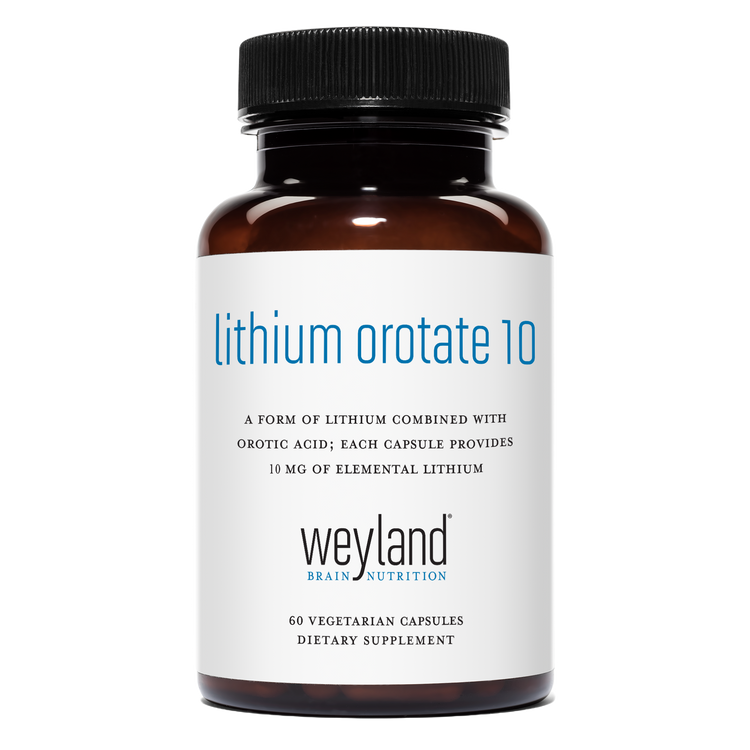
Which Form Absorbs and Works Best?
Neither form is universally better, because both supply the same elemental lithium at these trace amounts. The "which works best" question has a practical answer, not a chemistry one. What matters most is the amount on the label and whether a person sticks with it.
Both Deliver the Same Mineral
Both formats deliver the same trace mineral, so the label matters more than the format. At these small amounts, a capsule and a dropperful can provide the same amount of elemental lithium per serving. Rather than chasing claims about one form beating the other, it makes more sense to check the amount per serving printed on the bottle.
Why "Better" Depends on the Person
The best form is the one a person will actually take every day. Consistency beats format every time, since a supplement only fits a routine if it gets used. Someone who hates pills will do better with drops, while someone who forgets to measure will do better with a capsule. "Better," in most cases, comes down to preference and habit.
Which Format Fits Your Routine?
The better format usually comes down to how a person likes to take a supplement:
-
Prefer no taste and grab-and-go simplicity? Capsules.
-
Want to adjust the amount in small steps? Liquid drops.
-
Dislike swallowing pills? Liquid drops.
-
Value a fixed, identical dose every day? Capsules.
-
Like mixing a supplement into water or a drink? Liquid drops.
Many people simply pick the form they will remember to take each day, and that is the form that ends up working for them.
How Do You Choose a Quality Liquid Lithium or Capsule?
Whichever format wins, the same quality checks apply:
-
The elemental lithium amount per serving, stated clearly on the label.
-
Third-party testing or a Certificate of Analysis, so the contents are lab tested by an outside group.
-
Manufacturing in an FDA-registered, cGMP-compliant facility.
-
A clean ingredient list, and for liquids, a clear base and source.
-
Guidance to check with a clinician if taking medication or managing a health condition.
Weyland Brain Nutrition's liquid lithium and capsules are third-party tested and made in an FDA-registered, cGMP-compliant facility, so these checks are easy to confirm on the label of either form.

How Do You Take Each Form Safely?
Safely taking either form comes down to a few simple habits. The format changes how a dose is measured, not the basic rules of sensible use. These apply to drops and capsules alike.
Follow the Label Amount
Sticking to the serving on the label is the first rule for both forms. More is not better with lithium, even in small amounts, since the mineral is active in the body at low levels. The label lists the amount for a reason, so there is no benefit to doubling up.
Take It Consistently
A regular daily time helps either format become part of a routine. Pairing the drops or capsule with an existing habit, like a morning glass of water, makes it easier to remember. Consistency is what lets any supplement fit smoothly into daily life.
When to Ask a Clinician First
Some people should check with a clinician before starting either form. That includes anyone taking prescription lithium or another medication, people managing a kidney or thyroid condition, and anyone who is pregnant or nursing. A short conversation clarifies whether a low-dose supplement fits a person's situation, something a label cannot do on its own.
Liquid or Capsule: Which Will You Reach For?
Liquid lithium and capsules deliver the same trace mineral, so the choice really comes down to taste, convenience, and dosing style rather than one form beating the other. The sensible path is simple: pick the form you will take consistently, check the label and testing, and bring a clinician into anything medical.
For readers ready to choose, Weyland Brain Nutrition offers both liquid lithium drops and capsules, third-party tested and clearly labeled, so it is easy to match the format to the routine that fits.
Find the Perfect Fit for Your Routine
Capsules for convenience or drops for flexibility? Browse our full collection of brain nutrition supplements and find exactly what your regimen needs.
Shop the Full Collection
Frequently Asked Questions
Is liquid lithium better than lithium capsules?
Neither is universally better, since both deliver the same trace mineral, so the right choice depends on personal preference and which form gets taken consistently.
How do you take liquid lithium drops?
Liquid lithium drops are taken by the dropperful, usually stirred into water or juice, following the serving amount listed on the label.
Does liquid lithium taste bad?
Liquid lithium has a mild mineral taste that some people notice in water, and mixing it into juice softens the flavor for anyone sensitive to it.
Is liquid lithium the same as prescription lithium?
No, liquid lithium is a low-dose trace-mineral supplement measured in micrograms, while prescription lithium is a doctor-managed medication in much larger doses.
How much lithium is in a serving of liquid lithium drops?
The amount is listed on the label, and Weyland's liquid lithium drops provide 500 micrograms of elemental lithium per serving.
References
-
Consumer Healthcare Products Association. (2010, April). Certificate of analysis for dietary supplement components [Voluntary guideline]. Consumer Healthcare Products Association. https://www.chpa.org/public-policy-regulatory/voluntary-codes-guidelines/certificate-analysis-dietary-supplement
-
Lazarus J. H. (2009). Lithium and thyroid. Best practice & research. Clinical endocrinology & metabolism, 23(6), 723–733. https://doi.org/10.1016/j.beem.2009.06.002
-
Razzaque, M. S., & Wimalawansa, S. J. (2025). Minerals and Human Health: From Deficiency to Toxicity. Nutrients, 17(3), 454. https://doi.org/10.3390/nu17030454
Medical Disclaimer
The content on this page is for informational purposes only and is not intended as medical advice, diagnosis, or treatment. Always consult a qualified healthcare professional before making changes to your health regimen.
*These statements have not been evaluated by the Food and Drug Administration. Our products are not intended to diagnose, treat, cure, or prevent any disease.