Posted by GC Support
on October 02, 2026

Table of Contents
- 1. What Is Vitamin B Complex?
- 2. How Do B Vitamins Help with Energy?
- 3. Which B Vitamins Matter Most for Energy?
- 4. Do You Need a B Complex Supplement for Energy?
- 5. How Do Popular B Complex Products Compare?
- 6. What Should You Look for in a B Complex?
- 7. Can B Complex Support Mental Performance Too?
- 8. Running Low on Energy? Make B Vitamins Part of the Plan
Fatigue is one of the most common reasons people see a doctor, and a vitamin B complex for energy is often the first thing they try. The eight B vitamins help your body turn food into fuel, but extra doses only raise energy when your levels are low. Taking more than you need won't add a boost, and very high doses of some B vitamins can cause problems such as nerve damage.
Weyland Brain Nutrition makes supplements for brain health and daily energy support, and the best place to start is understanding how these nutrients work. B vitamins support energy by keeping your metabolism running, so the real question is whether your diet already gives you enough.
B VITAMINS PLUS CAFFEINE, ONE FORMULA
Comparing options for your daily energy routine? Weyland Energy Tablets pair a complete B-vitamin complex with botanically sourced caffeine. Take a closer look at an energy blend, not a caffeine-free vitamin supplement.
Meet Weyland Energy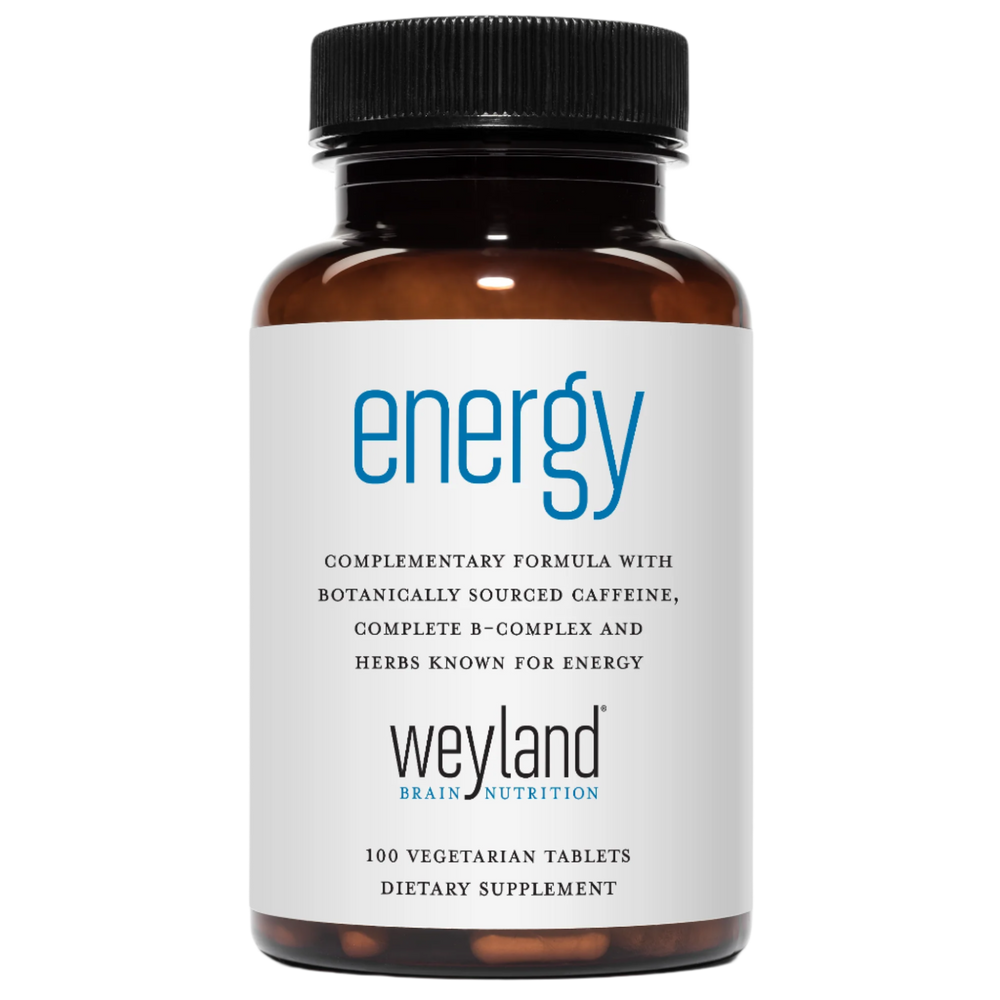
What Is Vitamin B Complex?
A vitamin B complex supplement combines all eight B vitamins in one pill. These water-soluble vitamins work as a team, and each one also has its own job. Knowing what they do helps explain why they matter for energy and brain health.
Group of Essential Nutrients
The eight B vitamins are thiamin (B1), riboflavin (B2), niacin (B3), pantothenic acid (B5), pyridoxine (B6), biotin (B7), folate (B9), and cobalamin (B12). Your body can't make enough of most of them, so you get them from food or supplements. It flushes out extras through urine, though it can store vitamin B12 in the liver for years.
Role in Energy Metabolism
B vitamins don't provide energy on their own. They act as helpers, called coenzymes, that help your cells break down carbohydrates, fats, and protein to produce energy. Without adequate amounts, those metabolic processes slow down, which can leave you tired and weak.
Support for Cognitive Function
Your brain relies on B vitamins to make chemical messengers and keep nerve cells healthy. Low levels of vitamin B12 and folate have been linked to memory problems and trouble thinking clearly, which is why B vitamins show up so often in cognitive health products.

How Do B Vitamins Help with Energy?
B vitamins help with energy by keeping the systems that make and use energy running smoothly. Their effects are steady rather than instant, so don't expect a jolt like caffeine. Three jobs stand out.
Conversion of Food into Fuel
Converting food into fuel is the main job of the B group vitamins. Thiamin drives carbohydrate metabolism, B6 handles amino acid metabolism, and biotin and pantothenic acid help process fatty acids. The end product is adenosine triphosphate (ATP), the molecule your cells burn for cellular energy.
Support for Nervous System Function
Your nervous system needs B vitamins to send signals. Vitamin B12 helps build the protective coating around nerves, while B1 and B6 support healthy nerve function. When levels drop too low, people may notice tingling, numbness, or muscle weakness.
Contribution to Mental Clarity
B vitamins help produce the brain chemicals associated with mood and alertness. Severe shortages of thiamin or B12 can even cause neuropsychiatric disorders such as confusion and memory loss. For people with normal levels, though, extra B vitamins are unlikely to sharpen thinking much.
Which B Vitamins Matter Most for Energy?
All eight B vitamins matter for energy, since each handles a different step. Each vitamin in the B complex plays a unique role in supporting energy:
-
B1 (thiamin): helps convert carbohydrates into usable energy
-
B2 (riboflavin): supports cellular energy production
-
B3 (niacin): aids metabolism and enzyme function
-
B5 (pantothenic acid): supports hormone and energy production
-
B6 (pyridoxine): supports neurotransmitter synthesis and the immune system
-
B7 (biotin): contributes to fat and carbohydrate metabolism and healthy skin
-
B9 (folate): supports DNA synthesis and red blood cell formation
-
B12 (cobalamin, including methylcobalamin): needed for red blood cells, nerve function, and energy metabolism
B12 and folate also work alongside iron, a trace mineral, to build the red blood cells that carry oxygen to your muscles and brain.
LOOK PAST THE PROMISE. CHECK THE FORMULA.
B-vitamin amounts and caffeine content both deserve a closer look. Review Weyland Energy’s ingredients and serving directions, then compare them with your multivitamin, morning coffee, and anything else already in your day.
See The Full Formula
Do You Need a B Complex Supplement for Energy?
Most people who eat a nutritious diet get enough B vitamins from food. A supplement helps most when age, diet, health, or medicines make low levels more likely. Food is the place to start.
Most People Get Enough B Vitamins from Food
B vitamins are found in many foods. Meat, fish, eggs, and dairy supply vitamin B12, while leafy greens and beans provide folate. Enriched breads and cereals in the U.S. add thiamin, riboflavin, niacin, and folic acid, the synthetic form of folate. B12 appears naturally only in animal foods, so vegans need fortified foods or supplements.
Some Groups Are More Likely to Run Low
Processed foods can crowd out nutrient-rich meals, but fortified grains keep true vitamin deficiency uncommon in the U.S. A few groups face higher risk. Older adults often absorb less B12 from food, heavy drinking can lead to thiamin deficiency, and long-term use of metformin or acid-reducing medicines can lower B12. Riboflavin deficiency and niacin deficiency are rare and usually tied to heavy drinking or severe illness.
Extra B Vitamins Add Little When Levels Are Normal
Vitamin supplementation helps most in those higher-risk groups. The National Institutes of Health (NIH) suggests that adults over 50 rely mainly on fortified foods or supplements for B12. Anyone who could become pregnant should take 400 micrograms (mcg) of folic acid daily to help prevent neural tube defects, serious birth defects of the brain and spine that form very early in pregnancy. Pregnant women need a little more, which a prenatal vitamin usually covers.
For people with normal levels, the potential health benefits of more B vitamins are small. Folate, B6, and B12 help control homocysteine, an amino acid tied to the cardiovascular system. However, large trials found that B vitamin pills didn't lower heart attack risk, so they aren't a shortcut to heart health.

How Do Popular B Complex Products Compare?
B-complex products range from basic multivitamins to energy blends and clean label pills. Supplement labels show which type you're holding.
Basic Multivitamins Cover Most People's Needs
Basic multivitamins include B-complex vitamins at or near 100% of the Daily Value (DV), along with other vitamins and minerals. For most people without special needs, that covers the B vitamins well and fills small gaps in the diet.
Energy Blends Get Most of the Lift from Caffeine
Targeted energy blends pair B vitamins with caffeine, herbs, or amino acids. The quick lift you feel from these products comes mostly from the caffeine rather than the vitamins, so check the caffeine amount first.
Clean Label Supplements Skip Extras but Work About the Same
Clean label vitamin B supplements skip artificial colors and extra fillers and focus on high-quality ingredients. Some use "active" forms such as methylfolate and methylcobalamin. These are fine choices, though standard folic acid and cyanocobalamin are well studied and work for most people.
What Should You Look for in a B Complex?
A quality B complex lists each dose clearly, stays close to the DV, and comes from a facility registered with the U.S. Food and Drug Administration (FDA). Choosing a quality B complex means focusing on these key factors:
-
Transparent labeling
-
Doses near the DV, unless a healthcare professional advises more
-
Inclusion of all essential B vitamins
-
Manufactured in FDA-registered facilities that follow current Good Manufacturing Practice (cGMP)
FDA registration doesn't mean the agency approved the product, since the FDA doesn't review dietary supplements before they're sold. Third-party seals from U.S. Pharmacopeia (USP) or NSF International add another layer of assurance.
More isn't better, either. Too much vitamin B6 over time can damage nerves and cause nerve pain, high-dose niacin causes flushing, and more than 1,000 mcg of folic acid a day can hide a B12 deficiency. Biotin can also throw off some lab tests, so mention it before blood work.

Can B Complex Support Mental Performance Too?
A B complex supports mental performance mainly by keeping brain cells supplied with what they need to make energy and chemical messengers. The difference is easiest to notice in people who were low to begin with.
B Vitamins Help Brain Cells Make Energy
Your brain uses about 20% of your body's energy while making up only about 2% of your weight. Brain cells depend on thiamin and other B vitamins to turn glucose into that energy, which keeps brain function steady.
B Vitamins Help Build Brain Chemicals Tied to Focus
Vitamin B6 helps make serotonin, dopamine, and gamma-aminobutyric acid (GABA), brain chemicals that affect mood and focus. Folate and B12 support the chemical steps that build and recycle these messengers.
B Vitamins Help Focus Most When Levels Are Low
Everyday focus depends more on sleep, food, and stress than on any pill. If low B12 is behind brain fog, fixing it can help, and a simple blood test can check. Otherwise, a B complex works best as one small part of a wellness routine.
Running Low on Energy? Make B Vitamins Part of the Plan
A vitamin B complex for energy helps your body turn food into fuel, so it matters most when your levels are low. Start with a nutritious diet, and see a healthcare professional about ongoing tiredness, since it can signal low B12 or iron.
For B vitamins plus a quick lift, Weyland Energy Tablets pair a complete B-vitamin complex that helps support normal energy metabolism with 200 mg of botanically sourced caffeine from guarana seed extract. The caffeine drives the lift, so keep the tablets away from kids and skip them during pregnancy unless your doctor approves.
Cover the basics first, then reach for Weyland Energy Tablets when you need an extra push.
These statements have not been evaluated by the Food and Drug Administration. This product is not intended to diagnose, treat, cure, or prevent any disease.
MAKE YOUR NEXT ENERGY CHOICE COUNT
Decided that B vitamins plus caffeine fit your routine? Choose Weyland Energy Tablets in a convenient tablet format. Follow the label directions, keep food and rest first, and speak with a healthcare professional about ongoing tiredness.
Shop Weyland Energy Tablets
Frequently Asked Questions
What does vitamin B complex do for energy?
Vitamin B complex helps your body turn the food you eat into usable energy, though it doesn't supply energy or calories on its own.
Can vitamin B complex help with fatigue?
A vitamin B complex may help when fatigue comes from low B vitamin levels, but it's unlikely to boost energy if your levels are normal, so ongoing tiredness deserves a checkup.
Which B vitamin is most important for energy?
All eight B vitamins work together, but vitamin B12 gets the most attention because low levels are fairly common in older adults and vegans and can cause fatigue.
How long does it take for B complex to work?
People who are low in a B vitamin may feel better within days to weeks after correcting it, while people with normal levels may notice no change at all.
Is it better to get B vitamins from food or supplements?
Food is the best source for most people, while supplements make sense for those at higher risk of low levels, such as older adults, vegans, and anyone pregnant or planning a pregnancy.
References
-
Baik, H. W., & Russell, R. M. (1999). Vitamin B12 deficiency in the elderly. Annual Review of Nutrition, 19, 357–377. https://doi.org/10.1146/annurev.nutr.19.1.357
-
Hanna, M., Jaqua, E., Nguyen, V., & Clay, J. (2022). B vitamins: Functions and uses in medicine. The Permanente Journal, 26(2), 89–97. https://doi.org/10.7812/TPP/21.204
-
Ho, C., Kauwell, G. P., & Bailey, L. B. (1999). Practitioners' guide to meeting the vitamin B-12 recommended dietary allowance for people aged 51 years and older. Journal of the American Dietetic Association, 99(6), 725–727. https://doi.org/10.1016/S0002-8223(99)00174-1
-
Jensen, N. J., Wodschow, H. Z., Nilsson, M., & Rungby, J. (2020). Effects of ketone bodies on brain metabolism and function in neurodegenerative diseases. International Journal of Molecular Sciences, 21(22), 8767. https://doi.org/10.3390/ijms21228767
-
MotherToBaby. (2026, January 1). Folic acid | folate. Organization of Teratology Information Specialists. https://www.ncbi.nlm.nih.gov/books/NBK582717/
-
U.S. Food and Drug Administration. (2026, May 4). Is it really ‘FDA approved’? https://www.fda.gov/consumers/consumer-updates/it-really-fda-approved
Medical Disclaimer
The content on this page is for informational purposes only and is not intended as medical advice, diagnosis, or treatment. Always consult a qualified healthcare professional before making changes to your health regimen.
*These statements have not been evaluated by the Food and Drug Administration. Our products are not intended to diagnose, treat, cure, or prevent any disease.


