Posted by GC Support
on August 14, 2026

Table of Contents
A glass of tap water holds more than most people think. Along with the usual minerals, it often carries a tiny bit of lithium, picked up naturally as water moves through rock and soil. Nearly everyone drinks a trace of it every day without noticing, even before considering lithium as a supplement.
That surprises people who only know lithium as a supplement or a prescription. The version in drinking water is a naturally occurring trace mineral, present in amounts far smaller than anything sold in a bottle.
What follows lays out how much lithium is naturally in drinking water, why the amount shifts from place to place, and how it stacks up against a supplement. For readers curious about the mineral itself, Weyland Brain Nutrition makes third-party-tested low-dose lithium, and the aim here is plain facts, not a pitch.
Curious About Trace-Mineral Support?
While tap water holds variable traces of lithium, our supplements provide a measured, consistent amount to easily support your daily wellness routine.
Shop Low-Dose Lithium
Is There Lithium in Drinking Water?
Drinking water almost always contains a small amount of lithium, because the mineral occurs naturally in the ground and dissolves into water. It is not added on purpose. It arrives on its own as water moves through rock and soil, which is why trace amounts of lithium show up in supplies across the country.
A Naturally Occurring Trace Mineral
Lithium is a naturally occurring trace mineral found in rock and soil. As rainwater and groundwater move through the soil, they dissolve small amounts of it and carry them along. That slow, natural process is how lithium ends up in the water people drink, no factory or treatment plant required.
Present in Most Water Supplies
Trace amounts of lithium turn up in most tap and groundwater sources, usually in very small amounts. A large USGS survey of untreated groundwater found lithium in wells nationwide, with typical levels of around 8 micrograms per liter in public-supply wells. The amounts are small, but the mineral is nearly everywhere water meets the right kind of rock.

How Much Lithium Is in Drinking Water?
The amount of lithium in drinking water varies widely, from less than 1 microgram per liter to a few hundred micrograms per liter, depending on where the water comes from. Most sources sit at the low end, well below a typical supplement serving. Here is how those amounts break down.
Typically Trace Amounts
Most drinking water carries only trace amounts of lithium. In the USGS survey, concentrations ranged from below 1 to nearly 400 micrograms per liter, with a median near 8 micrograms in public wells. To put that in scale, a liter at the median holds roughly 8 micrograms, a small slice of the microgram amounts found in a low-dose lithium supplement serving.
Levels Vary by Region
Some regions have far more lithium in their water than others. Concentrations tend to run highest across the western and southwestern states, including Arizona, Nevada, New Mexico, and the Dakotas, where the local geology is rich in the mineral. In other areas, such as parts of Florida, levels stay very low. Where a person lives shapes how much natural lithium comes out of the tap.
Tap vs Mineral vs Well Water
The type of water matters too. Private well water and some mineral waters can carry more lithium than treated municipal tap water, since they often draw from deeper groundwater that has spent longer moving through rock. Public supplies also vary based on the aquifer they tap. In every case, the source and the surrounding geology set the amount.
Trust What's In Your Supplement
Nature is unpredictable, but your nutrition shouldn't be. All Weyland Brain Nutrition products are clearly labeled, third-party tested, and cGMP-compliant.
View Our Trusted Formulas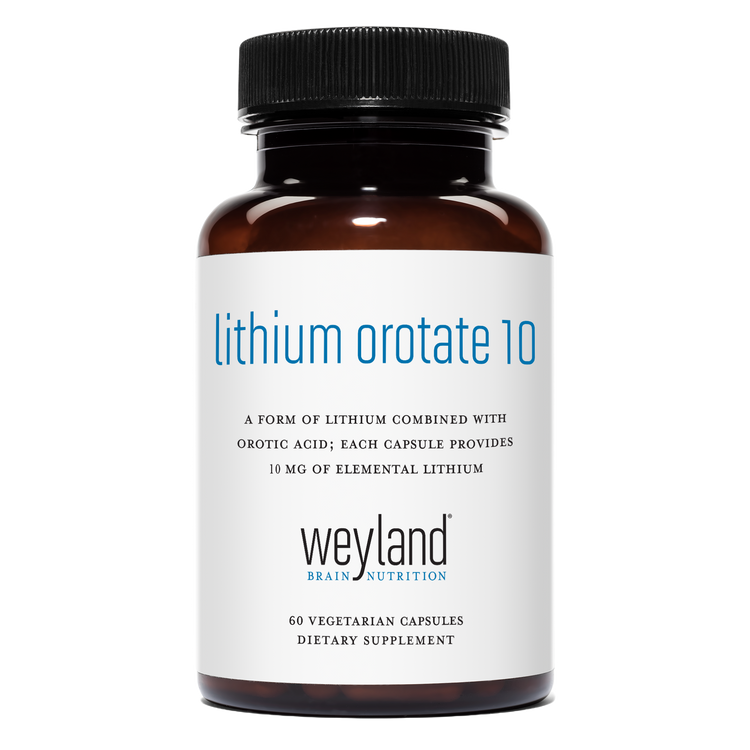
Why Does Lithium in Water Vary So Much?
Lithium levels in water vary mainly because of the ground the water travels through. Rock type, water age, and climate all shape how much of the mineral dissolves in. The differences come down to geology more than anything else.
Local Geology Drives It
Local geology is the biggest factor. Water moving through lithium-bearing rock and sandy, unconsolidated soil tends to pick up more of the mineral, while water flowing through carbonate rock tends to pick up less. That is why two towns not far apart can have very different amounts, simply because the rock beneath them differs.
Climate and Water Source Play a Role
Climate and the water's age also affect the amount. Lithium runs highest in arid regions and in older groundwater that has sat underground for a long time, giving it more time to dissolve minerals from the surrounding rock. Dry western basins tend to concentrate it, which aligns with the regional patterns observed in national surveys.
How Does Water Lithium Compare to Food and Supplements?
Lithium reaches people through a few routes, each in different amounts:
-
Drinking water: usually the largest natural source for most people, though still trace-level and highly variable by region.
-
Food: smaller amounts from plants grown in lithium-containing soil, plus items like eggs and dairy. The site's food-sources guide covers this route in detail.
-
Supplements: a set, measured amount of elemental lithium stated on the label.
-
Prescription lithium: far larger still, and managed by a doctor.
Natural sources provide small, variable amounts that vary with geography and diet, while a supplement provides a known, consistent amount.

Should You Worry About Lithium in Your Water?
For most people, the small amount of lithium in drinking water is a normal part of what comes out of the tap. It has been present in groundwater for as long as water has moved through rock. That said, specific questions about a local supply are worth taking to the right source.
Everyday Amounts Are Small
The lithium in ordinary drinking water is at trace levels and a routine part of what people drink every day. These amounts are far below the levels in a prescription and a fraction of many things already in the daily diet. For the average household, natural water lithium is simply part of the background, not something to lose sleep over.
Where to Take Specific Concerns
Questions about a specific water supply belong with the right expert. For details on what a local system contains, a municipal water authority or an annual water-quality report is the place to look, and private well owners can have water tested directly. For any health question about lithium and personal wellness, a healthcare provider is the right person to ask.
How Much Lithium Is in Your Glass?
Drinking water is most people's main natural source of lithium, and the amount is small, usually a handful of micrograms per liter, though it swings widely with region and local geology. Western and arid areas tend to run higher, while other regions remain very low, so no single number fits every tap.
The honest takeaway is that natural water lithium is real but at trace levels and hard to pin down, whereas a supplement offers a known, consistent amount rather than a moving target.
For readers who would rather have a measured amount than a variable one from the tap, Weyland Brain Nutrition's low-dose lithium is clearly labeled and third-party tested, so the exact amount in each serving is easy to see.
Take the Guesswork Out of Your Nutrition
Don't rely on the tap for your trace minerals. Browse our complete line of targeted wellness supplements designed to reliably support your active lifestyle.
Shop the Full Collection
Frequently Asked Questions
Does tap water contain lithium?
Yes, most tap water contains a small, naturally occurring amount of lithium that dissolves as water moves through rock and soil.
How much lithium is in drinking water?
Amounts vary widely, from under 1 to a few hundred micrograms per liter, with a typical level around 8 micrograms per liter in US public-supply wells.
Is lithium in water safe to drink?
Natural lithium in drinking water is at trace levels and a normal part of many water supplies, though questions about a specific local supply are best directed to a water authority.
Does bottled or mineral water have more lithium than tap water?
Some mineral and well waters carry more lithium than treated tap water because they draw from deeper groundwater, but the amount still depends on the source.
Is the lithium in water the same as a lithium supplement?
It is the same mineral, but water provides a small, variable trace amount while a supplement provides a set, measured dose on the label.
References
-
Huber, R. S., Kim, N., Renshaw, C. E., Renshaw, P. F., & Kondo, D. G. (2014). Relationship between altitude and lithium in groundwater in the United States of America: results of a 1992-2003 study. Geospatial health, 9(1), 231–235. https://doi.org/10.4081/gh.2014.20
-
Mahmudiono, T., Fakhri, Y., Daraei, H., Mehri, F., Einolghozati, M., Mohamadi, S., & Mousavi Khaneghah, A. (2023). The concentration of Lithium in water resources: A systematic review, meta-analysis and health risk assessment. Reviews on environmental health, 39(4), 667–677. https://doi.org/10.1515/reveh-2023-0025
-
National Water Quality Program. (2021, February 11). Many Americans may be drinking groundwater with high levels of lithium. U.S. Geological Survey. https://www.usgs.gov/news/lithium-us-groundwater
-
Petraccia, L., Liberati, G., Masciullo, S. G., Grassi, M., & Fraioli, A. (2006). Water, mineral waters and health. Clinical nutrition (Edinburgh, Scotland), 25(3), 377–385. https://doi.org/10.1016/j.clnu.2005.10.002
Medical Disclaimer
The content on this page is for informational purposes only and is not intended as medical advice, diagnosis, or treatment. Always consult a qualified healthcare professional before making changes to your health regimen.
*These statements have not been evaluated by the Food and Drug Administration. Our products are not intended to diagnose, treat, cure, or prevent any disease.