Posted by GC Support
on April 02, 2026

Table of Contents
Overview
The study “Lithium Toxicity From an Internet Dietary Supplement” by Pauzé et al. (2007). We are summarizing this scientific paper to provide background on poisonings related to over-the-counter online products. The authors present a specific clinical case in which a patient ingested a massive dose of the product Find Serenity Now®. By examining this incident, the researchers emphasize that “the widespread availability of medications and herbal products on the Internet has increased the potential for poisonings.” This document serves as a critical warning about the chemical realities of seemingly natural or gentle dietary supplements bought online.
Don’t Guess With Your Health
Online supplements may look harmless—but as this case shows, misuse can lead to real toxicity. Choose products that prioritize safety, quality, and transparency.
Shop Trusted Supplements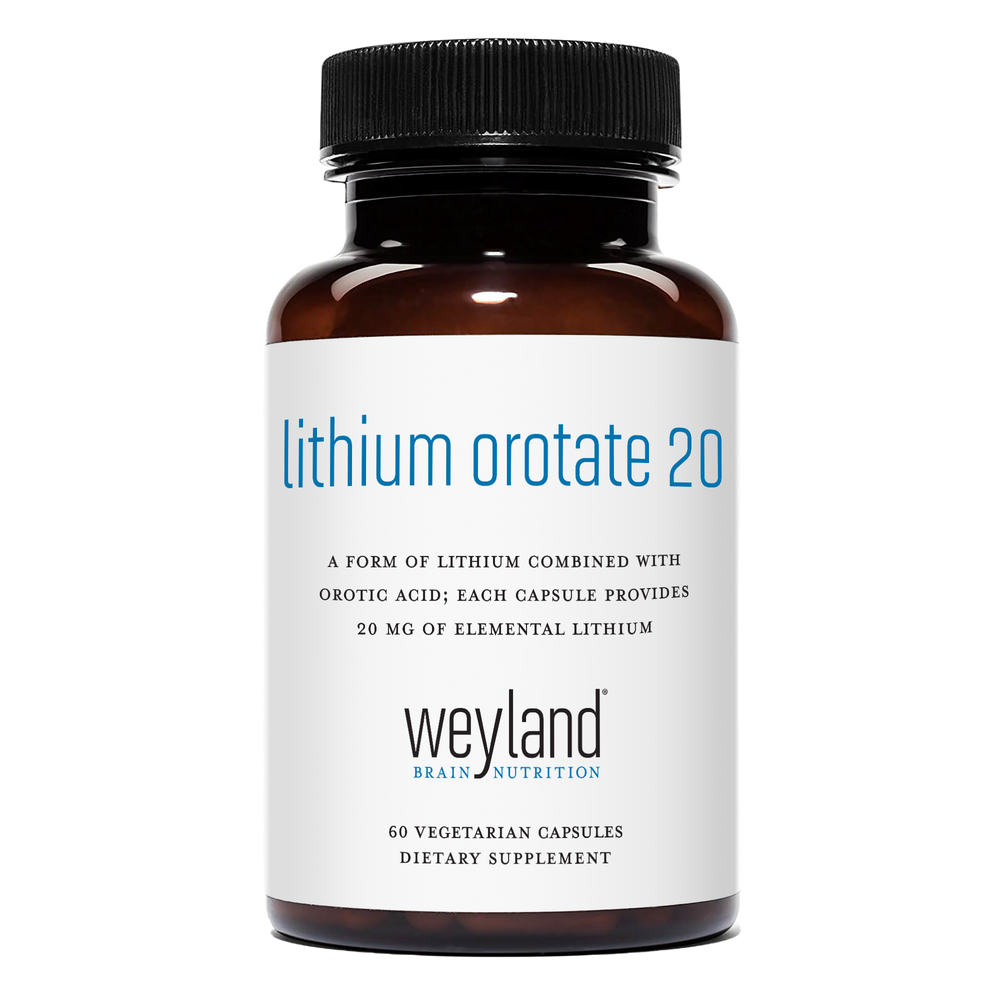
What Is the Danger of Online Dietary Supplements?
To understand the background and context of this scientific paper, we must examine how the internet has changed how people buy health products. The researchers point out that the web allows anyone to easily purchase powerful substances without a doctor’s prescription. Because dietary supplements are not always regulated as strictly as traditional prescription drugs, consumers might not realize how potent they can be.
This scientific paper focuses specifically on a product called Find Serenity Now®, which is marketed as a dietary supplement. According to its label, each tablet contains 120 milligrams (mg) of lithium orotate. The researchers provide an important mathematical breakdown to help us understand the chemical makeup of this supplement. They note that there is “3.83 mg of elemental lithium per 100 mg of (organic) lithium orotate compared to 18.8 mg of elemental lithium per 100 mg of (inorganic) lithium carbonate.” Even though the elemental lithium content is lower in the organic orotate form than in the common medical carbonate form, taking large amounts of it can still lead to a dangerous buildup in the body.

Methodology
Because this scientific paper is a medical case report, the methodology involves the direct clinical observation, testing, and treatment of a single patient. The subject was an 18-year-old woman who arrived at the emergency department (ED) after intentionally misusing a dietary supplement. The medical team recorded that she had ingested exactly 18 tablets of the Find Serenity Now® product.
To properly evaluate her condition, the doctors performed a series of standard emergency medical tests. They continuously monitored her vital signs to assess her basic body functions. They also performed an electrocardiogram (ECG) to assess her heart's electrical activity. To rule out the presence of other dangerous substances, the medical staff ran a comprehensive urine drug screen.
Finally, they drew blood to measure her exact serum lithium levels at different time intervals, first at almost 90 minutes after she swallowed the pills, and then again one hour later, to track how the chemical was moving through her system.

Main Findings
The clinical observations in this scientific paper reveal exactly what happens to the human body during a mild, acute overdose of lithium orotate.
Mild Tremors and Nausea
When the young woman arrived at the ED, her primary physical complaint was intense nausea. The researchers noted that she also reported having “one episode of emesis,” which is the medical term for vomiting. During her physical examination, the doctors found a mild tremor, meaning her hands or limbs were shaking slightly. However, they specifically noted that this tremor occurred “without rigidity,” meaning her muscles were not abnormally stiff or frozen.
Steady Heart and Normal Vitals
Despite the vomiting and shaking, the patient’s core bodily functions remained stable. Her vital signs, including her blood pressure and breathing rate, were completely normal. Furthermore, the ECG test showed a “normal sinus rhythm,” indicating that the excessive lithium had not disrupted the regular, healthy beating of her heart. The urine drug screen also came back negative, proving that her symptoms were solely caused by the lithium supplement and not by other recreational or prescription drugs.
Shifting Blood Levels
The blood tests provided a clear picture of how the body absorbs this dietary supplement.
- Almost 90 minutes after swallowing the 18 tablets, her serum lithium level was measured at 0.31 milliequivalents per liter (mEq/L).
- The medical team treated her with intravenous (IV) fluids to help flush her system and an antiemetic drug to stop her vomiting.
- Exactly one hour after the first test, her serum lithium level rose slightly to 0.40 mEq/L, indicating that her body was still absorbing the supplement from her digestive tract.
After three total hours of careful observation in the emergency department, both her nausea and her tremors completely resolved. Because her physical symptoms had cleared up and she was medically stable, she was safely transferred to a psychiatric hospital to receive further care and mental health support.

Why Do These Findings Matter for General Health?
The implications of this scientific paper are highly significant for both doctors and everyday consumers. First, the study proves that over-the-counter dietary supplements bought on the internet contain active ingredients that are entirely “capable of causing toxicity in overdose.” Consumers cannot assume a product is harmless simply because it is labeled as a supplement or sold freely online.
Furthermore, the researchers explain that different forms of lithium act very similarly once they are inside the human body. As the paper states, “Prior human and animal data have shown similar pharmacokinetics and shared clinical effects of these lithium salts.” This means that the organic lithium orotate found in internet supplements travels through the bloodstream and affects the nervous system in much the same way as the strict, prescription-grade inorganic lithium carbonate. Because of this shared behavior, the authors warn that “chronic lithium toxicity from ingestion of this product is also of theoretical concern.” This means that even if someone does not take a massive overdose all at once, slowly taking too much of this supplement every single day could theoretically lead to a dangerous, long-term poisoning of the body.
Choose Smarter, Stay Safer
Not all supplements are created equal. Avoid unnecessary risks by choosing high-quality products backed by better standards and transparency.
Browse the CollectionProtecting Yourself From Unregulated Internet Pills
This scientific paper serves as a vital reminder that dietary supplements are not necessarily harmless simply because they are easily accessible. By documenting a clear case of mild lithium toxicity from an online product, the researchers highlight the very real physical consequences of unregulated supplement misuse. From nausea and vomiting to mild tremors and shifting blood chemistry, the effects of taking too much lithium orotate are serious medical events. Understanding these risks helps ensure that consumers approach internet-bought health products with the caution and respect that active chemical compounds demand.
References
- Food and Drug Administration. (2021, December 21). Dietary supplements. https://www.fda.gov/consumers/consumer-updates/dietary-supplements
- Hedya, S. A., Avula, A., & Swoboda, H. D. (2023, June 26). Lithium toxicity. In StatPearls. StatPearls Publishing. https://www.ncbi.nlm.nih.gov/books/NBK499992/
- Office of Dietary Supplements. (2023, January 4). Dietary supplements: What you need to know. National Institutes of Health. https://ods.od.nih.gov/factsheets/WYNTK-Consumer/
- Pauzé, D. K., & Brooks, D. E. (2007). Lithium toxicity from an internet dietary supplement. Journal of Medical Toxicology, 3(2), 61–62. https://doi.org/10.1007/BF03160910
Medical Disclaimer
The content on this page is for informational purposes only and is not intended as medical advice, diagnosis, or treatment. Always consult a qualified healthcare professional before making changes to your health regimen.
*These statements have not been evaluated by the Food and Drug Administration. Our products are not intended to diagnose, treat, cure, or prevent any disease.