Posted by GC Support
on April 14, 2026

Table of Contents
Overview
The study “Different pharmacokinetics of lithium orotate inform why it is more potent, effective, and less toxic than lithium carbonate in a mouse model of mania” by Pacholko et al. (2023). This scientific paper explores a critical issue in psychiatric medicine. Today, Lithium Carbonate (LiCO) is a mainline treatment for preventing severe mood episodes in Bipolar Disorder (BD). However, because it has a very narrow safe dosage range, patients often suffer from side effects like intense thirst and kidney trouble. Because of these harsh reactions, many people simply stop taking their medicine. The researchers wanted to know whether a different form, Lithium Orotate (LiOr), could be absorbed differently. They believed this unique formula could provide the exact same mental health benefits at much lower doses, thereby erasing the nasty side effects that make standard therapies so difficult to endure.
Featured Supplement
Tired of Lithium's Side Effects? There May Be a Better Way.
Research suggests that the form of lithium matters as much as the dose. Weyland Lithium Orotate delivers the same mood-stabilizing mineral using the orotate carrier studied in the research you're about to read.
See Weyland Lithium Orotate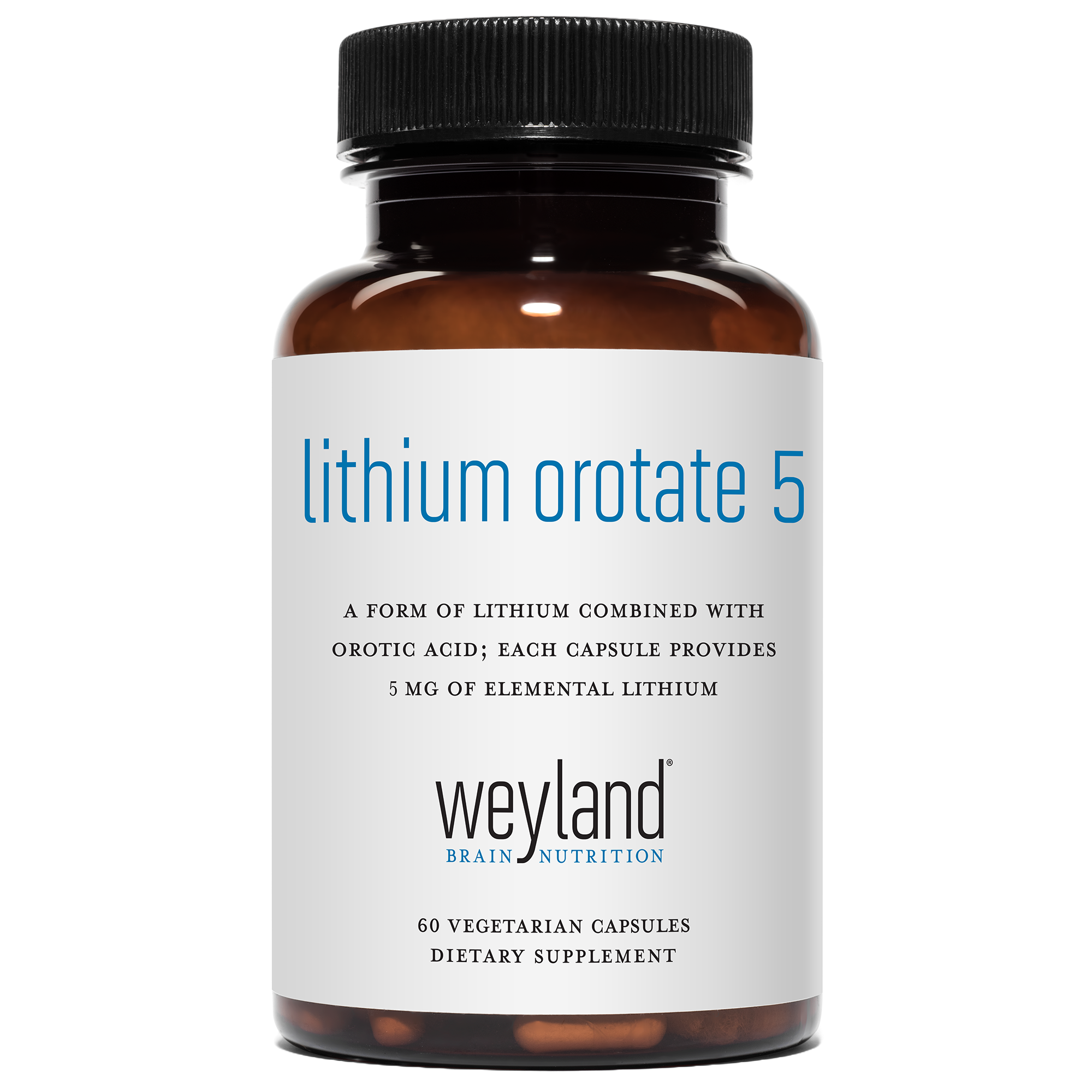
What Is the Background and Context of This Research?
Doctors have used lithium to treat extreme mood shifts for over fifty years. Even with the invention of modern drugs, lithium remains one of the absolute best ways to prevent mood-episode recurrences in patients. However, the standard prescription, LiCO, comes with severe medical baggage. It has a very narrow therapeutic window, which means the difference between a helpful dose and a toxic dose is dangerously small. During short-term use, patients often suffer from Polydipsia (excessive thirst) and Polyuria (frequent urination). If a patient takes it for a long time, it can lead to serious conditions like permanent kidney damage or a sluggish thyroid gland.
Because of these miserable side effects, treatment non-adherence is a massive issue. Patients simply stop taking their pills because they feel sick. In the 1970s, a doctor named Hans Nieper suggested a clever solution. He heavily promoted a compound called LiOr. He believed that the orotic acid attached to the lithium acted as a special mineral carrier. This carrier can easily cross biological membranes, delivering the medicine directly into the central nervous system. While early tests showed it did reach the brain effectively, a few later studies claimed it harmed the kidneys. As a result, the medical community abandoned it. Today, the authors of this scientific paper are reopening the case. They hypothesized that because LiOr is well absorbed, doctors could prescribe a much smaller dose, thereby bypassing any safety or toxicity concerns entirely.

Methodology
To properly test their theory, the researchers designed a highly controlled experiment using male and female mice. First, they needed a way to simulate human mania. To do this, they injected the mice with a stimulant called D-amphetamine (dA). This stimulant causes Amphetamine-Induced Hyperlocomotion (AIH), which means the mice become extremely hyperactive. This hyperactivity closely mirrors the manic phases of BD and is known to be highly sensitive to standard lithium treatments.
The researchers divided the mice into groups and gave them different doses of either LiCO or LiOr exactly thirty minutes before giving them the amphetamine. They carefully tracked the mice’s movements using a special open-field arena and video tracking software. They wanted to find the Minimal Effective Concentration (MEC) for each drug, which is the absolute lowest dose needed to successfully calm the hyperactive mice. To ensure the drugs were not just making the mice weak or physically sick, they also ran a Forced Swim Test and a Rotarod test to confirm their basic locomotor functions remained totally normal.
In addition to the live mouse tests, the team conducted advanced ex vivo (out-of-body) tests. They applied the medicines directly to live brain slices to observe Long-Term Potentiation (LTP), a measure of how brain signals strengthen over time. Finally, after determining the optimal live doses, the researchers tested the long-term safety of each compound. They gave the mice their treatments every day for 14 consecutive days. On the fifteenth day, they tested the animals’ blood. They measured levels of Blood Urea Nitrogen (BUN) and creatinine to assess kidney function. They also measured Thyroid-Stimulating Hormone (TSH) to assess thyroid function.

Main Findings
Higher Potency and Effectiveness
The scientific paper reveals a massive difference in how well these two drugs work. The standard medical treatment, LiCO, required a heavy dose to calm the animals. The study explicitly states that “LiCO induced a partial block of AIH at doses of 15 mg/kg in males and 20 mg/kg in females.” In stark contrast, LiOr worked wonders at a fraction of that amount. The researchers noted that “LiOr elicited a near complete blockade at concentrations of just 1.5 mg/kg in both sexes.”
This means the alternative compound is exactly ten times more potent than the standard prescription. Furthermore, the tiny 1.5 mg/kg dose of LiOr blocked hyperactivity more effectively and for much longer. While the LiCO stopped working shortly after administration, the LiOr continued to block manic behaviors effectively at 12, 24, and even 36 hours after it was given.
Different Transport in the Body
The researchers discovered exactly why the alternative compound works so much better. Standard LiCO easily breaks apart in water, separating into its basic ions before it reaches the brain. However, LiOr stays intact. The scientific paper notes that LiOr “did not readily dissociate into its constituent ions.” Because it remains intact, it travels through the body along completely different chemical pathways.
- It relies heavily on Organic Anion Transporting Polypeptides (OATPs) to cross biological barriers.
- It specifically targets cells that use the Pentose Phosphate Pathway (PPP).
- It uses an enzyme called Uridine Monophosphate Synthase (UMPS) to release the medicine once it is inside the targeted cells.
When the researchers chemically blocked these specific transporters and enzymes, the LiOr stopped working completely, but the LiCO kept working normally. This definitely proves that the two drugs travel through the body in entirely different ways.
Better Kidney and Thyroid Health
Because the alternative compound works perfectly at such low doses, it completely spared the organs from heavy chemical damage. During the 14-day safety test, mice taking LiCO developed severe thirst and drank excessive amounts of water. The male mice showed elevated blood creatinine levels, indicating their kidneys were struggling to filter waste. The female mice showed significantly increased TSH expression, meaning their thyroids were becoming highly sluggish. On the other hand, mice treated with LiOr showed no signs of excessive thirst, kidney strain, or thyroid problems, even when given doses three times the necessary MEC.

What Are the Clinical Implications for Patients?
The implications of this scientific paper are incredibly encouraging for anyone suffering from severe, chronic mood swings. Currently, millions of patients must choose between enduring dangerous manic episodes or enduring the miserable, daily side effects of LiCO. The study firmly concludes that “LiOr demonstrates superior efficacy, potency, and tolerability to LiCO in both male and female mice.” If these animal tests correctly translate to humans, it could revolutionize global psychiatric care.
Because LiOr targets brain cells directly and efficiently, human patients could theoretically take tiny microdoses of the mineral. These small doses would provide robust, long-lasting mood stabilization without causing the infamous, sharp “lithium spikes” in the bloodstream that slowly destroy kidney and thyroid tissues. This is especially important for female patients, who are naturally at a much higher risk of developing lithium-induced thyroid issues as they age. By simply switching the chemical carrier from a standard carbonate to a highly targeted orotate, doctors could drastically improve patient compliance. People would be far more likely to take their medicine daily if it did not make them constantly thirsty or fearful of long-term organ failure.
Take the Next Step
Ready to Try the Smarter Form of Lithium?
Weyland Lithium Orotate gives you research-backed mood support at a low, targeted dose. Same mineral. Cleaner delivery. Better safety profile. No prescription needed.
Shop Weyland Lithium OrotateA Brighter Future for Bipolar Therapies
This scientific paper provides compelling, data-driven evidence that modern medicine might have unfairly abandoned a highly effective mental health treatment. By closely examining how different chemicals move through the bloodstream and into the brain, researchers proved that lithium orotate is not only vastly more powerful than standard prescriptions but also remarkably safer for continuous, long-term use. Because it uses a smart biological delivery system to reach the central nervous system, it requires much lower doses, thereby protecting the kidneys and thyroid from toxic buildup. While more clinical trials on humans are definitely needed, these impressive animal findings offer immense hope. Understanding these complex biological pathways is the very first major step toward creating gentle, highly effective mood stabilizers that patients can confidently take for life without fear of crippling side effects.
References
- Gitlin, M. (2016). Lithium side effects and toxicity: Prevalence and management strategies. International Journal of Bipolar Disorders, 4, Article 27. https://doi.org/10.1186/s40345-016-0068-y
- Hedya, S. A., Avula, A., & Swoboda, H. D. (2023, June 26). Lithium toxicity. In StatPearls. StatPearls Publishing. https://www.ncbi.nlm.nih.gov/books/NBK499992/
- Kibirige, D., Luzinda, K., & Ssekitoleko, R. (2013). Spectrum of lithium induced thyroid abnormalities: A current perspective. Thyroid Research, 6, Article 3. https://doi.org/10.1186/1756-6614-6-3
- Logan, R. W., & McClung, C. A. (2016). Animal models of bipolar mania: The past, present and future. Neuroscience, 321, 163–188. https://doi.org/10.1016/j.neuroscience.2015.08.041
- Pacholko, A. G., & Bekar, L. K. (2023). Different pharmacokinetics of lithium orotate inform why it is more potent, effective, and less toxic than lithium carbonate in a mouse model of mania. Journal of Psychiatric Research, 164, 296–304. https://doi.org/10.1016/j.jpsychires.2023.06.012
- Roth, M., Obaidat, A., & Hagenbuch, B. (2012). OATPs, OATs and OCTs: The organic anion and cation transporters of the SLCO and SLC22A gene superfamilies. British Journal of Pharmacology, 165(5), 1260–1287. https://doi.org/10.1111/j.1476-5381.2011.01724.x
Medical Disclaimer
The content on this page is for informational purposes only and is not intended as medical advice, diagnosis, or treatment. Always consult a qualified healthcare professional before making changes to your health regimen.
*These statements have not been evaluated by the Food and Drug Administration. Our products are not intended to diagnose, treat, cure, or prevent any disease.