Posted by GC Support
on April 07, 2026

Table of Contents
Overview
The study “Is there a role for lithium orotate in psychiatry?” by Devadason et al. (2018). This scientific paper examines the growing evidence that trace amounts of lithium may be essential for a healthy brain. For years, scientists have noticed that people living in areas with naturally high lithium levels in their drinking water tend to have better mental health outcomes.
The author questions if we can achieve these same positive health results by taking a low-dose supplement. By breaking down past research and historical medical claims, this scientific paper seeks to determine whether this over-the-counter option has a place in modern psychiatry.
Looking for Smarter Mental Wellness Support?
Research suggests trace minerals like lithium may play a role in brain health, but quality and formulation matter. Start with options designed for clarity and consistency.
Check Out Product Options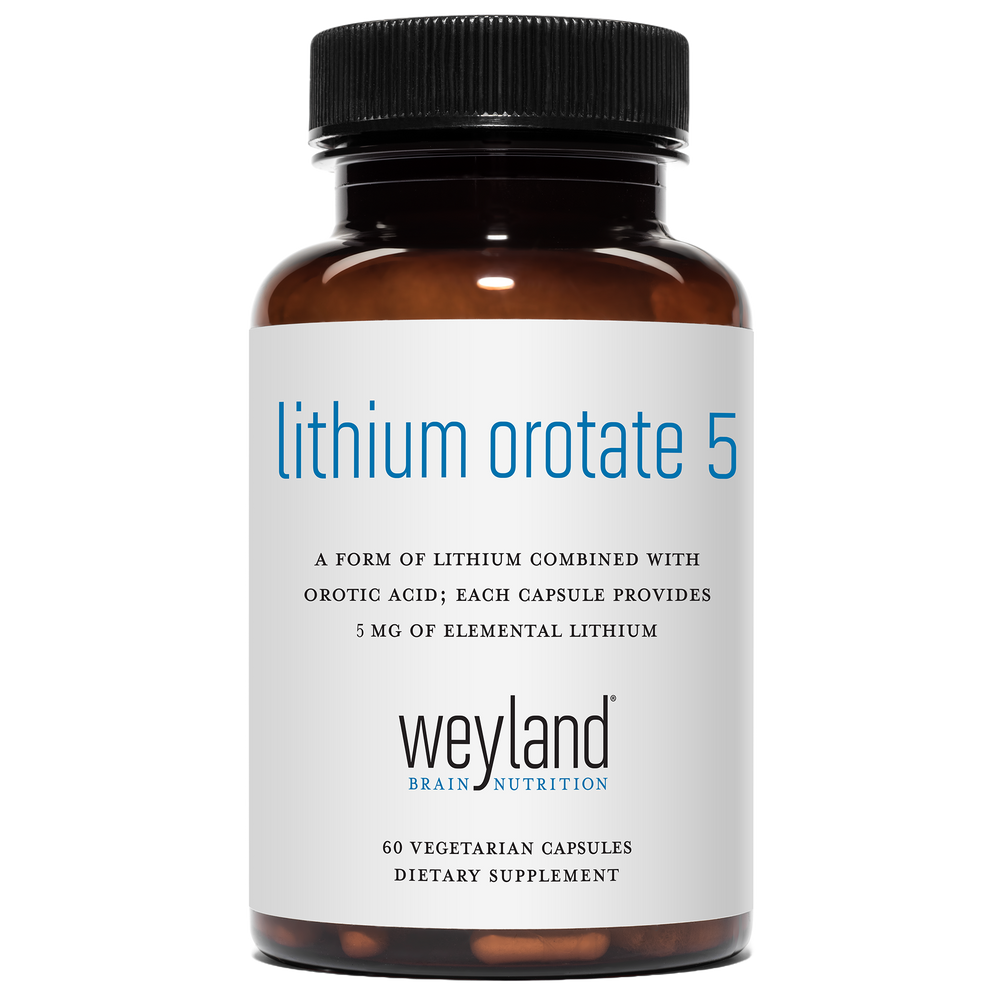
Why Are Researchers Looking At Trace Amounts Of Minerals?
To truly grasp the importance of this scientific paper, we must look at how our environment affects our brains. There is mounting evidence that people who live in areas where the land or water supply is relatively rich in lithium have lower rates of mental illness. This includes lower rates of suicide, aggression, and homicide compared to areas where the land or water supply is poor in lithium. Over the past 28 years, researchers have conducted at least 8 large studies demonstrating this exact link across different localities worldwide. The study points out that the latest research confirming this was conducted by Shiotsuki et al. in 2016.
In addition to mental illness, trace lithium might also help with memory and aging. A massive, population-based study in Denmark concluded that long-term exposure to higher lithium levels in drinking water could be associated with a lower risk of getting dementia. This was documented by Kessing et al. in 2017. All this growing evidence from large population studies aligns perfectly with smaller cellular studies. According to a 2016 review by Dell’Osso et al., lithium may be a crucial trace element for optimal brain functioning. All these studies imply that getting enough lithium is “neuroprotective,” meaning it protects the nervous system. On the flip side, not getting enough lithium might make vulnerable people more likely to develop a range of psychiatric and degenerative conditions.
Because of this, advocates argue that we need a safe and effective mineral supplement to correct this specific deficiency. They point to LO, a supplement used worldwide by non-medical health practitioners for over 30 years. It does not require a doctor’s prescription, and in the United States, it does not require approval from the Food and Drug Administration.

Methodology
Because this scientific paper is an editorial debate piece, the methodology does not involve a brand-new laboratory experiment. Instead, the methodology centers on a deep, critical review of the existing scientific literature, historical data, and epidemiological studies. The author systematically reviewed data spanning nearly three decades to compare the effects of naturally occurring lithium with synthetic supplements.
The researcher evaluated the foundational work of John Cade, who originally established the benefits of clinical lithium. Then, the author examined the specific claims made by early supplement advocates, particularly Nieper's historical studies conducted in 1973. By placing population data, cellular biology findings, and historical medical records side by side, the methodology provides a comprehensive overview of where the science currently stands and where it is severely lacking.

Main Findings
Natural Sources Protect The Brain
One of the most important findings highlighted in this study is that natural, trace amounts of lithium genuinely seem to protect the brain. The epidemiological evidence strongly suggests that there are real therapeutic benefits from lithium ions when consumed naturally through food and water. The main question the scientific paper asks is whether a supplement can replicate this natural process.
A Targeted Delivery System
The study explores the theory of why LO might be special. According to early research by Nieper, when lithium ions are combined with the orotate molecule, they act as a highly targeted delivery system. This system theoretically transports lithium ions very efficiently across the cell membrane to their necessary sites of action inside the cell. Advocates claim that with standard prescription lithium carbonate, doctors must use massive doses to essentially “force” the lithium into the body’s cells. Because LO is supposedly more efficient, a person can take a much lower dose. For example, a single 120 milligram tablet of LO contains only about 5 milligrams of elemental lithium. In stark contrast, a standard 250 milligram tablet of lithium carbonate contains about 50 milligrams of elemental lithium.
Attenuated But Noticeable Benefits
Even though the doses are incredibly small, the reported benefits are very promising. The scientific paper lists several positive effects reported by users.
These reported benefits include:
- Feeling calmer overall.
- Experiencing fewer or less intense depressive, hypomanic, or mixed symptoms.
- Being far less impulsive in daily life.
- Experiencing less frequent and less intense suicidal thoughts or aggressive impulses.
- Reduced consumption of alcohol.
- Not getting as easily upset by common daily stressors.
The author notes that it is very interesting that these benefits are remarkably similar to those of known lithium carbonate therapy, just in a milder, attenuated form.

What Are The Real World Implications For Patients?
The implications of this scientific paper are both exciting and highly cautious. On one hand, the author concludes that “there is mounting evidence that a higher, incidental oral intake of lithium via environmental sources is neuroprotective.” This means that small amounts of this mineral are likely very good for the human brain. Furthermore, the study notes that a few small human trials, such as the one by Schrauzer and de Vroey in 1994, showed that LO was effective, safe, and generally well tolerated. It is also very reassuring to know that there have been absolutely no reported cases of death or serious side effects in more than 40 years of use in the United States and Europe.
However, the scientific paper makes it crystal clear that we cannot blindly trust these supplements yet. Nieper’s original study claiming that the orotate form acts as a superior targeted delivery system was never successfully replicated by other scientists. Because no large randomized controlled trials have been conducted to date, there is no definitive medical evidence of its long-term safety.
This raises a significant implication for vulnerable patient populations. Even at low doses, the author warns that safety issues are paramount. Medical professionals must be incredibly careful when giving any form of lithium to the elderly or to people who have had previous kidney or thyroid problems. Even individuals who seem to have perfectly normal kidney and thyroid functions might have a hidden genetic weakness, known as a pharmacogenetic susceptibility, which could lead to severe organ impairment when exposed to lithium over time.
Make Informed Choices for Long-Term Brain Health
The science is still evolving, so your supplement choices should be grounded in quality and care. Discover options built with better standards in mind.
Browse the CollectionThe Future Of Gentle Brain Supplements
This scientific paper shows that the medical world still has much to learn about how simple earth minerals affect our mental health. While the idea of a low-dose, over-the-counter pill that mimics the brain-protecting effects of natural spring water is incredibly appealing, the science is not completely settled. The initial data and decades of anecdotal reports suggest that this gentle supplement could be a massive help for people struggling with mood and impulsive behaviors. However, until modern science steps up and conducts massive, rigorous clinical trials, patients and doctors must approach this potential remedy with a healthy mix of hope and caution.
References
- Devadason, P. (2018). Is there a role for lithium orotate in psychiatry? Australian & New Zealand Journal of Psychiatry, 52(12), 1107–1108. https://doi.org/10.1177/0004867418810185
- Kessing, L. V., Gerds, T. A., Knudsen, N. N., Jørgensen, L. F., Kristiansen, S. M., Voutchkova, D., Ernstsen, V., Schullehner, J., Hansen, B., Andersen, P. K., & Ersbøll, A. K. (2017). Association of lithium in drinking water with the incidence of dementia. JAMA Psychiatry, 74(10), 1005–1010. https://doi.org/10.1001/jamapsychiatry.2017.2362
- Memon, A., Rogers, I., Fitzsimmons, S. M. D., Carter, B., Strawbridge, R., Hidalgo-Mazzei, D., & Young, A. H. (2020). Association between naturally occurring lithium in drinking water and suicide rates: Systematic review and meta-analysis of ecological studies. The British Journal of Psychiatry, 217(6), 667–678. https://doi.org/10.1192/bjp.2020.128
- Shorter, E. (2009). The history of lithium therapy. Bipolar Disorders, 11(Suppl. 2), 4–9. https://doi.org/10.1111/j.1399-5618.2009.00706.x
Medical Disclaimer
The content on this page is for informational purposes only and is not intended as medical advice, diagnosis, or treatment. Always consult a qualified healthcare professional before making changes to your health regimen.
*These statements have not been evaluated by the Food and Drug Administration. Our products are not intended to diagnose, treat, cure, or prevent any disease.